The Emerging Leader’s Playbook: 15 Ways to Improve Your Leadership Skills
- Leadership
- In the News
- July 6, 2026
The Emerging Leader’s Playbook: 15 Ways to Improve Your Leadership Skills
Why Most Leaders Struggle to Improve Leadership Skills (And What to Do About It)

If you want to improve leadership skills, here is a quick summary of what actually works:
- Build self-awareness – Know your strengths, blind spots, and how others experience you.
- Develop emotional intelligence – Manage your emotions and lead with empathy.
- Practice active listening – Give people your full attention before you respond.
- Delegate with clear expectations – Trust your team and hold them accountable.
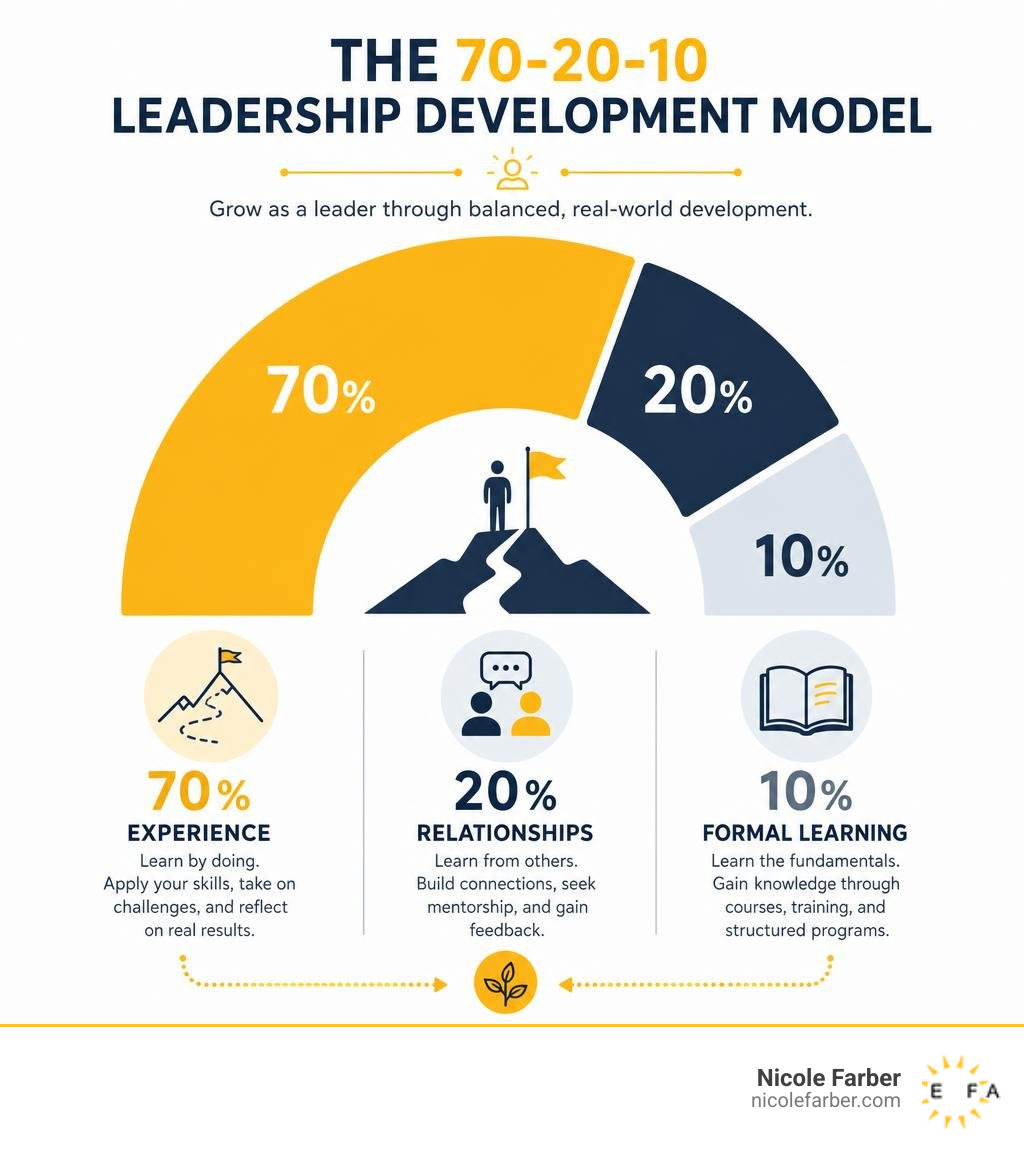
- Commit to continuous learning – Use the 70-20-10 model: 70% experience, 20% relationships, 10% formal training.
- Seek honest feedback – Use 360-degree reviews and regular check-ins.
- Follow a structured improvement plan – Focus on one area at a time over 90-day cycles.
Leadership is not a personality trait you are born with. It is a set of skills you build — deliberately, over time.
And yet, most people try to improve the wrong way. They read a book, attend a workshop, and walk away feeling inspired. Three months later? Nothing has changed.
The numbers tell a sobering story. Only 19% of leaders can effectively reduce employee burnout. Just 26% have mastered developing middle performers into high achievers. And only 27% of employees say their leader consistently encourages and recognizes their ideas.
These are not small gaps. They are the difference between a team that thrives and one that quietly disengages.
The good news? Every one of those gaps is closable. Leadership skills — from emotional intelligence to strategic thinking to conflict resolution — can be learned, practiced, and embedded as lasting habits. The World Economic Forum’s Future of Jobs Survey 2025 even projects emotional intelligence among the most critical skills required in the business world going forward.
Great leadership has always been about one thing: influencing and motivating people to come along on a journey with you. That was true of history’s most celebrated leaders. It is just as true for a law firm partner in Philadelphia trying to build a high-performing team, or a rising manager in Wilkes-Barre navigating rapid change.
I’m Nicole Farber, CEO of ENX2 Legal Marketing, with over 15 years of experience guiding law firms and businesses toward growth — and a passionate speaker on how to improve leadership skills from the inside out. I’ve seen how leaders who invest in themselves create ripple effects that transform their entire organizations.
Improve leadership skills word list:
The Science of Growth: Why You Must Proactively Improve Leadership Skills
To understand how to become a great leader, we must first look at how human beings acquire expertise. Many people believe that simply occupying a managerial role for a decade makes them an expert leader. However, performance psychology tells us otherwise. As highlighted in How to Get Better at Anything: Influence, Leadership, and More | Psychology Today , experience and expertise are not the same thing. Experience accrues automatically over time, whereas expertise must be built through deliberate, focused effort.
Once we reach an average level of performance in our roles, we tend to switch our focus from active skill development to mere task completion. To break out of this plateau, we must understand How to Become an Effective Leader. This requires moving past generic advice and committing to structured practice. When we target specific weaknesses rather than repeating what we are already good at, we unlock genuine growth.
Self-Leadership: Mastering the Inner Game of Influence
Before we can lead others, we must be able to lead ourselves. Self-leadership is the foundation of all external authority. It encompasses our self-management habits, our emotional responses, and our capacity to learn from our environment.

When we look at Leadership Skills Development | Mindtools , we see that core competencies like emotional intelligence and learning agility are the building blocks that make any leadership style effective. To truly Develop Your Leadership, we must start by mastering our internal habits.
1. Cultivate Deep Self-Awareness to Improve Leadership Skills
Self-awareness is the first step toward growth. We cannot correct a blind spot we do not know exists. To build self-awareness, we can start by conducting a personal SWOT (Strengths, Weaknesses, Opportunities, Threats) analysis.
We must also reflect on how our background and social identity shape our perspective. When we understand our natural tendencies, we can learn How to Be a Good Leader who remains objective under pressure.
- Actionable Step: Write down your core strengths and weaknesses. Ask three trusted colleagues for their honest feedback on your blind spots, and compare their answers with your self-assessment.
2. Develop Emotional Intelligence (EQ)
Emotional intelligence is not a soft skill; it is one of the strongest predictors of professional success. EQ is made up of four key pillars: self-awareness, self-regulation, empathy, and social skills.
When we improve our EQ, we learn to pause before reacting. This allows us to handle high-pressure situations in the workplace with poise and clarity.
- Actionable Step: When you feel triggered during a difficult conversation, pause for three seconds. Name the emotion silently to yourself before choosing how to respond.
3. Commit to Learning Agility
Learning agility is our ability to adapt, learn from mistakes, and apply those lessons to new situations. Agile leaders do not shy away from “heat experiences”—highly challenging assignments that push them out of their comfort zones. Instead, they embrace these moments as the fastest path to growth.
- Actionable Step: Keep a decision journal. Document your major decisions, the expected outcomes, and the actual results. Review this journal quarterly to identify patterns in your judgment.
4. Practice Ruthless Time and Energy Management
We cannot lead effectively if we are constantly operating in a state of exhaustion. Great leaders protect their focus time through structured boundaries and time-blocking. By prioritizing high-leverage tasks, we ensure that our energy is focused where it can make the greatest impact.
- Actionable Step: Block out the first 90 minutes of your workday for deep, strategic thinking. Turn off notifications and avoid checking emails during this period.
Leading Individuals: Coaching, Empathy, and Accountability
According to Gallup research, managers account for 70% of the variance in team engagement. This means our daily interactions with our team members directly dictate their productivity and retention.
To bridge the gap between leadership perception and reality, we must move away from a command-and-control approach. Instead, we should adopt a coaching mindset, as detailed in How to Develop Leadership Skills: A Practical Guide for Leaders at Eve . This shift is essential for anyone learning How to Become a Good Leader at Work.
5. Master Active Listening to Improve Leadership Skills
Active listening is more than just hearing words; it is about understanding the speaker’s intent and emotion. When we listen actively, we build deep trust and psychological safety.
This practice is central to Being a Good Leader in the Workplace. It ensures that our team members feel genuinely valued and respected.
- Actionable Step: In your next one-on-one meeting, spend the first five minutes in pure listening mode. Do not interrupt, offer advice, or check your phone. Simply listen and paraphrase their points to ensure alignment.
6. Deliver Constructive, Actionable Feedback
Feedback should never be a once-a-year event during annual performance reviews. To cultivate a growth mindset, we must establish continuous feedback loops.
Our feedback must be specific, objective, and focused on behaviors rather than personal traits. This approach is key to the strategies in our Good Leader Workplace Guide.
- Actionable Step: Use the “Situation-Behavior-Impact” model. Instead of saying, “Your presentation was messy,” say, “During yesterday’s client meeting (Situation), you did not have the latest project metrics ready (Behavior), which made the client hesitate to sign the contract (Impact).”
7. Delegate with Autonomy and Clear Expectations
Poor delegation is a major bottleneck in growing organizations. Effective delegation is not about offloading work we do not want to do; it is about empowering others to grow.
When we delegate, we must define the clear outcomes we need while giving our team members the autonomy to decide how to achieve them. This process is a core part of our Beginners Guide to Leading Your Team.
- Actionable Step: When assigning a task, write down the expected outcome, the quality standards, and the deadline. Ask the team member to repeat their understanding of the assignment back to you to ensure complete alignment.
8. Coach Middle Performers into High Achievers
Only 26% of leaders have mastered the art of developing middle performers into high achievers. It is easy to focus our energy on our top stars or struggling employees, but the middle tier is where the bulk of our team resides.
By investing in their career development, we can unlock massive productivity gains. This focus is what takes a team From Good to Great: How to Lead Your Team to Peak Performance.
- Actionable Step: Identify one middle performer on your team. Schedule a dedicated conversation to discuss their long-term career goals, and co-create a plan to help them reach the next level.
Leading Teams: Fostering Collaboration and Psychological Safety
A group of talented individuals does not automatically make a great team. To achieve peak performance, we must build a cohesive unit that communicates openly and collaborates seamlessly.

Whether you are leading a legal team in Philadelphia, a marketing group in Wilkes-Barre, or a creative agency in New Orleans, the principles of team cohesion remain the same. Our Become Good Leader Team Guide highlights that team performance relies heavily on trust and clear communication.
9. Build Psychological Safety and Trust
Psychological safety is the belief that one will not be punished or humiliated for speaking up with ideas, questions, concerns, or mistakes. When trust is high, team members are more likely to take calculated risks and innovate. When trust is low, critical information gets hidden, which can lead to costly mistakes.
- Actionable Step: Build psychological safety by sharing a personal mistake or area of growth during your next team meeting. This normalizes vulnerability and encourages others to do the same.
10. Resolve Conflicts Using the FIRE Framework
Conflict is inevitable in any high-performing team. However, unresolved conflict can quickly lead to toxic dynamics.
To handle disagreements constructively, we can use the FIRE framework:
- Facts: State the objective, verifiable facts of the situation.
- Interpretation: Share your interpretation of those facts.
- Reaction: Explain your emotional or professional reaction.
- End Result: Articulate the desired positive outcome.
- Actionable Step: When a conflict arises, schedule a mediation session within 24 hours. Guide both parties to state only the objective facts before discussing their interpretations or reactions.
11. Align Team Strengths Using Structured Frameworks
Rather than trying to turn every team member into a well-rounded generalist, great leaders build well-rounded teams. By mapping our team’s natural talents across execution, influence, relationship-building, and strategic thinking domains, we can assign tasks that align with each person’s strengths.
- Actionable Step: Create a team strengths grid. Map out each member’s top three talents, and use this grid when assigning roles for your next major project.
Strategic and Organizational Leadership: Navigating Change and Vision
As we step into broader organizational roles, our focus must shift from daily operations to long-term strategy. This transition requires us to balance different leadership styles to navigate complex business environments.
| Leadership Style | Core Focus | Ideal Context | Pros | Cons |
|---|---|---|---|---|
| Transformational | Vision, inspiration, and organizational evolution | Periods of rapid change or stagnation | High engagement, fosters innovation | Can neglect daily operations |
| Servant | Supporting, coaching, and developing team members | Long-term talent retention and culture building | High trust, low turnover | Can slow down urgent decision-making |
| Situational | Adapting style based on team maturity and business stage | Dynamic, industries | High flexibility, targeted support | Requires high emotional intelligence |
To understand how these styles function in real-world environments, we can look at How to Improve Leadership Skills in the Workplace . Developing these capabilities is a key focus of our The Complete Guide to Leadership Development.
12. Formulate and Communicate a Clear Strategic Vision
A compelling vision is the north star that guides our team through uncertainty. To lead effectively, we must craft a clear vision statement and align our daily goals with that broader purpose.
This alignment is a central theme in our Good Leader Complete Guide. It ensures that everyone understands how their individual work contributes to the organization’s success.
- Actionable Step: Review your team’s current quarterly goals. Ensure that every goal is directly connected to a larger strategic objective, and communicate this connection clearly to your team.
13. Lead Through Organizational Change with Introspection
Change is often met with resistance. To lead successful change initiatives, we must communicate accurately and lead with introspection.
By acknowledging the challenges of transition while maintaining a clear path forward, we can help our teams navigate uncertainty with confidence.
- Actionable Step: When introducing a major organizational change, explain the “why” behind the decision. Address potential concerns directly, and outline the specific steps the team will take to transition smoothly.
14. Expand Your Professional Network and Seek Mentorship
No leader is an island. To continue growing, we must actively build relationships with mentors, coaches, and peers. Engaging with local leadership networks in areas like Philadelphia, Wilkes-Barre, Luzerne County, New Orleans, and Antigua Guatemala can provide invaluable perspectives and support.
- Actionable Step: Identify one leader outside your immediate department or industry whose leadership style you admire. Reach out to invite them for a brief coffee chat to discuss their career journey.
15. Implement a Structured 90-Day Improvement Protocol
To turn leadership theory into permanent habits, we must focus on sequential, deliberate practice. As detailed in Leadership Improvement: What Actually Works – Leaders ADAPT , trying to change too many behaviors at once often leads to failure.
Instead, we can implement a structured 90-day protocol:
- Days 1–7 (Diagnose): Identify a single bottleneck in your leadership style.
- Days 8–30 (Design): Establish concrete, daily behavioral changes.
- Days 31–60 (Practice): Practice these behaviors consistently and seek feedback.
- Days 61–90 (Embed): Evaluate your progress and integrate the habits permanently.
- Actionable Step: Select one specific leadership skill, such as active listening or delegation, and commit to practicing it daily using this 90-day framework.
Frequently Asked Questions about Leadership Development
What is the difference between a leader and a manager?
While the terms are often used interchangeably, their core focus is different. Managers focus primarily on processes, operational execution, and maintaining order. Leaders focus on setting strategic direction, shaping organizational culture, and inspiring people to work toward a shared vision. Both roles are essential for organizational success.
How long does it take to see measurable leadership improvement?
The timeline for improvement depends on the complexity of the skill. According to Leadership Skills That Can Be Improved: A Development Guide | Quarterdeck , simpler skills like written communication can show noticeable improvement within 1 to 3 months of focused practice. More complex skills, such as emotional intelligence or strategic thinking, typically require 6 to 12 months of consistent practice and feedback to develop fully.
Can emotional intelligence actually be developed?
Yes. Unlike cognitive intelligence (IQ), which remains relatively stable throughout adulthood, emotional intelligence (EQ) can be developed throughout our lives. Through self-reflection, deliberate practice, and continuous feedback, we can strengthen our self-regulation, empathy, and social skills over time.
Conclusion
Improving your leadership skills is a lifelong journey of self-discovery, practice, and growth. By shifting from passive experience to deliberate practice, you can build the trust, clarity, and vision needed to guide your team through any challenge.
At Nicole Farber, we believe in the power of faith-driven, authentic leadership. From my personal journey as a single mother and business leader in the legal marketing industry, we are dedicated to helping entrepreneurs and law firms in Philadelphia, Wilkes-Barre, Luzerne County, New Orleans, and Antigua Guatemala unlock their full potential.
If you are ready to take your leadership to the next level, Explore Nicole Farber’s Leadership Insights to discover resources, coaching, and strategies designed to help you lead with confidence and purpose.