The Good Leader’s DNA: Characteristics That Drive Success
- Leadership
- In the News
- November 3, 2025
Why Understanding Good Leadership Matters More Than Ever

What is being a good leader involves inspiring others, building trust, and creating an environment where people can thrive while driving meaningful results. The core elements include trust and integrity, a clear vision, empathy, communication, empowerment, and a commitment to continuous growth.
The Great Resignation changed everything. Millions of workers left their jobs, with poor leadership often being the breaking point. Today’s employees, especially in competitive markets like Philadelphia and New Orleans, won’t tolerate bosses who micromanage, ignore well-being, or fail to provide growth opportunities.
Good leadership isn’t a natural gift; it’s a learnable skill that can transform your team and business. Whether you’re running a law firm in Wilkes-Barre or managing a growing practice, the principles remain the same.
The cost of bad leadership is crushing, with studies showing 74% of employees experience burnout due to poor management. In contrast, great leaders create higher profits, better customer satisfaction, and teams that want to show up each day.
As Nicole Farber, CEO of ENX2 Legal Marketing, I’ve learned what is being a good leader through 15 years of experience. My approach focuses on leading from within first, then empowering others to become their best selves at work.
The High Cost of Poor Leadership and Why It Matters
Poor leadership isn’t just an HR problem—it’s bleeding your business dry. Every day with ineffective leadership costs you money, talent, and opportunities. I’ve seen brilliant teams fall apart because someone at the top couldn’t grasp what is being a good leader actually means.
The Great Resignation was a massive “we’re done” moment. According to Pew Research, most workers who quit in 2021 cited low pay, no advancement opportunities, and feeling disrespected. That last one is a direct failure of leadership.
When employees don’t feel valued, they walk. The pandemic just gave them the push to leave toxic situations. A staggering 74% of employees are experiencing burnout, largely due to unclear expectations and a lack of support. A burned-out workforce makes more mistakes, is less innovative, and stops caring about quality.
The ripple effects are brutal: productivity drops, customer service suffers, and innovation dies. But here’s where it gets exciting: good leadership flips this entire script.
When leaders understand what is being a good leader truly involves, profits increase because engaged teams work smarter. Customer satisfaction soars because happy employees create happy customers. And employee retention becomes your secret weapon, saving you the immense cost of replacing talent.
In competitive markets like Philadelphia or relationship-focused cities like New Orleans, a culture driven by effective leadership isn’t optional. It’s what separates thriving businesses from those constantly struggling. The choice is yours: invest in becoming the leader your team deserves, or keep paying the hidden costs of poor leadership.
The Core Qualities: What is Being a Good Leader at Heart?
So, what is being a good leader at its core? It’s about embodying fundamental qualities that create fertile ground for collective success. It’s not just what you do, but who you are.

Building a Foundation of Trust and Integrity
Trust is everything. Without it, you’re building on quicksand. It’s built on a foundation of credibility—when you say you’ll do something, you do it. This is what transforms a manager into someone people want to follow. Authenticity and honesty are crucial; people have an incredible radar for fake behavior. You don’t need to be perfect, but you do need to be real. Owning your failures and being transparent about challenges will earn you more respect than trying to cover them up.
This extends to accountability. When you model ownership by saying “I should have communicated better” instead of “You didn’t understand,” you create a culture where everyone feels safe to be human. Humility means recognizing that the best ideas can come from anywhere, and respect shows up in small moments—how you listen, how you respond to disagreement. Gallup found that employees who don’t trust their leaders are more likely to leave. When you lead by example, your team feels safe to innovate and bring their whole selves to work.
Driving Vision and Action with Passion
Trust gets people to listen, but vision gets them to move. A clear, compelling vision is your team’s North Star, turning individual tasks into a shared mission. Whether you’re leading a law firm in Wilkes-Barre or a non-profit in Antigua Guatemala, your vision must answer the “why” behind the “what.”
Your passion and enthusiasm fuel this vision. Genuine belief in your mission is contagious. This must be paired with decisiveness and courage. Teams need leaders who can make tough calls with a bias for action. Vision without execution is just daydreaming. Great leaders inspire others by inviting them to be part of something bigger than themselves.
Fostering Growth Through Empathy and Communication
All the vision in the world won’t matter if you can’t connect with your people. What is being a good leader without the ability to understand and support your team?

Active listening is the most underrated leadership skill. It’s not just waiting to talk; it’s truly hearing what is—and isn’t—being said. Empathy and compassion don’t make you soft; they make you effective. Understanding your team members as whole people helps you lead them better. This requires relationship building—knowing what motivates them and what their goals are.
Effective communication is a two-way street, involving transparency, constructive feedback, and positive encouragement. This creates an environment of collaboration where people feel safe to share ideas and support each other’s growth. As I discuss in Being a Good Leader in the Workplace, building strong teams is about nurturing an environment where people thrive. When people feel understood and supported, they become partners in your shared success.
The Leader’s Mindset: Empowering Teams and Embracing Growth
True leadership requires a fundamental mindset shift. What is being a good leader isn’t about being the smartest person in the room; it’s about creating an environment where others can flourish while you commit to your own continuous growth. Your success is measured by what your team achieves together.
What is being a good leader in practice? Empowering your people.
Empowerment is the heart of effective leadership. It’s not just delegating tasks; it’s entrusting your team with ownership of outcomes. The servant leadership philosophy flips the traditional hierarchy: instead of your team serving you, you serve them by removing obstacles and providing resources.
Proper delegation is an art. It involves matching challenging opportunities with team members’ growth goals while giving them the autonomy to find their own path. This requires creating psychological safety, where your team knows they can take calculated risks without fear of punishment. In my experience leading teams from Philadelphia to New Orleans, this safety net is what separates good teams from exceptional ones.
Providing resources means ensuring people have the training, mentorship, and information they need. When you create accountability through empowerment, your team holds themselves to high standards because they own the results. These effective business leadership strategies aren’t just feel-good approaches—they drive real results through faster innovation and more creative problem-solving.
What is being a good leader to yourself? Continuous learning and self-awareness.
You can’t lead others effectively if you’re not willing to lead yourself first. This requires the same intentionality you bring to developing your team.

Self-awareness is the foundation. It means honestly assessing your strengths and blind spots and understanding how your emotions affect others. Continuous learning is non-negotiable. Whether you’re leading in Wilkes-Barre or Luzerne County, what worked five years ago might not work today. Stay curious and seek out perspectives that challenge your thinking.
Adaptability and resilience are crucial. How you bounce back from setbacks sets the tone for your organization. View obstacles as learning opportunities. Understanding your strengths allows you to lead authentically and build teams that complement your abilities. Most importantly, learning from failure is one of the greatest teachers. When your team sees you owning your mistakes, it gives them permission to do the same.
Our guide on how to become an effective leader dives deeper, but the key is that leadership is a lifelong journey. The best leaders never stop growing themselves.
Leadership vs. Management: Understanding the Key Differences
What is being a good leader isn’t the same as being a good manager. I see this confusion often, from law firms in Philadelphia to businesses in New Orleans. The terms are related, but not identical.
Management is about doing things right. It’s planning, organizing, and ensuring projects finish on time and on budget. Excellent managers, like those I’ve seen running practices in Wilkes-Barre, can run operations like clockwork, ensuring efficiency and stability.
Leadership, on the other hand, is about doing the right things. It’s setting direction, painting a picture of what’s possible, and inspiring people to build something better. Leaders ask, “Are we measuring the right things?”
Both roles are essential. An organization without strong management is a ship with a brilliant captain but no one in the engine room. An organization with great management but weak leadership is a highly efficient crew sailing in circles.
Successful businesses, whether in Luzerne County or new markets, have leaders who can move between both roles. Sometimes you must inspire with a vision; other times, you must organize the practical steps. The key difference is focus:
| Feature | Leadership (Why & What) | Management (How & When) |
|---|---|---|
| Focus | Vision, inspiration, change, long-term strategy | Operations, efficiency, control, short-term goals |
| Approach | Inspires trust, motivates, empowers, develops people | Organizes tasks, allocates resources, monitors performance |
| Goal | Drives innovation, shapes culture, creates future | Maintains stability, solves problems, achieves objectives |
| Relationship | Coaches, mentors, influences | Directs, supervises, delegates |
| Risk | Accepts calculated risk, encourages experimentation | Minimizes risk, ensures predictability |
The goal isn’t to choose one over the other but to develop both capabilities and know when to use each. This creates thriving organizations where people feel both inspired by the journey and confident in the execution.
Frequently Asked Questions about Being a Good Leader
As we explore what is being a good leader, I often hear the same questions from entrepreneurs in markets from Philadelphia to New Orleans. Let’s explore the most common ones.
How can I develop my leadership qualities?
Leadership development is like learning an instrument—it requires consistent practice. Here are key strategies:
- Learn continuously: Read books, listen to podcasts, and stay curious about how other industries solve problems.
- Seek feedback: This is pure gold for your development. Actively ask your team, peers, and mentors for their perspective on your strengths and growth areas.
- Find a mentor (and be one): Seek guidance from a leader you admire, and teach others to clarify your own understanding.
- Take on challenges: Volunteer for difficult projects to stretch your comfort zone and build resilience.
- Consider formal training: Our leadership development seminars offer a structured environment to practice new skills.
What do followers need most from their leaders?
Followers aren’t looking for perfection. They need four fundamental things to feel secure and motivated:
- Trust: They need to believe you’ll do what you say, have their back, and are competent to lead them.
- Compassion: They need to know you see them as whole people, not just productivity machines. Showing genuine care for their well-being, whether in Wilkes-Barre or remotely, builds loyalty.
- Stability: They look to you to be a calm, consistent presence, providing steady leadership even when things feel chaotic.
- Hope: According to Gallup, people need to believe in a better future. When you paint a compelling picture of where you’re headed, you fuel the motivation to get through tough times.
Why is authenticity so important for a leader?
Early in my career, I thought I needed to project an image of perfection. That approach was exhausting and didn’t inspire anyone. Authenticity is crucial because it:
- Builds trust: People can sense when you’re being real. When your words match your actions, people know what to expect.
- Creates genuine connections: Being human with your team—admitting mistakes, celebrating wins authentically—allows for real connection.
- Fosters a safe culture: When you admit uncertainty or ask for help, you create psychological safety where innovation and honest communication can thrive.
As a single mother building a business, I’ve learned my unique journey makes me a more effective leader. Our guidance for women in leadership explores this further. What is being a good leader isn’t about perfection; it’s about being genuinely committed to serving your team and growing alongside them, whether in Antigua Guatemala or New Orleans.
Conclusion
So, what is being a good leader truly about? It’s not about having all the answers. It’s about showing up authentically, caring deeply about your people, and committing to your own continuous growth.
Leadership is a journey, not a destination. I’ve experienced its challenges and triumphs as a single mother building a business and leading teams from Philadelphia to New Orleans. The tough decisions and moments of doubt are all part of the path.
Great leaders are made, not born. They are forged through intentional effort and a genuine desire to lift others up. Their success is measured by how they empower others to reach their potential.
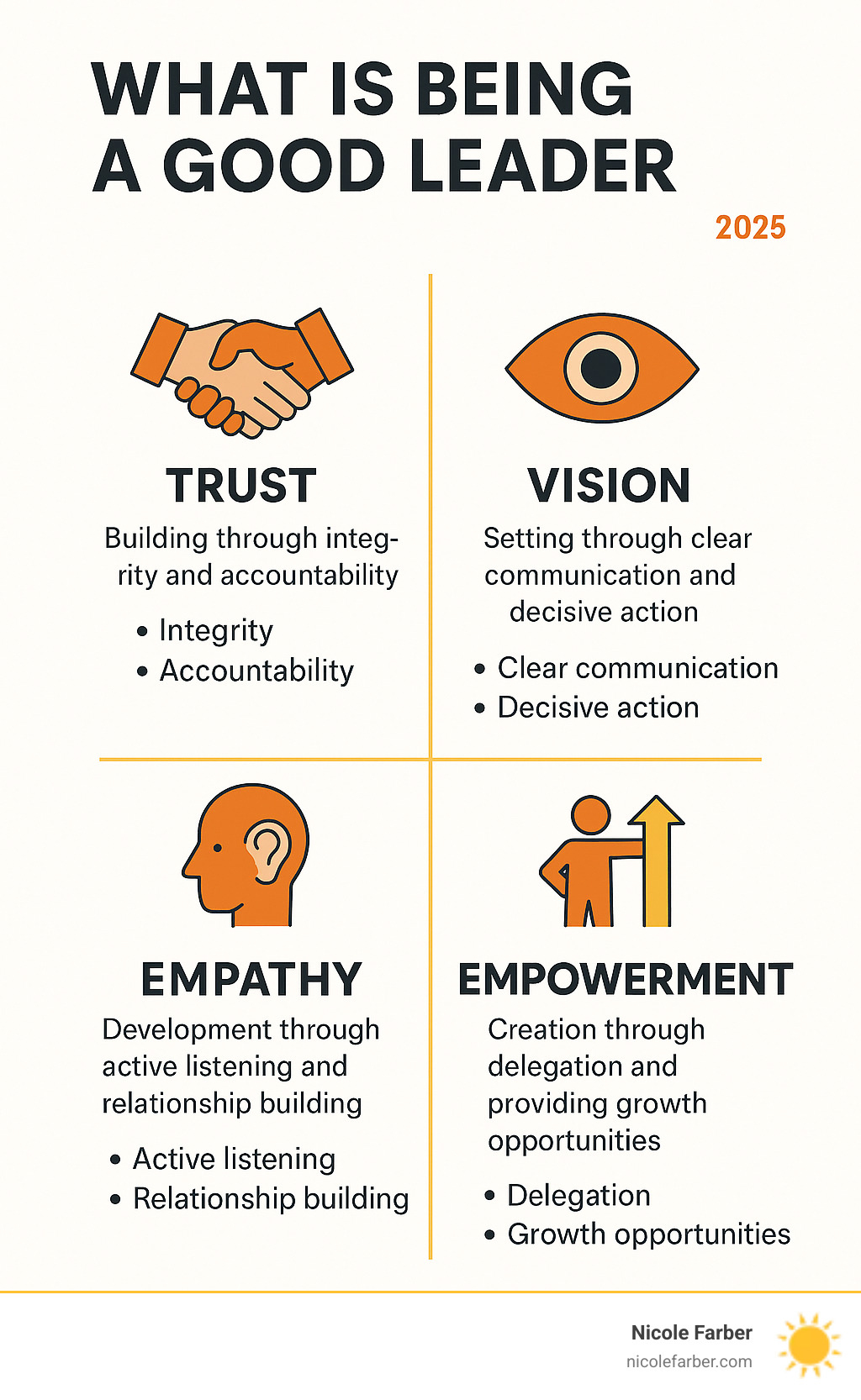
The key takeaways—building trust through integrity, inspiring action with vision, fostering growth through empathy, and empowering your people—are practical tools that work anywhere, from a law firm in Wilkes-Barre to a community initiative in Antigua Guatemala.
My approach to leadership is rooted in real-life experience and a faith-driven commitment to serving others. I believe every person has leadership potential. True leadership starts from within, cultivated through grit, grace, and a belief in human potential. When you lead from a place of authenticity and service, you inspire people to become their best selves.
This commitment to good leadership creates healthier workplaces and more engaged teams. Ready to take the next step? Explore more insights on our leadership blog for practical strategies to help you become the leader you were meant to be.