Are Your Habits Holding You Back? Try These Self Leadership Strategies
- Leadership
- Word of the Day
- October 9, 2026
Are Your Habits Holding You Back? Try These Self Leadership Strategies
Build Better Habits With Self Leadership Strategies

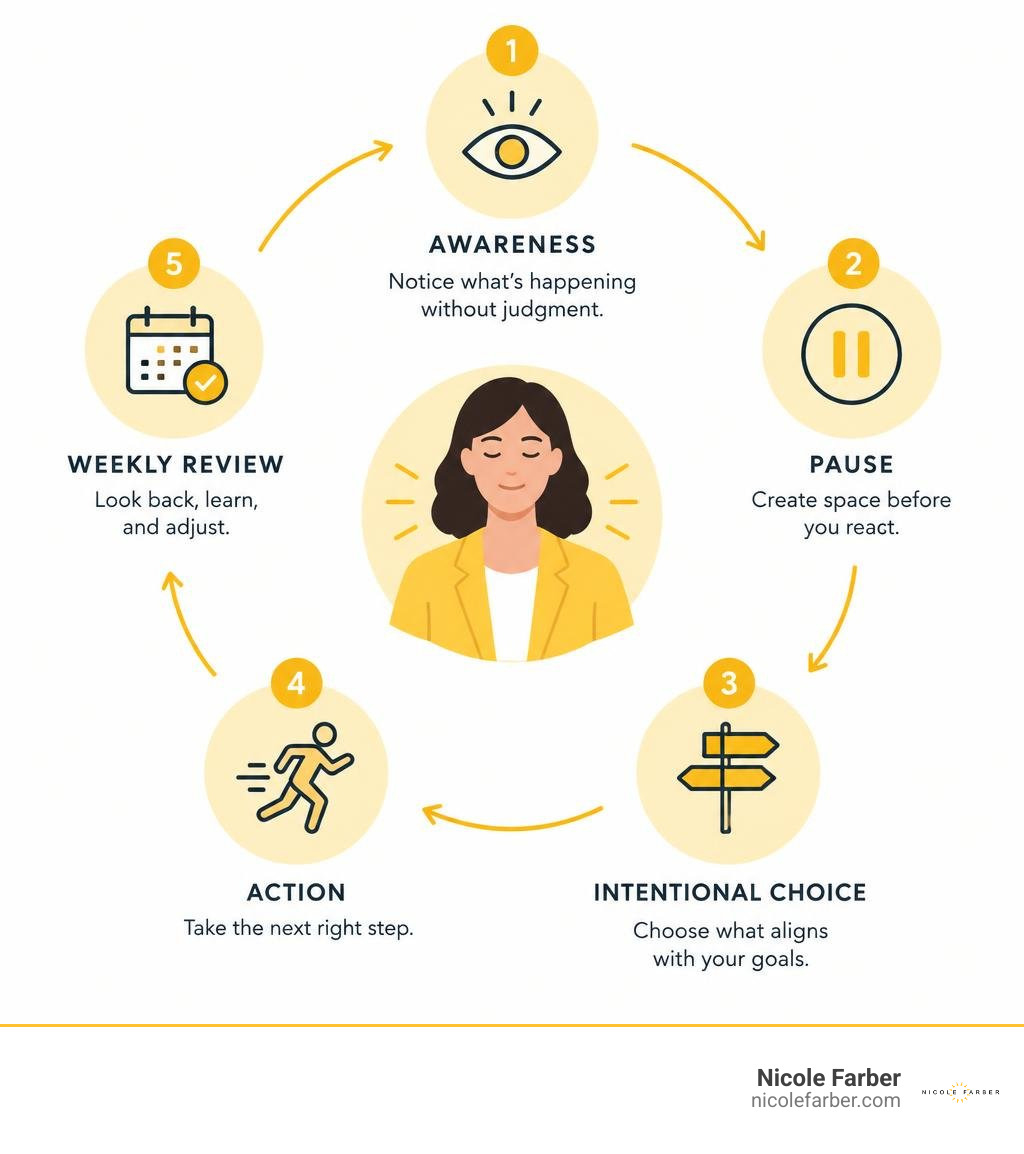
Self leadership strategies help you notice unhelpful habits, pause before reacting, and choose actions that match your goals. Start with three simple practices:
- Track one pattern for a week, such as avoiding outreach, checking email too often, or working late.
- Name the trigger behind it: stress, fear of rejection, fatigue, or uncertainty.
- Make an if-then plan: “If I feel tempted to delay a client-growth task, then I will work on it for 10 minutes before opening email.”
This is not about forcing yourself to be productive every minute. It is about leading your thoughts, emotions, and behavior with more awareness and intention. For a busy law firm partner, that can mean protecting time for business development, responding calmly under pressure, and making decisions based on long-term priorities instead of the loudest demand of the day.
Research consistently links self-leadership with stronger wellbeing, resilience, and performance, especially in complex and creative work. The first step is simple: stop treating every habit as a fixed trait. A habit is a pattern, and patterns can be observed, tested, and changed.
I am Nicole Farber, a business owner and leadership speaker with more than 15 years of experience helping organizations grow through change. My work with self leadership strategies focuses on the practical inner habits that help people lead with clarity, consistency, and confidence.
Simple self leadership strategies glossary:
What Is Self-Leadership and How Does It Differ from Self-Management?
Many professionals confuse managing their schedules with leading themselves. Self-management is tactical. It answers the question, “How do I complete this task efficiently?” It involves time blocks, to-do lists, and inbox zero. Self-leadership, by contrast, asks, “Why am I doing this, and who do I need to become to achieve it?” It is the conscious practice of directing your thoughts, emotions, and behaviors toward your deeply held convictions.
Understanding what is leadership begins on the inside. While self-management keeps you on time, self-leadership keeps you on purpose. When we operate solely on self-management, we risk executing meaningless tasks with incredible precision. Self-leadership provides the internal drive, moral compass, and autonomy required to navigate unpredictable terrain.
| Dimension | Tactical Self-Management | Purpose-Driven Self-Leadership |
|---|---|---|
| Primary Focus | Task execution, checklists, and calendar efficiency | Value alignment, personal vision, and behavioral integrity |
| Core Question | “How do I get this done on time?” | “Why does this matter, and what response is required?” |
| Driver | External deadlines, reminders, and compliance | Internal standards, intrinsic motivation, and purpose |
| Handling Failure | Rescheduling tasks or working longer hours | Reflecting on root causes, reframing beliefs, and learning |
| Scope of Impact | Short-term workflow and immediate productivity | Long-term resilience, identity growth, and sustainable impact |
As highlighted in positive psychology research on self-leadership, true autonomy occurs when our actions are internally regulated rather than dictated entirely by external pressures. Whether you are running a practice in Philadelphia or leading a creative agency in New Orleans, leading yourself is the non-negotiable foundation for guiding others.
The Core Pillars of Leading Yourself
Self-leadership rests upon three foundational pillars that work in tandem:
- Self-Awareness: The capacity to recognize your internal states, blind spots, emotional triggers, and core values in real time.
- Self-Regulation: The ability to manage your energy, disrupt automatic behavioral patterns, and choose deliberate responses over emotional reactions.
- Self-Accountability: Taking radical ownership of your outcomes without defaulting to external blame or passive excuses.
When you develop these three competencies, you build an internal compass that keeps you grounded amidst market volatility and daily chaos. Pairing these pillars with practical leadership skills allows you to bridge the gap between ambitious intentions and reliable daily habits.
The Impact on Wellbeing, Resilience, and Performance
The data supporting self-leadership is compelling. Research indicates that individuals who intentionally cultivate self-leadership demonstrate 70% higher wellbeing and 22% higher organizational citizenship behaviors. Because self-leaders regulate their cognitive and emotional responses, they experience lower rates of chronic burnout and manage acute stress with far greater agility.
Furthermore, autonomous, self-leading professionals are consistently more productive, with the most dramatic performance gains occurring in complex, adaptive, and creative roles. By viewing difficulties as data rather than identity verdicts, self-leaders utilize proven personal growth and resilience frameworks to thrive through sustained industry disruptions.
Core Self Leadership Strategies for Mindset and Habit Mastery
Executing your daily priorities requires more than raw willpower; it requires constructive thought habits, behavioral cue management, and natural reward systems.

When we rely strictly on willpower, mental fatigue depletes our resolve by mid-afternoon. By designing environments with clear visual prompts and pairing challenging responsibilities with intrinsic satisfaction, we transform discipline from a painful chore into an automated routine.
Evidence-Based Self Leadership Strategies for Daily Execution
One of the most rigorously tested frameworks for habit transformation is the WOOP method (Wish, Outcome, Obstacle, Plan), developed by psychologist Gabriele Oettingen. While pure positive thinking often reduces motivation by tricking the brain into feeling as though the goal has already been realized, mental contrasting bridges aspirations with practical reality.
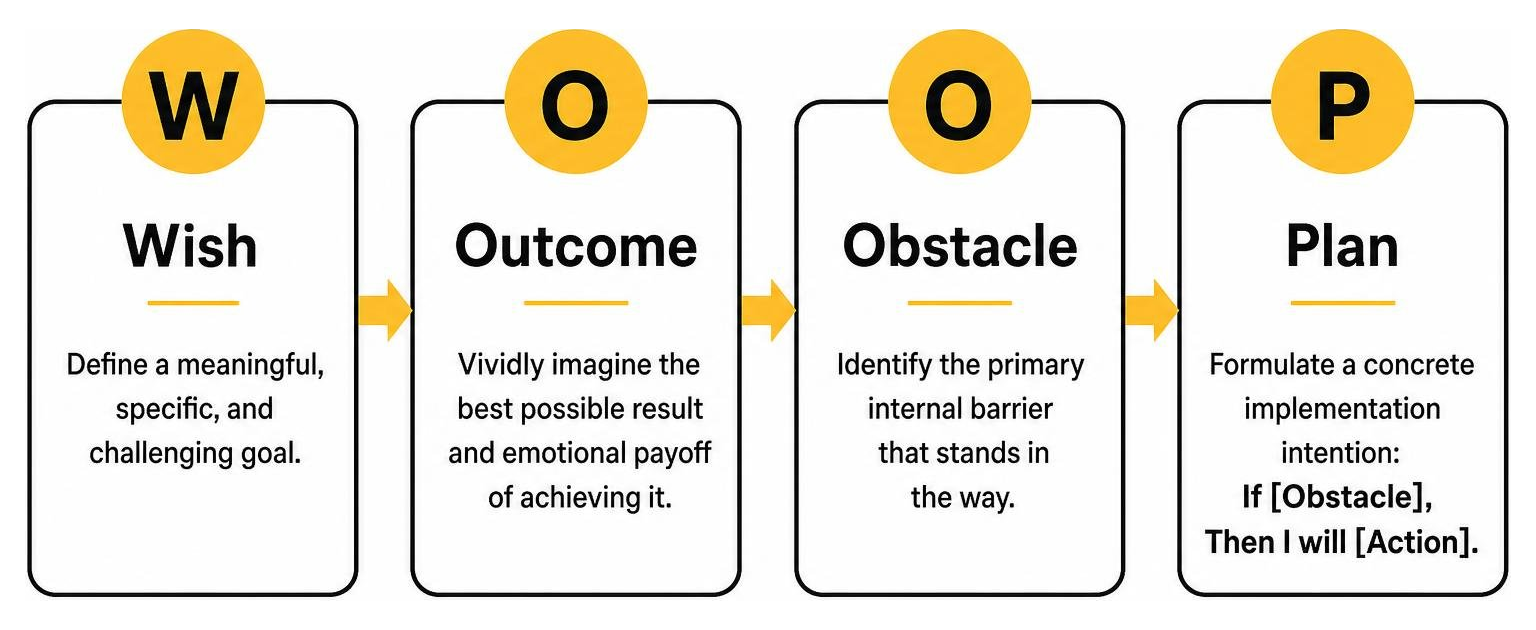
The WOOP framework operates through four deliberate steps:
- Wish: Define a meaningful, specific, and challenging goal.
- Outcome: Vividly imagine the best possible result and emotional payoff of achieving it.
- Obstacle: Identify the primary internal barrier (such as procrastination, fear of failure, or fatigue) that stands in the way.
- Plan: Formulate a concrete implementation intention using an “If [Obstacle], Then I will [Action]” structure.
Across more than 20 field studies involving thousands of participants, as documented in evidence-based WOOP goal-setting studies, this simple strategy produced substantial, long-term improvements in goal attainment compared to conventional visualization.
Context-Specific Self Leadership Strategies for High-Stakes Environments
Self-direction adapts to whatever arena you step into:
- Job Interviews: High-stakes evaluations trigger performance anxiety. Use the STAR method (Situation, Task, Action, Result) paired with physiological grounding to communicate with structured confidence rather than rambling under pressure.
- Entrepreneurship & Risk: Business founders navigating uncertain cash flows across Luzerne County or international hubs like Antigua Guatemala must separate temporary market setbacks from personal capability, conducting weekly strategic pivots rather than emotionally reacting.
- Creative Work: Protect deep-work blocks from administrative interruptions by establishing pre-performance rituals, allowing you to master how to become a good leader at work through consistent, focused output.
The Neuroscience of Inner Alignment: Metacognition and Emotional Intelligence
Metacognition is the practice of “thinking about your own thinking.” It allows us to step outside our immediate emotional currents and objectively observe our cognitive processes.
Activating the Stimulus-Response Gap
Between every external stimulus and your ultimate response lies a brief neurological window. In that space lies your freedom to choose. When you master self-leadership, you learn to widen that gap rather than operating on impulsive autopilot.
To activate this window under pressure, we use the cognitive ABCD Framework:
- A (Activating Event): An unexpected deadline change or difficult client interaction occurs.
- B (Belief): Your immediate internal narrative surfaces (e.g., “We are going to lose this account, and it’s my fault”).
- C (Consequence): The physiological sensation and emotional reaction arise (e.g., elevated heart rate, panic, defensive posturing).
- D (Disputing the Belief): You pause, examine the evidence, dispute the catastrophic thought, and choose a rational, constructive next step.
Expanding Self-Knowledge and Emotional Self-Awareness
Despite its critical importance, large-scale research by organizational psychologist Dr. Tasha Eurich reveals that only 10% to 15% of individuals actually possess true self-awareness, as explored in self-awareness research by Tasha Eurich. Most people live in an echo chamber of their own assumptions.
Expanding your self-knowledge requires objective diagnostics and regular reflection. Utilizing tools like CliftonStrengths and the VIA Character Strengths assessment helps you differentiate between basic competence (tasks you can do) and energizing strengths (tasks that fuel your focus). Discovering these distinctions is an essential step as you learn how to become an effective leader who operates from authentic capability rather than exhausting imitation.
Overcoming Obstacles, Thinking Traps, and Limiting Beliefs
Even seasoned professionals fall prey to common cognitive distortions: catastrophizing minor errors, all-or-nothing thinking, and impostor syndrome. When unaddressed, these mental traps derail consistent execution and drain your daily momentum.
Dismantling Subconscious Resistance
When you encounter internal resistance before starting a major initiative, pause and ask yourself a crucial diagnostic question: “Is this a genuine threat to my wellbeing, or is it simply a familiar feeling of discomfort?”
The human brain is biologically wired to conserve energy and avoid social vulnerability. Discomfort is often misinterpreted by the nervous system as physical danger. By replacing self-criticism with self-compassion, you lower your cortisol levels and build the grit necessary to step outside your comfort zone. Reviewing proven emerging leader growth strategies can give you practical ways to dismantle these mental roadblocks systematically.
Reframing Limiting Internal Narratives
To dismantle persistent limiting beliefs, conduct a regular Belief Audit:
- Write down the limiting statement (e.g., “I am not analytical enough to handle complex firm financials”).
- Ask: “What concrete, objective evidence contradicts this assumption?”
- Draft an empowering, factual counter-narrative (e.g., “I have successfully managed multi-tiered budgets before by asking targeted questions and engaging expert support”).
- Anchor this new narrative into daily practice through intentional behavioral evidence gathering.
Building a Sustainable Self-Leadership Routine from Youth to Career
Lasting personal leadership is built through small, repeatable daily architectures rather than sporadic bursts of heroic motivation.
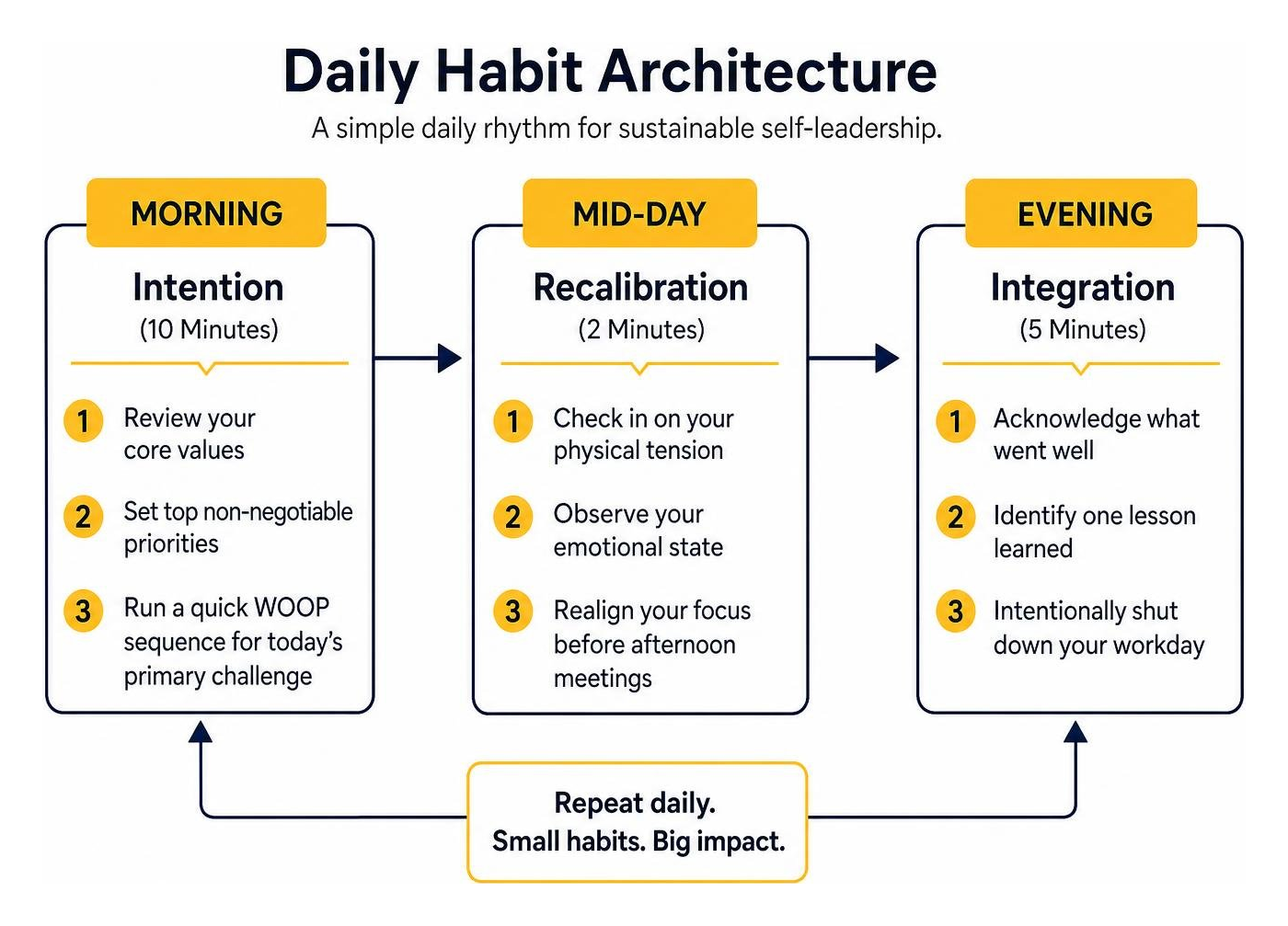
A sustainable routine includes:
- Morning Intention (10 Minutes): Review your core values, set top non-negotiable priorities, and run a quick WOOP sequence for your day’s primary challenge.
- Mid-Day Recalibration (2 Minutes): Check in on your physical tension, observe your emotional state, and realign your focus before afternoon meetings.
- Evening Integration (5 Minutes): Acknowledge what went well, identify one lesson learned, and intentionally shut down your workday.
When designing long-term personal routines, following an established framework for designing a structured self-leadership plan ensures that your daily habits remain adaptable across changing career seasons.
Fostering Self-Leadership in Students and Young Adults
Self-direction should not begin in the executive boardroom; it starts in the classroom. By integrating Social Emotional Learning (SEL) principles, educators and parents can help students discover their personal “sparks”—their authentic passions and intrinsic interests.
Using exercises like Sparks Peer-to-Peer Interviews and Personal Identity Wheels, young people learn to identify their core strengths, label their stressors, and build resilience early. Equipping students with emotional self-regulation gives them an enduring foundation for academic and personal success long before they enter the corporate workforce.
Structuring Daily and Weekly Accountability Systems
Maintaining personal accountability requires structured feedback mechanisms. Instead of hoping for discipline, build systematic checkpoints:
- Conduct a Personal SWOT Analysis: Periodically evaluate your internal Strengths, internal Weaknesses, external Opportunities, and external Threats.
- Run a Weekly Review: Every Friday or Sunday, answer three simple questions:
- What commitments did I keep or break this week?
- Where did I operate on autopilot rather than intention?
- What specific adjustments will I make for the upcoming week?
- Engage Mentorship Feedback Loops: Partner with a mentor or peer to review your progress objectively, embracing external perspectives to spot blind spots.
Investing in structured professional leadership development ensures that your accountability structures remain rigorous, supportive, and aligned with your broader career vision.
Frequently Asked Questions About Self-Leadership
How does the WOOP method differ from traditional positive visualization?
Traditional positive visualization focuses solely on imagining a successful outcome, which can inadvertently lower physiological arousal and reduce effort because the brain feels satisfied prematurely. The WOOP method combines positive visualization with mental contrasting by explicitly identifying the primary internal obstacle standing in the way and creating a concrete “If-Then” implementation plan to overcome it.
How does self-leadership improve decision-making under high stress?
Self-leadership activates the prefrontal cortex by expanding the stimulus-response gap. By using emotional labeling and cognitive reframing (such as the ABCD framework), you reduce amygdala hijacking, lower cognitive load, and evaluate complex problems against core values rather than immediate fears.
Can young adults develop self-leadership before entering the workforce?
Yes. Young adults can build self-leadership through Social Emotional Learning (SEL) tools, identifying personal passions (“sparks”), tracking daily study habits, and learning emotional regulation techniques. Practicing these skills early establishes high self-efficacy and resilience well before they transition into professional careers.
Conclusion
True influence never begins with managing others; it begins with mastering yourself. When you move away from reactive habits, challenge limiting internal beliefs, and implement structured self-direction tools like the WOOP framework and metacognitive reflection, you build an unshakeable foundation for lasting success.
As a single mother and CEO who has built businesses and guided firms through rapid transformation, I know that lasting leadership is forged in the quiet, daily choices to align actions with faith and purpose. Whether you are leading a team across the United States from Philadelphia and Wilkes-Barre to New Orleans, or managing international initiatives in Antigua Guatemala, the strength of your organization will always reflect the depth of your personal self-mastery.
Take ownership of your daily habits today. If you are ready to elevate your team’s execution, scale your firm, and lead with purpose, discover our proven strategic business leadership guidance and start building sustainable momentum from the inside out.