Stop Chasing Billable Hours and Craft Real Business Development Plans for Law Firms
- Marketing
- In the News
- October 28, 2026
Stop Chasing Billable Hours and Craft Real Business Development Plans for Law Firms
Build a Law Firm Business Development Plan That Fits Your Practice

Effective business development plans for law firms start with a clear target client and a measurable goal. Pick the clients and matters you want more of. Set a 90-day goal, choose two or three ways to build relationships, and block time each week to follow up. Track conversations, referrals, new matters, and revenue so you can keep what works and change what does not.
Billable work will always demand your attention. A simple plan makes growth a regular part of the week instead of something you tackle only when the pipeline slows.
I’m Nicole Farber, a legal marketing leader with more than 15 years of experience helping law firms grow. I’ll show you how to turn business development plans for law firms into practical steps you can use alongside client work.
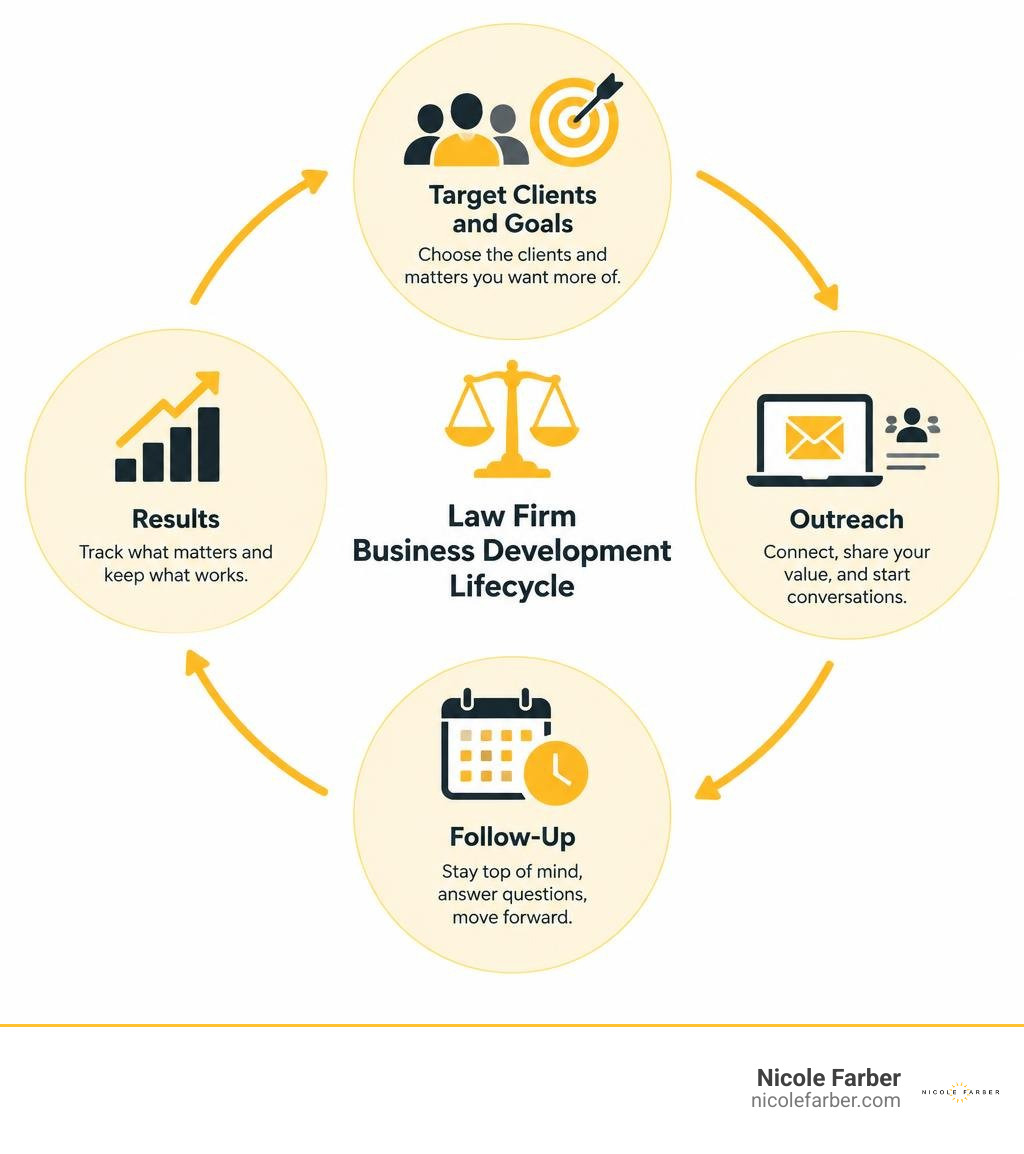
Business development plans for law firms terms to know:
Why Business Development Plans for Law Firms Drive Sustainable Revenue
Many law practices operate on an unpredictable revenue roller coaster. When caseloads peak, business development stops. When matters resolve, attorneys scramble to find new clients. Without structured attorney business development, firms remain vulnerable to shifting market conditions and inconsistent cash flow.
A written business development plan replaces uncertainty with predictable growth. Research shows that 64% of entrepreneurs with a formal business plan grow their businesses, compared to just 43% without one. Additionally, executives who express high satisfaction with their growth attribute that success directly to structured planning.
When you implement a strategic plan, you build long-term enterprise equity. You establish market differentiation that sets your firm apart from generalists, whether you serve commercial clients in Center City Philadelphia, family-owned enterprises across Luzerne County, or corporate accounts in New Orleans.
Business Development vs. Marketing: Clarifying the Strategic Divide
Lawyers often use “marketing” and “business development” interchangeably, but they serve distinct roles in your revenue engine. Marketing builds brand visibility, generates inbound interest, and educates your broader audience. Business development turns that awareness into individual relationships, signed retainer agreements, and recurring revenue.
When you merge bizdev and marketing to win high value accounts faster, your practice creates a seamless pipeline from initial brand awareness to long-term client advocacy.
| Strategic Focus | Legal Marketing | Legal Business Development |
|---|---|---|
| Primary Objective | Brand awareness and lead generation | Relationship conversion and revenue generation |
| Target Audience | Broad market segments and demographics | Specific key decision-makers and referral sources |
| Core Channels | Website, SEO, digital ads, social media | One-on-one meetings, pitches, direct networking |
| Success Metrics | Website traffic, form fills, impressions | Signed matters, revenue collected, referral volume |
| Ownership | Marketing directors, external agencies | Practicing attorneys, managing partners, BD leaders |
Escaping the Billable Hour Trap Through Dedicated Growth Time
The billable hour is the primary obstacle to firm growth. When your compensation depends entirely on logged hours, finding time for non-billable relationship building feels counterproductive. Yet treating growth as an afterthought guarantees you will stay trapped on the billing treadmill.
Escaping this cycle requires a shift in practice management:
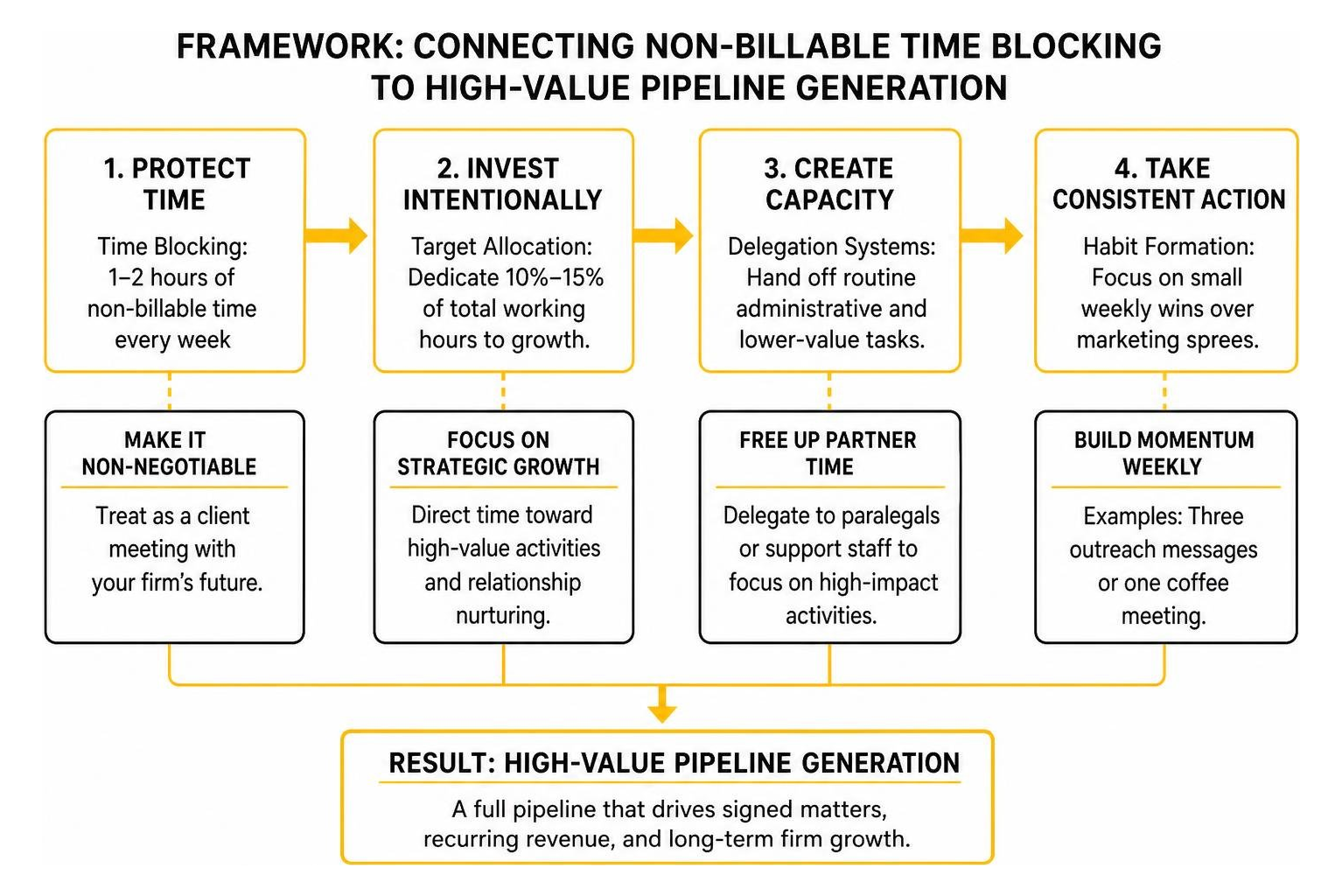
- Time Blocking: Protect one to two hours of non-billable time on your calendar every week as a non-negotiable client meeting with your own firm’s future.
- Target Allocation: Aim to dedicate 10% to 15% of your total working hours to strategic growth and relationship nurturing.
- Delegation Systems: Hand off routine administrative and lower-value operational tasks to paralegals or support staff to free up partner-level time.
- Habit Formation: Focus on small weekly wins—such as three outreach messages or one coffee meeting—rather than occasional, exhausting marketing sprees.
Investing in dedicated law firm development ensures your firm’s pipeline stays full regardless of active caseload fluctuations.
Core Pillars of High-Performing Law Firm Growth Frameworks
A comprehensive growth plan serves as an operational roadmap and a valuable asset when securing financing or planning lateral expansion. As detailed by the New York City Bar Association on writing a business plan, an effective framework balances financial projections with market realities and operational resources.

Every high-performing firm framework includes four foundational pillars:
- Executive Summary: A clear statement of your firm’s mission, practice scope, geographic focus, and core financial milestones.
- Market Intelligence: An objective evaluation of practice area demand, competitor strengths, and emerging regulatory trends.
- Operational Infrastructure: The staffing models, legal technology, and workflow systems required to handle new client volume efficiently.
- Financial Forecasts: Monthly revenue projections, expense assumptions, and realization rate targets over a multi-year horizon.
Aligning Practice Niche and Ideal Client Profiles in Business Development Plans for Law Firms
Specialization drives profitability. General practice firms often compete on price, whereas focused niche authorities command premium rates. A core component of modern client acquisition for lawyers is developing an Ideal Client Profile (ICP).
To construct an actionable ICP, define:
- Industry and Demographics: Identify the specific sectors you serve best, such as logistics companies in Wilkes-Barre, hospitality groups in New Orleans, or cross-border ventures in Antigua Guatemala.
- Key Decision-Makers: Pinpoint the exact roles responsible for hiring legal counsel, including general counsels, chief financial officers, or business founders.
- Catalytic Triggers: Clarify the specific events that prompt prospects to seek legal counsel, such as regulatory audits, commercial real estate acquisitions, or partnership disputes.
- Specific Pain Points: Address the operational, financial, or personal risks keeping those decision-makers awake at night.
Setting SMART Financial Targets and Revenue Projections
Vague goals like “growing firm revenue” rarely produce results. Sustainable growth requires setting SMART goals—specific, measurable, achievable, relevant, and time-bound.
Using structured frameworks like the Washington State Bar Association’s law firm business plan template/law-firm-business-plan-template.pdf?sfvrsn=2b7e3df1_8) helps translate broad growth ambitions into concrete financial projections.
For example, instead of targeting “more corporate clients,” set a goal to secure six new corporate retainers with an average annual matter value of $50,000 by December 31, generating $300,000 in gross revenue.
By working backward from your revenue target, you can calculate the exact number of discovery calls, proposals, and referral touchpoints required each month to hit your numbers. This disciplined modeling helps you move from vision to revenue with clear accountability.
Step-by-Step Execution: Building Your Practice Growth Engine
Execution transforms a strategic document into revenue. Break your annual plan into 90-day execution sprints to prevent overwhelm and maintain forward momentum.
Using a proven business development plan template gives your partners and associates a clear structure for tracking weekly activities.

Developing Thought Leadership and Personal Branding
Prospective clients rarely hire a firm name alone; they hire lawyers they respect and trust. Establishing personal authority positions you as the obvious choice in your practice area.
- Publish Strategic Content: Write insightful articles addressing real-world legal challenges facing your target industry rather than generic legal updates.
- Engage on LinkedIn: Share commentary on recent appellate rulings, regulatory shifts, or market trends to stay top-of-mind with corporate decision-makers.
- Secure Speaking Engagements: Deliver presentations at trade associations, regional business chambers, and industry conferences where your ideal clients gather.
Lawyers looking to accelerate their market positioning often benefit from the rainmaker blueprint business development coaching for lawyers to refine their messaging and outreach tactics.
Cultivating High-Value Referral Networks and Client Advocacy
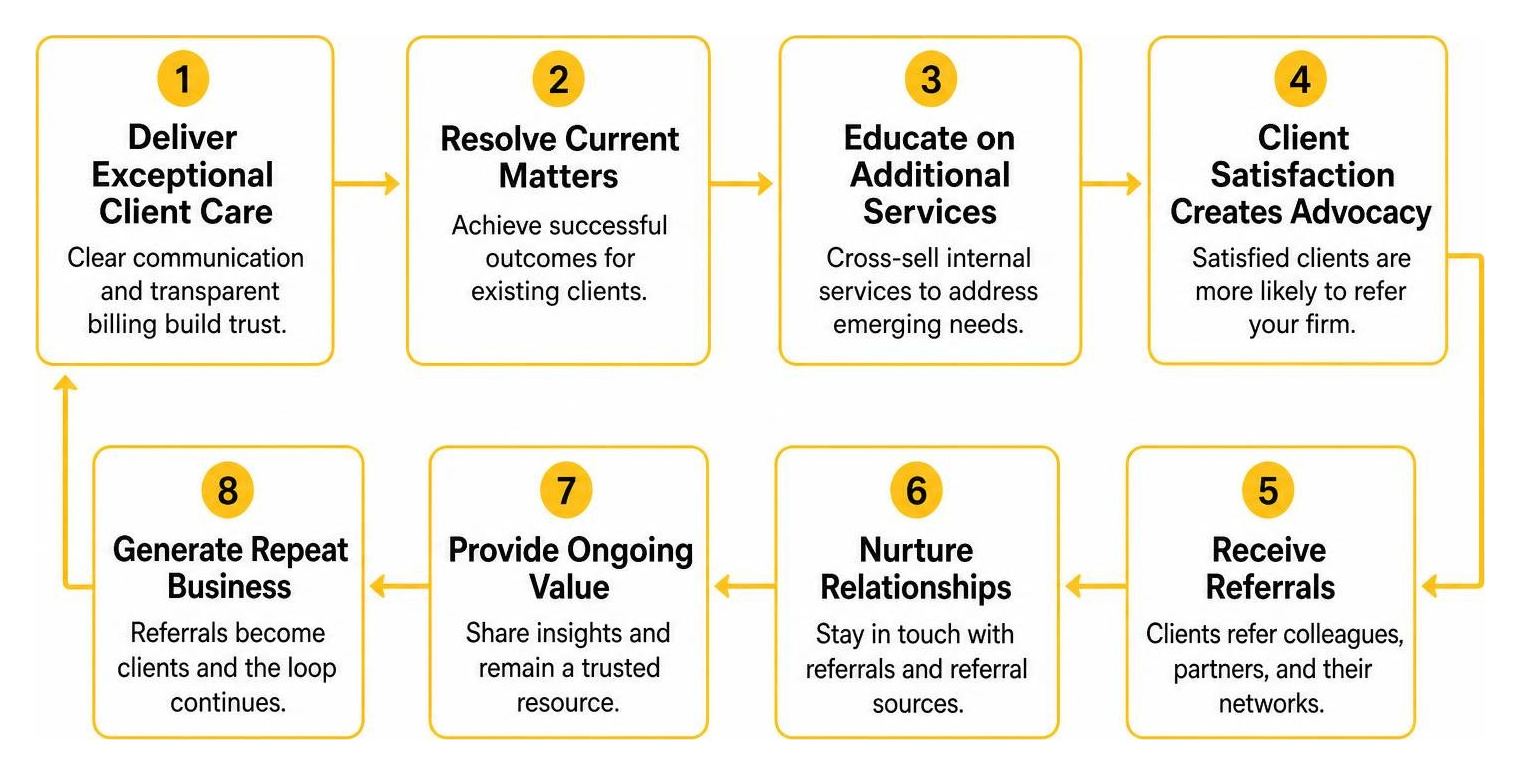
Referrals remain one of the most reliable sources of high-value legal work. A systematic referral engine actively generates qualified leads month after month.
To build an active referral network:
- Partner with Complementary Professionals: Connect with accountants, commercial bankers, wealth managers, and insurance brokers who serve your ideal clients.
- Deliver Exceptional Client Care: Since roughly 72% of firm revenue originates from existing clients and their networks, providing clear communication and transparent billing directly drives repeat business.
- Cross-Sell Internal Services: Educate current clients on your firm’s other practice areas to resolve emerging issues before they seek outside counsel.
Implementing these winning business development strategies creates a steady pipeline of inbound opportunities from trusted sources.
Implementing Technology and CRM Systems for Business Development Plans for Law Firms
Relying on memory or disorganized spreadsheets leads to missed follow-ups and lost revenue. Modern practices rely on legal Customer Relationship Management (CRM) tools and relationship intelligence platforms to automate data capture and track prospective matters.
These platforms integrate with your email and calendar to surface warm connection paths, schedule automated follow-ups, and track pipeline velocity. Mastering these essential processes for modern attorneys ensures no high-value relationship slips through the cracks.
Frequently Asked Questions About Legal Business Development
How much weekly time should an attorney dedicate to business development?
Attorneys should dedicate one to two hours per week to business development activities, working toward 10% to 15% of their total working time. Blocking this non-billable time on your calendar ensures consistency without disrupting active caseloads.
What key metrics demonstrate law firm business development success?
Track both leading indicators (such as introductory meetings, outreach calls, and submitted proposals) and lagging indicators (such as newly opened matters, realization rates, average case values, and revenue influenced).
Can solo practitioners and boutique law firms scale without large marketing budgets?
Yes. Solo practitioners and boutique firms often outmaneuver larger competitors by focusing on tight niche markets, providing personalized client service, and building referral networks with complementary professionals.
Conclusion
Building a successful legal practice requires more than recording billable hours—it demands intentional, proactive leadership. A structured business development plan gives your practice predictable revenue, attracts higher-value clients, and builds long-term equity.
Whether you run an established practice in Philadelphia, manage a boutique firm in Luzerne County, or expand across New Orleans, a clear roadmap transforms your growth goals into reality. Take the first step by building a business development plan that protects your time and positions your firm for lasting success.