Transform Your Presentations with the Best Leadership Speaking Programs
- Leadership
- Word of the Day
- September 7, 2026
Transform Your Presentations with the Best Leadership Speaking Programs
How to Choose the Best Leadership Speaking Course

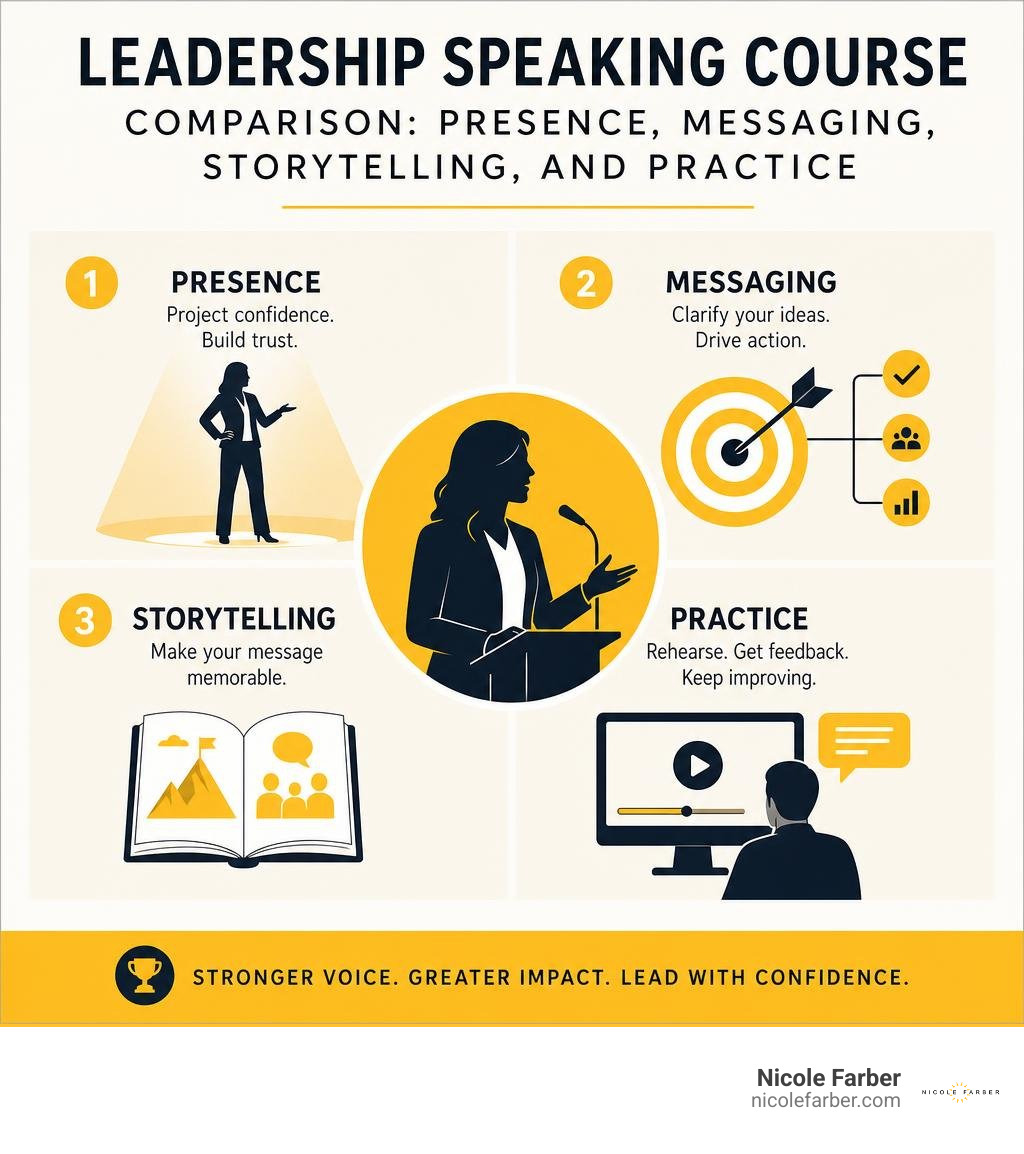
The best leadership speaking course goes beyond reducing presentation nerves. It should help you shape a clear strategic message, project executive presence, tell persuasive stories, and lead difficult conversations when the stakes are high.
For law firm partners in Philadelphia and beyond, prioritize programs that include:
- Live coaching and video feedback, not lectures alone
- Practice for client pitches, team meetings, change announcements, and media moments
- Messaging frameworks that turn complex legal or business ideas into clear action
- Ongoing practice tools, such as peer feedback or AI-based simulations
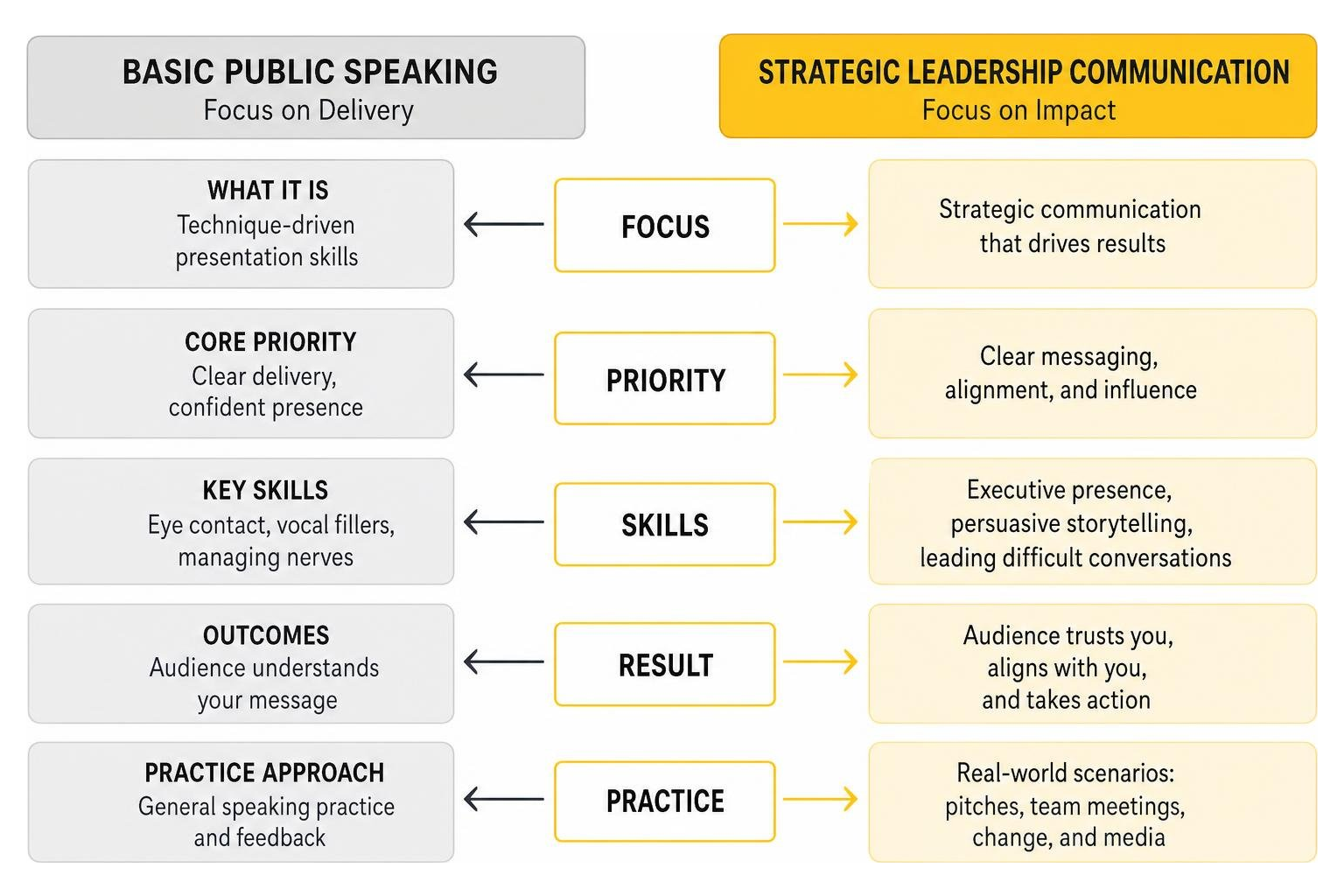
General public-speaking classes can improve delivery. Leadership-focused training also teaches you how to build trust, align stakeholders, and move people toward a decision.
I am Nicole Farber, CEO of ENX2 Legal Marketing, with more than 15 years of experience helping law firms and businesses grow, communicate their value, and lead through change. As a leadership speaker and conference presenter, I have seen that the right leadership speaking course can strengthen both a leader’s voice and their ability to inspire action.
Learn more about leadership speaking course:
What Sets a Leadership Speaking Course Apart from Traditional Public Speaking
Many professionals ask us why standard public speaking classes fail to move the needle when they reach senior management. The truth is simple: traditional public speaking focuses on mechanics—eye contact, eliminating vocal fillers, and avoiding stage fright. While those basics matter, they do not prepare an executive to navigate a hostile board meeting, deliver painful organizational restructuring news, or rally a cross-functional division around an ambiguous vision.
A dedicated leadership speaking program bridges that gap. It treats spoken communication not as a stage performance, but as an operational tool for strategic alignment and cultural influence. In our comprehensive leadership speaking guide 2026, we examine how executive presence directly impacts team velocity and company morale.
Data shows that organizations with highly effective communicators achieve 47% higher total returns to shareholders compared to those with poor communication habits. When we communicate with strategic clarity, we eliminate the friction that stalls business outcomes. Whether you are leading an enterprise in New Orleans, managing teams across Luzerne County, or directing global initiatives from Antigua Guatemala, speaking as an executive requires moving your audience from passive listening to committed execution.
Foundational Curriculum of a Modern Leadership Speaking Course
A modern leadership speaking curriculum focuses on physical presence, vocal command, and real-time behavioral adaptation. Executive presence is not an innate genetic trait; it is a learned discipline that integrates deliberate body language, vocal cadence, and concise framing.
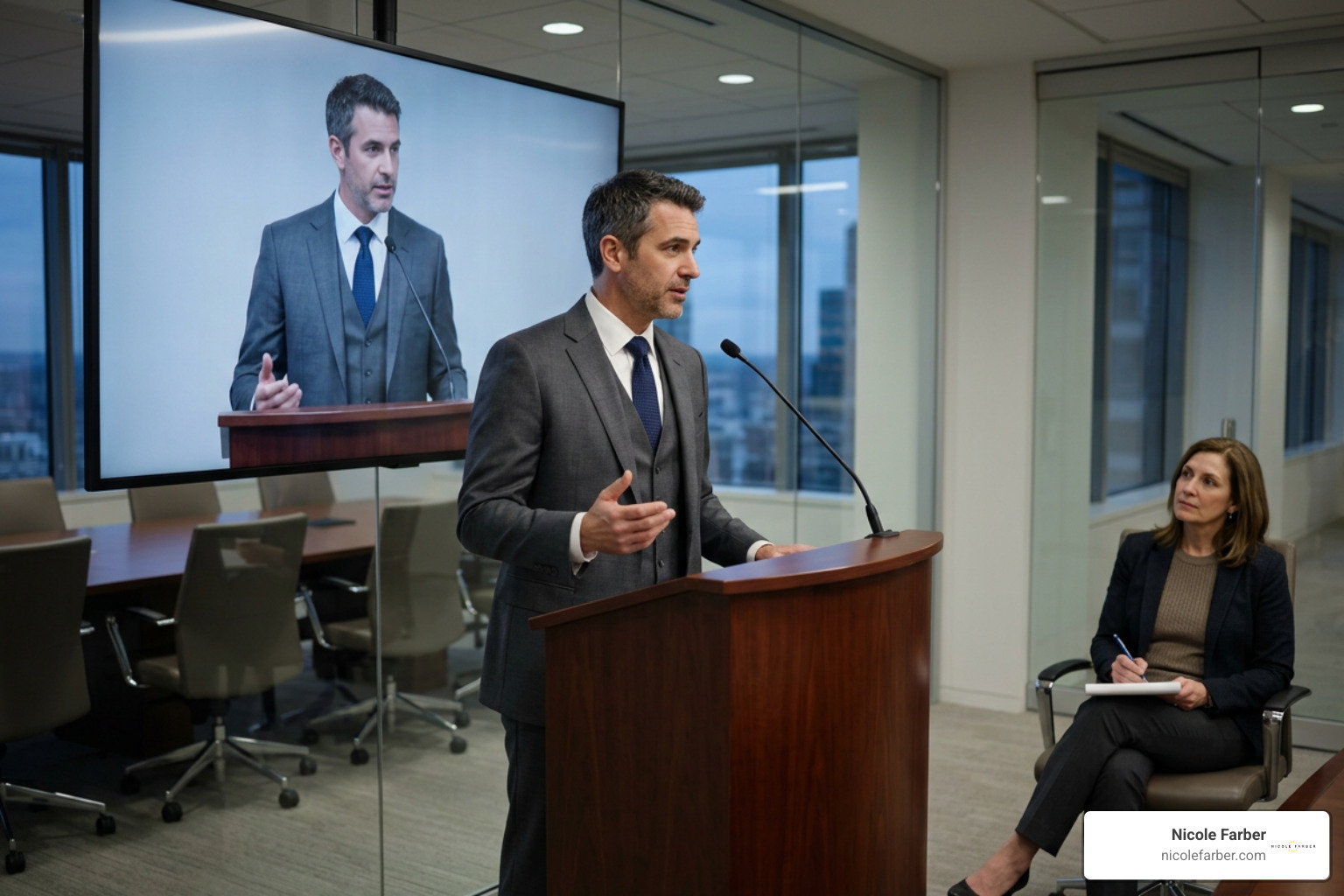
When we evaluate top-tier programs, the foundational curriculum invariably features several core pillars:
- Executive Presence and Physical Command: Learning to project calm authority through posture, grounded movement, and deliberate eye contact.
- Vocal Variety and Auditory Pacing: Controlling tone, pitch, and intentional pauses to emphasize critical strategic points without sounding rehearsed.
- Impromptu Delivery and Agility: Mastering frameworks to answer unexpected media questions, address tough investor inquiries, and handle tense stakeholder challenges on the spot.
- Rigorous Video Self-Critique: Recording presentations to observe micro-behaviors, eliminate distracting tics, and track measurable improvements over time.
Strategic Messaging, Storytelling, and Executive Altitude
One of the greatest challenges leaders face is avoiding the “weeds.” Technical experts, attorneys, and operational directors often overwhelm their teams with data dumps instead of strategic insights. A leadership speaking curriculum teaches executives to maintain “executive altitude”—the ability to distill complex data into high-level strategic narratives.
By integrating structured storytelling, leaders translate dense spreadsheets and regulatory briefs into relatable stories that drive buy-in. Programs such as Persuasive Leadership – Harvard Graduate School of Design Executive Education emphasize that turning data into persuasive narratives is the single most effective way to align teams during rapid organizational change.
Top Program Types and Delivery Methods for Executives
Choosing the right format depends on your professional goals, schedule flexibility, and organizational needs. Modern executive training spans three primary delivery models: university-led credentials, immersive cohort workshops, and high-touch private coaching.
| Program Type | Primary Focus | Best Suited For | Typical Delivery Format |
|---|---|---|---|
| University Executive Education | Classical rhetoric, theoretical leadership frameworks, global credentialing | Senior executives, directors seeking academic credentials | Multi-week online cohorts or 2–5 day campus intensives |
| Cohort-Based Seminars | Practical speech labs, peer critique, fast skill-building | Emerging managers, cross-functional teams | 2-day workshops or 4-week interactive virtual practicums |
| 1-on-1 Executive Coaching | Customized messaging, high-stakes pitch preparation, confidential feedback | C-suite leaders, founders, keynote presenters | Private weekly sessions with AI simulation tools |
University-Led Executive Education Programs
University programs integrate classical rhetoric with contemporary management science. Offerings from institutions like INSEAD and Harvard emphasize ethical persuasion, formal authority versus informal influence, and systemic change management.
Online credentials from top business schools often include multi-week interactive modules that combine asynchronous case studies with live global breakout discussions. These programs are ideal for leaders who want to build a recognized credential while expanding their international executive network.
Immersive Leadership Development Seminars and Cohort Practicums
For organizations looking to upskill management cohorts quickly, intensive seminars offer hands-on practice. Regional cohort workshops throughout Philadelphia and Wilkes-Barre provide interactive environments where participants practice speaking, receive immediate peer critique, and refine their delivery.
We frequently partner with companies through dedicated leadership development seminars and curate top leadership training programs for employees that deliver real results. In these group practicums, leaders build confidence through repeated exposure to simulated corporate pressure.
Intensive 1-on-1 Coaching and AI-Powered Simulations
When high-stakes presentations—such as capital raises or major industry keynotes—are on the line, private executive coaching provides the highest return. Working directly with an experienced Philadelphia public speaking coach allows leaders to audit their authentic voice, refine proprietary keynotes, and eliminate communication blind spots.

Many contemporary programs now integrate cutting-edge tools to accelerate learning by pairing strategic coaching with live interactive labs. Other modern initiatives incorporate 24/7 AI-driven speech simulators that analyze vocal cadence, filler word frequency, and eye tracking between live sessions. Leaders looking for structured personal growth can also join a dedicated coaching class to systematically refine their delivery.
Core Frameworks for Navigating High-Stakes Presentations
To lead effectively, you need reliable mental models that work under pressure. The best training programs teach structured communication frameworks that can be applied to any speaking scenario.
The Leader’s Script and Proposition Architecture
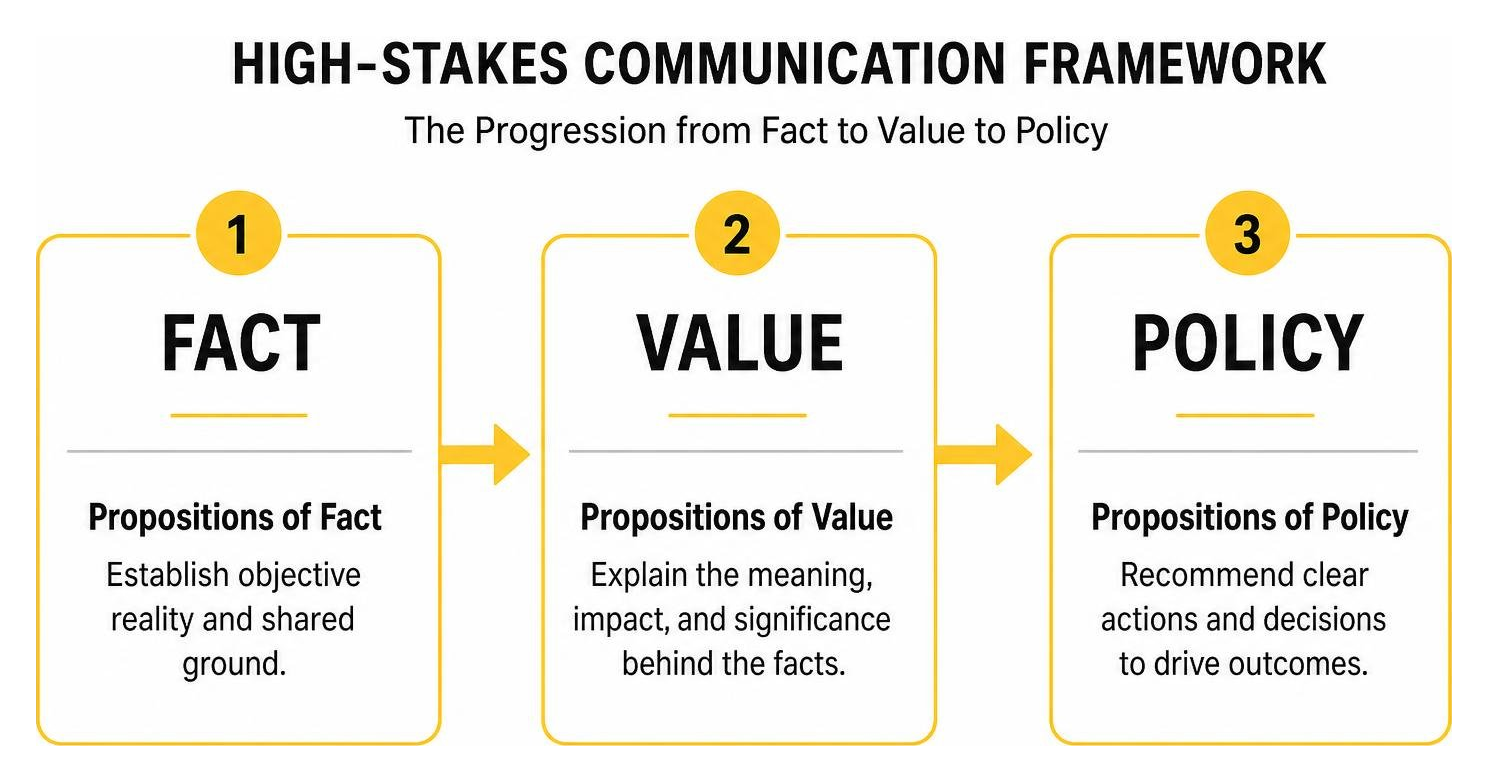
A foundational framework used in high-level speechwriting organizes persuasive arguments around three rhetorical propositions:
- Propositions of Fact: Establishing objective reality and shared ground (“Our customer acquisition cost increased by 22% this quarter”).
- Propositions of Value: Explaining why that fact matters to the organization’s core mission and stakeholders (“This margin compression limits our ability to fund new product innovations”).
- Propositions of Policy: Proposing a clear, actionable path forward with accountability (“We must reallocate our Q3 marketing spend into high-retention channels starting next Monday”).
As executive speechwriting principles emphasize, effective presentations require “writing for the ear, not the eye.” Spoken English relies on shorter sentences, intentional fragments, and rhythmic cadence to ensure audience retention.
The Hero’s Journey and Data-Driven Persuasion
Whether you are delivering internal town halls or major speaking engagements, narrative structure determines whether your message sticks. By positioning the team or client as the “Hero” and the leadership strategy as the “Guide,” executives inspire collective ownership rather than top-down compliance.
When presenting technical metrics, the most effective speakers isolate the primary strategic insight, wrap it in a real-world case study, and present the numbers as milestones along an overarching journey.
Maximizing Career Impact and Organizational Return
Investing in communication training yields tangible dividends across an executive’s career and the organization at large. With 53% of business leaders reporting that skill-building is their top priority to close enterprise capability gaps, communication training directly addresses organizational performance.
Measuring the Organizational ROI of a Leadership Speaking Course
The business case for enrolling leaders in comprehensive communication programs is proven by concrete metrics:
- Accelerated Decision Velocity: Clear messaging removes ambiguity, cutting meeting lengths and speeding up strategic approvals.
- Stronger Stakeholder and Cross-Functional Alignment: When department heads articulate shared objectives clearly, interdepartmental friction drops significantly.
- Higher Employee Retention and Engagement: Transparent, inspiring executive communication builds organizational trust and loyalty.
- Successful Organizational Transformations: CEO research shows that leaders operating at advanced stages of vertical development achieve far higher success rates in multi-year organizational transformations, directly improving market share and profitability.
Mindset Transformation, Self-Awareness, and Complexity Management
Modern executives face a documented “complexity crisis”—an expanding gap between external market volatility and leadership readiness. Overcoming this requires deep self-awareness, emotional intelligence, and unwavering personal conviction.
As a single mother and CEO who built a business from the ground up, Nicole Farber shares in her work as a motivational leadership keynote speaker that authentic, faith-driven leadership cannot be faked. True presence comes from aligning your inner values with your public delivery, allowing you to project genuine confidence when guiding teams through unprecedented challenges.
Frequently Asked Questions About Executive Presentation Training
Who is the ideal candidate for executive speaking training?
Executive speaking training is designed for professionals at critical career inflection points:
- C-Suite Leaders and Founders: Seeking to refine investor pitches, navigate crisis communications, and deliver impactful media appearances.
- Emerging Executives and Senior Managers: Transitioning from tactical execution roles to high-visibility strategic leadership positions.
- Cross-Functional Department Heads: Needing to persuade diverse stakeholder groups, align remote divisions, and present complex data to executive boards.
How do virtual simulations and AI coaching compare to in-person intensives?
In-person intensives provide unmatched immersion, real-time stage mechanics, and instant peer feedback. However, modern virtual platforms and AI-powered simulation tools excel at ongoing sustainment. AI coaches allow executives to practice daily, track vocal cadence, and monitor eye contact continuously between live coaching sessions, creating a highly effective hybrid learning loop.
What is the typical timeframe to see measurable improvements in executive presence?
Initial structural improvements—such as organizing presentations using concise messaging frameworks and reducing filler words—are often noticeable within the first 3 to 5 days of structured practice. Long-term behavioral shifts, such as commanding a boardroom under extreme pressure and mastering impromptu stakeholder handling, typically solidify over 4 to 8 weeks of continuous coaching and real-world application.
Conclusion
Mastering executive communication is the fastest way to turn your strategic vision into measurable business impact. Whether your goals include commanding boardrooms, scaling a high-growth firm, or inspiring teams across regional offices, refining your voice creates lasting influence.
Explore our comprehensive resources on leadership speaking to take the next step in transforming your executive presentations, empowering your teams, and accelerating your leadership career.