Level Up Your Game: Discover Premier Coaching Classes
- Life
- In the News
- January 9, 2026
Why Coaching Classes Matter for Your Success

Coaching class programs offer supplemental education and personalized guidance designed to help you achieve specific goals—whether that’s acing a competitive exam, advancing your career, or developing new skills. Here’s what you need to know:
Quick Answer: What is a Coaching Class?
- Academic Coaching: Tutoring for specific subjects, test prep (SAT, CAT, GMAT), and study skills development
- Professional Coaching: Leadership training, career transitions, and executive development programs
- Sports Coaching: Athletic certification, skill development, and mental toughness training
- Personal/Life Coaching: Goal setting, confidence building, and wellness guidance
Key Differences from Traditional Education:
- More personalized attention than typical classroom settings
- Focus on specific, measurable outcomes
- Flexible formats (online, in-person, or hybrid)
- Student-centered curriculum custom to individual needs
Whether you’re a law firm partner in Philadelphia looking to sharpen your leadership skills, a student in New Orleans preparing for entrance exams, or a professional in Wilkes-Barre seeking career advancement, coaching classes provide the structure, accountability, and expert guidance that traditional schooling often cannot offer. Unlike teachers who deliver standardized content to many students at once, coaches work with you to open up your specific potential and help you define—and reach—your unique goals.
The coaching industry has exploded globally, with over 57,519 ICF-certified coaches worldwide and proven results across every field. Studies show that professionals who invest in coaching skills see tangible benefits: HR professionals who became certified coaches earned higher salaries and received more promotions. Students in personalized coaching programs consistently outperform their peers. Athletes working with certified coaches develop not just physical skills, but leadership and character traits that serve them for life.
As Nicole Farber, I’ve spent over 15 years helping law firms and business leaders achieve breakthrough results through strategic guidance and personalized coaching class programs. My approach combines practical business strategy with faith-driven leadership principles, helping driven professionals like you overcome overwhelm and achieve sustainable growth.
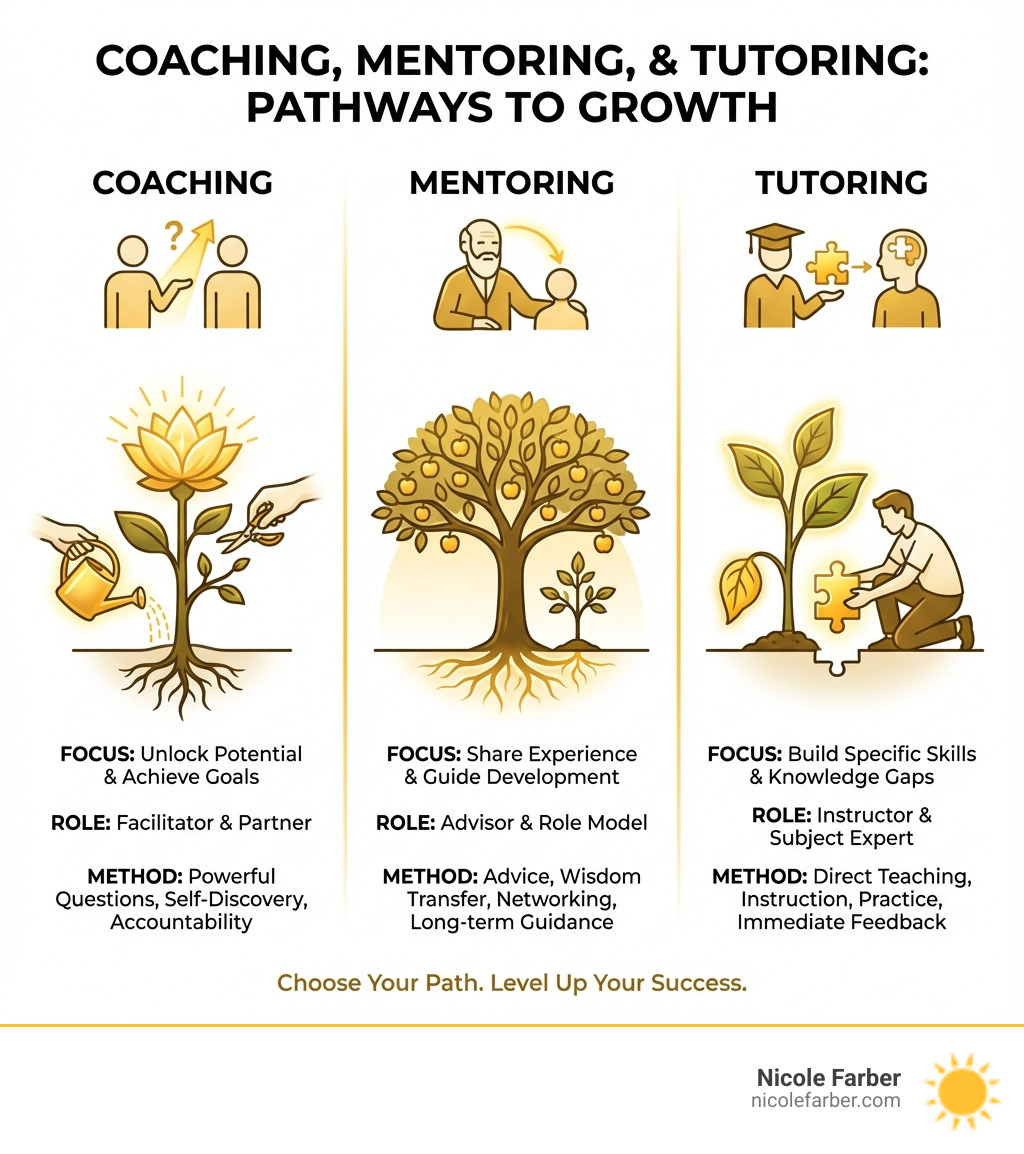
A World of Coaching: Finding Your Niche
The landscape of coaching classes is incredibly diverse, reflecting the vast array of human aspirations and challenges. From boosting academic performance to mastering a new professional skill or cultivating personal well-being, there’s likely a coaching program custom to your unique needs. We often find that pinpointing your specific goal is the first step toward finding the right coaching path.
Academic and Test Prep Coaching
For students, academic coaching classes are a powerful tool for supplemental learning and competitive edge. These programs go beyond traditional classroom teaching by offering focused, individualized support. Whether you’re a high school student in Luzerne County aiming for top university admissions or an aspiring MBA candidate in Philadelphia preparing for exams like the GMAT or SAT, academic coaching can make a significant difference.
These classes often provide:
- Subject-specific tutoring: Deep dives into challenging subjects where students need extra support.
- Competitive exam prep: Specialized strategies and practice for high-stakes tests.
- Study skills development: Techniques for effective learning, time management, and organization.
- Personalized learning plans: Custom approaches that address individual strengths and weaknesses, ensuring efficient progress.
- Hybrid learning models: Many coaching class providers now offer flexible combinations of online and in-person sessions, allowing students in places like New Orleans or Antigua Guatemala to access high-quality instruction regardless of their physical location.
The goal is not just rote memorization but true understanding and mastery. For instance, platforms like BYJU’s (as highlighted in our research) provide online education apps with video classes and personalized mentoring, allowing students to access content anytime, anywhere. This accessibility saves students time and offers an equally effective means of study as traditional schools. We believe that learning should be about enjoying knowledge, and innovative approaches like these foster that enjoyment.
Professional and Career Coaching
In the professional field, coaching classes are invaluable for individuals and organizations seeking to lift performance and achieve strategic objectives. For lawyers and entrepreneurs, like those we work with in Philadelphia, this often involves honing leadership skills, navigating career transitions, or developing robust business strategies.
Our research shows that professional coaching encompasses several key areas:
- Leadership skills: Programs designed to cultivate effective leadership qualities, from communication to decision-making. We offer custom Leadership Development Seminars that empower leaders to inspire their teams and drive results.
- Career transitions: Guidance for individuals moving into new roles, industries, or even starting their own ventures.
- Certification programs: Many coaches pursue credentials from respected bodies like the International Coaching Federation (ICF). Our research confirms that ICF-accredited programs, such as those offered by iPEC, meet rigorous educational requirements for professional certification, enhancing credibility and skill. You can explore more about these pathways with an ICF-Accredited Coach Training Program.
- Public speaking: Specialized training to improve presentation skills, crucial for firm partners and business leaders.
- Business strategy: Focused coaching to refine business models, marketing efforts, and overall growth plans. This is where our Business Strategy Coaching truly shines, helping clients develop actionable plans. For law firm leaders, our Executive Coaching for Lawyers provides targeted support to steer the unique challenges of the legal industry.
Sports and Performance Coaching
Sports coaching classes are not just for elite athletes; they are foundational for youth sports and professional development alike. These programs focus on skill development, physical conditioning, and crucial mental aspects of competition.
Key elements include:
- Athletic certification: Programs like the NFHS Fundamentals of Coaching (which you can learn more about at NFHS Fundamentals of Coaching) provide essential training for interscholastic teacher-coaches, ensuring they create healthy and age-appropriate athletic experiences. These courses often lead to certification and endorsement, meeting state-level requirements across the US, including for coaches in Philadelphia, Wilkes-Barre, and New Orleans.
- Skill development: Intensive training for specific techniques and strategies in various sports.
- Team culture: Building camaraderie, sportsmanship, and a positive team environment.
- Mental toughness: Developing resilience, focus, and confidence under pressure.
The Positive Coaching Alliance (PCA) emphasizes critical principles for youth sports, ensuring that “winning happens both on and off the field.” These include:
- Double-Goal Coach®: Pursuing both winning and the more important goal of teaching life lessons through sports.
- Triple-Impact Competitor®: Encouraging athletes to improve on three levels: Personal Mastery (making oneself better), Leadership (making teammates better), and Honoring the Game (improving the sport).
- Honoring the Game: Instilling respect for rules, opponents, officials, teammates, and self.
- Positive Sports Parent: Educating parents on how to support their children’s athletic journey constructively.
- Coaching with Empathy: Building meaningful relationships with athletes by understanding their experiences and fostering strong connections.
Personal and Life Coaching
Personal and life coaching classes are designed to help individuals open up their full potential and achieve fulfillment in various aspects of their lives. These programs address goals ranging from improved relationships to improved well-being and greater self-confidence.
We often see these areas covered:
- Goal setting: Structured approaches to define, plan, and achieve personal objectives. This is a core focus for any Goal Achievement Coach.
- Confidence building: Strategies and exercises to boost self-esteem and self-efficacy.
- Relationship coaching: Guidance for improving personal and professional relationships.
- Wellness coaching: Support for achieving health and lifestyle goals.
- Niche coaching areas: Specialized programs cater to specific demographics or philosophies, such as Life Coaching for Women or Faith-Based Life Coach programs that integrate spiritual principles with personal development.

The Transformative Benefits of Enrolling
Investing in a coaching class is an investment in your future. The benefits extend far beyond the immediate skills learned, creating a ripple effect of positive change in academic performance, personal growth, and career trajectory. We’ve seen how guided learning empowers individuals to achieve what they once thought impossible.

Academic and Personal Growth
For students, the impact of coaching classes can be profound, fostering not just better grades but also essential life skills.
- Improved grades: Personalized attention helps students grasp complex concepts, leading to higher academic achievement.
- Better study habits: Coaches teach effective organizational and learning strategies, such as time management skills and efficient note-taking.
- Increased self-efficacy: As students achieve small victories, their confidence grows, making them more proactive learners.
- Overcoming learning gaps: Unlike traditional schooling, which can move at a fixed pace, coaching allows for focused intervention on specific areas of difficulty. This personalized attention ensures no student is left behind, whether they’re struggling with math in Luzerne County or essay writing in Antigua Guatemala.
- Personalized attention vs. traditional schooling: In a typical classroom, a teacher caters to many students. A coach, however, provides one-on-one or small-group support, tailoring methodologies to the individual’s learning style. This makes the learning experience more engaging and effective.
Career Acceleration and Professional Development
For professionals, coaching classes are a catalyst for career advancement and leadership excellence.
- Increased salary potential: Studies show a direct correlation between coaching skills and earning power. For instance, HR professionals who became iPEC Certified Professional Coaches saw an increase in salary potential and were promoted more often.
- Higher promotion rates: Developing leadership, communication, and strategic thinking skills through coaching makes individuals more valuable to their organizations.
- Earning professional certifications: Many coaching programs offer accredited certifications, such as those recognized by ICF, which improve credibility and open new doors.
- Building a professional network: Engaging with coaching communities and programs connects you with like-minded professionals and mentors.
- Leadership development: Our Leadership Development Seminars are designed to equip executives and aspiring leaders with the tools to inspire, innovate, and lead with impact.
- Strategic guidance for legal professionals: For lawyers, understanding how to leverage coaching can be a game-changer. Our Benefits of Business Coaching for Lawyers Guide illustrates how custom coaching can significantly improve practice management, client acquisition, and firm growth.
How to Choose the Right Coaching Class for You
Selecting the ideal coaching class is a critical decision that impacts your growth and investment. With so many options available, consider various factors to ensure you make an informed choice that aligns with your goals and values.
What to Look for in an Academic Coaching Class
When evaluating academic coaching classes, we recommend focusing on these key aspects:
- Curriculum and materials: Does the program offer comprehensive, up-to-date content that covers the specific subjects or exams you need? Look for well-structured modules and quality study aids.
- Faculty credentials: Who are the instructors? Do they have a proven track record, subject matter expertise, and effective teaching methodologies? For example, some CAT coaching programs boast instructors with multiple 100 percentile scores.
- Student-to-teacher ratio: Smaller ratios often mean more personalized attention and quicker doubt clarification.
- Track record of success: Look for testimonials, success stories, and quantifiable results from previous students.
- Use of technology for personalized learning: Modern programs leverage AI and data analytics to adapt to individual learning paces and styles, offering customized study plans and feedback.
- Mock tests and assessments: Regular evaluations help track progress, identify weak areas, and simulate exam conditions.
Finding a Professional Development Coaching Class
For professional and executive coaching classes, the criteria shift slightly to emphasize accreditation and practical application:
- Accreditation: Look for programs accredited by reputable bodies like the International Coaching Federation (ICF) or recognized by HR organizations such as SHRM for Professional Development Credits (PDCs). This ensures quality and professional standing.
- Coach’s experience and niche: Does the coach have relevant experience in your industry or specific area of need? For instance, someone seeking Executive Coaching for Lawyers would benefit from a coach with deep legal industry insight.
- Testimonials and case studies: Real-world examples of client success can provide valuable insight into a coach’s effectiveness.
- Program methodology: Understand the underlying philosophy. Some programs, like iPEC, emphasize a “consciousness-based approach” to open up potential.
- Specific services: For leaders, our CEO Coaching Services focus on strategic planning, leadership development, and operational excellence, custom to the unique demands of executive roles.
Key Factors: Cost, Location, and Format
The practicalities of cost, location, and format are crucial for any coaching class decision.
| Coaching Type | Average Cost (Estimated USD) | Typical Duration |
|---|---|---|
| Academic Tutoring | $50-$200 per hour | Varies (short-term to ongoing) |
| Competitive Exam Prep | $500-$5,000+ per course | 3-12 months |
| Life Coaching | $75-$500 per session | 3-6 months (weekly/bi-weekly sessions) |
| Professional Coaching | $200-$1,000+ per session | 6-12 months (bi-weekly sessions) |
| Executive Coaching | $5,000-$25,000+ per program | 6-12 months (intensive, often organizational) |
| Sports Certification | $30-$100 per course | Self-paced (few hours to few weeks) |
Evaluating ROI: Beyond the sticker price, consider the return on investment. For academic coaching, this could be a scholarship earned or admission to a dream university. For professional coaching, it might be a promotion, increased revenue for your business, or improved leadership effectiveness. The value often far outweighs the monetary cost.
Online vs. offline classes:
- Online offers unparalleled flexibility and access to a global pool of experts. A student in Antigua Guatemala could receive SAT prep from a top instructor in New York, or a lawyer in Wilkes-Barre could access specialized legal marketing coaching.
- Offline provides direct, in-person interaction, which some individuals prefer for immediate feedback and a more traditional classroom feel. In cities like Philadelphia and New Orleans, you’ll find a vibrant array of local coaching centers.
- Hybrid models offer the best of both worlds, blending the convenience of online learning with periodic in-person sessions or workshops.
Self-paced vs. live sessions: Self-paced courses allow you to learn at your own speed, revisiting content as needed. Live sessions offer real-time interaction, structured schedules, and immediate Q&A, which can be highly motivating.
The Future of Coaching: Technology and Trends
The world of coaching classes is continuously evolving, driven by technological advancements and shifting societal needs. We are witnessing an exciting change that promises even more personalized, accessible, and effective coaching experiences.
The Role of Technology
Technology is revolutionizing how coaching is delivered and experienced:
- Online platforms: Robust learning management systems (LMS) provide structured environments for course content, assignments, and communication.
- Mobile learning apps: Apps allow for on-the-go learning, offering video lectures, practice questions, and progress tracking right from your smartphone.
- AI-driven feedback: Artificial intelligence is increasingly used to provide instant feedback on practice exercises, identify learning patterns, and suggest personalized learning paths.
- Personalized learning paths: Advanced data analytics track individual performance, allowing programs to adapt content and pace to each student’s unique needs, as emphasized by platforms that champion personalized learning.
- Virtual classrooms: Interactive virtual spaces facilitate live sessions, group discussions, and collaborative learning, bridging geographical distances.
- Hybrid models: Blending online and offline components creates flexible, effective learning environments. As our research notes, a platform like Klassroom is a uniquely designed Hybrid tutoring platform, demonstrating how these models integrate technology for a seamless experience.
Emerging Industry Trends
Beyond technology, several key trends are shaping the future of coaching:
- Focus on soft skills: There’s a growing recognition of the importance of emotional intelligence, critical thinking, adaptability, and communication skills, leading to more coaching programs dedicated to these areas.
- Micro-coaching sessions: Shorter, focused coaching interactions designed to address specific, immediate challenges, fitting into busy schedules.
- Group coaching for peer learning: Leveraging the power of collective intelligence and shared experiences, group coaching fosters a supportive community and diverse perspectives.
- Increased demand for mental wellness coaching: As awareness of mental health grows, coaching focused on stress management, resilience, and emotional well-being is becoming more prevalent.
- Specialized niches: The coaching industry continues to diversify, with coaches specializing in everything from financial literacy to specific athletic disciplines. Our emphasis on a Goal Achievement Coach reflects this trend towards highly targeted support.
- Growth of the coaching industry worldwide: The ICF’s impressive membership numbers (over 57,519) indicate a thriving and expanding global industry, reflecting a widespread belief in the power of coaching to transform individuals and societies.
Frequently Asked Questions about Coaching Classes
We often hear common questions about coaching classes, and we want to provide clear, concise answers to help you steer your options.
How much do coaching classes typically cost?
The cost of coaching classes varies significantly based on the type of coaching, the coach’s experience, program duration, and format.
- Academic tutoring can range from $50 to $200+ per hour for individual sessions, while comprehensive competitive exam prep packages might cost anywhere from $500 to over $5,000. For instance, some intensive CAT online coaching programs can range from around $200 (INR 17,999) to $700 (INR 52,000) or more, depending on the year and features.
- Life coaching typically ranges from $75 to $500 per session, often bundled into multi-session packages.
- Professional and executive coaching represents a more significant investment, with individual sessions potentially costing $200 to $1,000+, and comprehensive organizational programs reaching $5,000 to $25,000+.
- Sports certification courses can be more affordable, with some online modules costing as little as $30-$100.
The return on investment (ROI) for coaching is measured not just in monetary terms, but in improved grades, career growth, improved personal fulfillment, and the achievement of specific goals. Many find the long-term benefits far outweigh the initial financial outlay.
Are online coaching classes as effective as in-person ones?
The effectiveness of online coaching classes versus in-person ones largely depends on the program’s quality and the individual student’s learning style and preferences.
- Online advantages: We’ve seen that online coaching offers incredible flexibility, allowing individuals in Philadelphia, Wilkes-Barre, New Orleans, Luzerne County, or even Antigua Guatemala to access top-tier experts regardless of location. It can also be more cost-effective due to reduced overhead and travel expenses. Many online platforms are highly interactive, utilizing video, AI-driven tools, and virtual classrooms to create engaging learning experiences.
- In-person advantages: Some individuals thrive with the direct, face-to-face interaction of an in-person setting, finding it easier to build rapport and receive immediate, physical feedback.
- Hybrid models: Often, the best solution combines elements of both. For example, a mostly online program might include occasional in-person workshops or mentorship calls, offering the convenience of digital learning with the benefits of direct interaction. Our research shows that online coaching can be highly effective, with many students achieving significant success through well-designed digital programs.
What is the difference between a coach and a teacher?
While both coaches and teachers facilitate learning and growth, their roles and methodologies differ fundamentally.
- A teacher primarily imparts knowledge within a structured curriculum. They are experts in their subject matter and deliver content to a group of students, guiding them through a predefined learning path. Their focus is often on transferring information and ensuring students meet specific academic standards.
- A coach, on the other hand, partners with a client to open up their potential and help them achieve self-defined goals. A coach doesn’t necessarily teach new content in the same way a teacher does; instead, they facilitate self-findy, provide accountability, and help clients leverage their existing strengths while developing new strategies. Coaching is highly personalized and focuses on the “how” – how to learn, how to grow, how to overcome obstacles – rather than just the “what.”
Conclusion: Take the Next Step in Your Journey
In today’s dynamic world, coaching classes are more than just supplemental education; they are powerful catalysts for personal and professional change. We’ve explored the diverse types available, from academic and professional development to sports and life coaching, and highlighted the profound benefits they offer. Whether you’re seeking improved grades, accelerated career growth, or improved personal well-being, the right coaching program can provide the structure, accountability, and expert guidance you need.
It’s about empowering yourself through guided learning, leveraging personalized strategies, and investing in your most valuable asset: yourself. As Nicole Farber, I am passionate about helping leaders and entrepreneurs, whether in Philadelphia, Wilkes-Barre, New Orleans, or Antigua Guatemala, to overcome challenges and achieve their highest potential. We believe that with the right support, you can transform your aspirations into tangible achievements.
Don’t let your goals remain dreams. Take control of your growth today and find how a dedicated coaching class can lift your game.
Explore Life Coaching Resources