Emerging Business Leaders and Where to Find Them
- Entrepreneurship
- In the News
- June 5, 2026
Emerging Business Leaders and Where to Find Them
Defining and Identifying Emerging Business Leaders

Emerging business leaders are shaping the future of industries across the country — and the right development program can fast-track that growth in a big way.
Here’s a quick overview of what emerging business leader programs offer:
| Program Type | Who It’s For | Key Benefits |
|---|---|---|
| University-based (e.g., Gies, UAH) | High school seniors, first-year college students | Scholarships up to $5,000, mentorship, campus immersion |
| Chamber-led (e.g., Henry County, Amherst) | Young professionals aged 22–40 | Networking, leadership labs, community engagement |
| Corporate/finance (e.g., Goldman Sachs) | Undergraduate students | Technical training, mentorship, recruitment pipeline |
| Regional cohort programs (e.g., CLT Alliance) | High-potential diverse professionals | 7-month immersive training, executive communications |
Every year, hundreds of programs across the U.S. — from university campuses to local chambers of commerce — identify talented individuals and give them the tools, networks, and experiences they need to lead. Whether you’re a rising high school senior, a first-year college student, or a young professional under 40, there’s likely a program designed specifically for where you are right now.
These programs aren’t just good for participants. They also strengthen organizations, build regional talent pipelines, and drive local economic growth.
I’m Nicole Farber, CEO of ENX2 Legal Marketing, with over 15 years of experience helping businesses and law firms grow — including speaking on self-leadership and professional development at leadership conferences — and I’ve seen how investing in emerging business leaders creates lasting impact. In the sections ahead, I’ll walk you through the landscape of these programs so you can find the right fit.
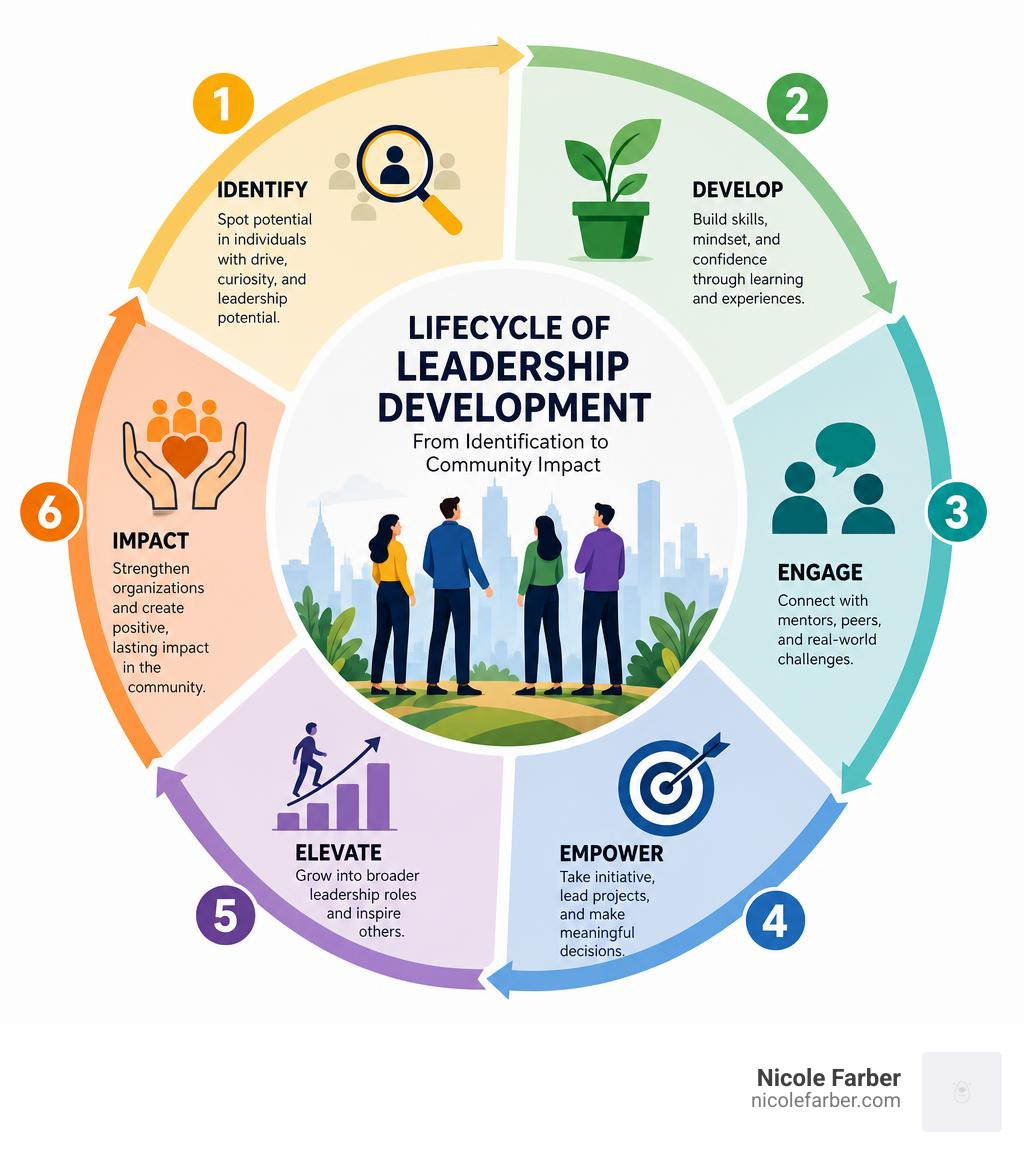

When we talk about an emerging business leader, we are not just referring to someone with an impressive job title or a corner office. True leadership starts long before a person reaches the C-suite. We define these individuals by their drive, their ability to influence others positively, and their commitment to continuous growth. They are the high-potential professionals who look at challenges as opportunities and actively seek out ways to elevate their teams.
Identifying these leaders early is a crucial step in building a sustainable talent pipeline. Organizations and selection committees look for a unique blend of emotional intelligence, strategic thinking, and resilience. To understand the foundational qualities that make someone stand out, it helps to ask: What is Leadership? It is the art of motivating a group of people to act toward achieving a common goal, and emerging leaders demonstrate this long before they are formally asked to lead.
On a national level, initiatives like The CO—100 List: Micro-Business Leaders showcase how small-scale entrepreneurs and agile business minds are redefining leadership across the USA. These programs prove that emerging talent can be found in every corner of our economy, from tech startups to local boutique agencies.
How Programs Select Emerging Business Leaders
The selection process for formal leadership development programs is designed to filter for both capability and character. For academic and university-based programs, academic performance often serves as a baseline. For example, many selective student cohorts require a minimum 3.2 GPA. However, numbers only tell a small part of the story.
Selection committees look closely at:
- Leadership Demonstration: Evidence of taking initiative in group projects, student organizations, or previous employment.
- Extracurricular Activities: Active involvement in sports, debate clubs, or community service that showcases teamwork and dedication.
- Application Essays and Recommendations: Personal narratives that highlight how the applicant handles adversity and collaborates with diverse groups.
For young professionals, the focus shifts to workplace contributions and a demonstrated desire to grow. If you are preparing to apply for such a program or want to stand out in your current role, learning How to Become an Effective Leader is an excellent starting point to refine your personal brand and skill set.
Goals and Benefits of Leadership Development Programs
Why do organizations, chambers of commerce, and academic institutions invest so heavily in developing emerging business leaders? The answer lies in the massive return on investment for everyone involved. For the participants, these programs offer career acceleration and an fast-track path to management roles. For organizations, they ensure talent retention and a smooth transition of power when senior leaders retire.
When we look at the broader picture, the benefits extend deep into our communities. Well-trained leaders build healthier businesses, which in turn create more jobs and support local economic development. To explore the full scope of these organizational dynamics, our Business Leadership Complete Guide provides deep insights into how structured training translates directly into business success.
Career Outcomes for Emerging Business Leaders
The practical impact of these programs on an individual’s career trajectory is measurable and profound. Participants consistently report a marked increase in their workplace influence and strategic decision-making capabilities.
Many premier programs are structured as a seven-month immersive leadership and talent development experience. Over this period, participants move beyond basic management tasks to master executive communications, conflict resolution, and change management. This intensive preparation helps professionals transition From Good to Great: How to Lead Your Team to Peak Performance, turning high-potential employees into highly effective executives who drive real business results.
Program Structure and Curriculum Design
To turn potential into performance, leadership development programs rely on carefully designed curricula. These are not passive lecture series; they are dynamic, interactive experiences. A typical curriculum combines rigorous classroom training with hands-on exercises, mentorship, and peer networking.
One of the key concepts taught in modern programs is polarity management—the ability to navigate and balance seemingly opposing forces, such as short-term results versus long-term sustainability, or individual autonomy versus team collaboration. Alongside these soft skills, programs also incorporate technical training, such as financial literacy, data-driven decision making, and strategic planning. To build a robust framework for your own team, exploring modern Business Leadership Strategies can help you align your curriculum with real-world market demands.
Immersive Experiences and Real-World Application
The best learning happens when theory meets practice. That is why top-tier programs incorporate immersive experiences like leadership labs, where participants are placed in high-pressure, simulated business scenarios.
In many local ecosystems, this real-world application is tied directly to entrepreneurship. For example, in Pennsylvania, initiatives like the Local startups highlighted through TechCelerator @ Luzerne County … give rising talent a platform to pitch ideas, solve operational bottlenecks, and engage directly with regional business incubators.
Furthermore, many programs build communication confidence by providing public speaking opportunities or incorporating structured speaking groups, such as Toastmasters memberships, to help participants master the art of the presentation.
| Feature | University-Based Programs | Chamber-Led / Regional Cohorts |
|---|---|---|
| Primary Audience | High school seniors & undergraduate students | Young professionals (typically aged 22–40) |
| Duration | Intensive summer weeks or semester-long cohorts | 7 to 9 months (usually meeting monthly) |
| Focus Areas | Academic foundations, career exploration, basic business disciplines | Executive communication, local economic impact, advanced networking |
| Community Component | Campus integration and peer-to-peer student activities | Public service projects and direct engagement with local non-profits |
Eligibility, Costs, and Scholarship Opportunities
Access to leadership development should not be limited by financial barriers. Programs across the United States structure their eligibility and tuition models to ensure that the brightest minds can participate, regardless of their economic background.
For university-based initiatives, eligibility is often tailored to specific academic milestones—such as programs designed specifically for first-year business students or rising high school seniors. Program fees can range from a few hundred dollars for local workshops to thousands for executive-level university retreats. To navigate these choices and find the right path for your personal development, check out our Good Leader Complete Guide.
Financial Support and Accessibility Initiatives
To support under-resourced or underrepresented individuals, many organizations offer robust financial assistance packages. These initiatives are designed to level the playing field and bring diverse voices into the business ecosystem.
Common financial support mechanisms include:
- Application Fee Waivers: Removing the initial barrier to entry for low-income applicants.
- Engagement Scholarships: Small, targeted stipends (such as a $500 scholarship split across the fall and spring semesters) to offset the cost of program materials or travel.
- Renewable Scholarships: Major institutional awards, sometimes up to $5,000 per year, for students who enroll in affiliated business degree programs.
In regions like Louisiana, the 2025-2026 Emerging Leaders Program hosted by the Greater New Orleans Foundation highlights how community foundations actively fund and support nonprofit and business leaders, ensuring that cost is never a barrier to professional growth.
Fostering Networking, Mentorship, and Community Engagement

A key benefit of any leadership program is the immediate expansion of your professional network. These programs bring together like-minded peers from diverse industries, creating a fertile ground for collaborative learning and lifetime professional relationships.
Through structured networking events, such as morning mixers, after-hours socials, and collaborative team-building exercises, participants learn to build authentic professional relationships. Furthermore, peer-to-peer learning is enriched by direct access to mentors—often local chamber board members or established executives who volunteer their time to guide the next generation.
For young professionals in major metropolitan areas, joining groups like the Emerging Leaders Group in Philadelphia provides an invaluable platform to connect with international business communities and build global perspectives.
Regional Impact and Talent Ecosystems
Local leadership programs do not operate in a vacuum; they are vital engines for regional economic prosperity. By keeping high-potential talent engaged locally, these programs prevent “brain drain” and ensure that communities have a steady supply of capable leaders to steer local industries.
In Pennsylvania, the Greater Wilkes-Barre Chamber of Business and Industry plays a pivotal role in this space, running programs that connect young professionals directly to local board seats and public service projects.
This model of localized, high-impact leadership development is mirrored internationally. For instance, looking at global forums like Who Comes? – The Antigua Forum – Universidad Francisco Marroquín in Antigua Guatemala, we see how bringing together highly motivated disruptors and business leaders from around the world can spark innovative solutions to complex economic challenges on a global scale.
Diversity, Inclusion, and Support for Underrepresented Professionals
We firmly believe that the future of business leadership must be as diverse as the communities we serve. Bringing together individuals with different backgrounds, life experiences, and perspectives leads to better problem-solving, greater innovation, and stronger organizational resilience.
A key part of this effort is actively Developing Female Leaders and supporting minority entrepreneurs who have historically faced systemic barriers to funding and mentorship. When we look at successful global examples, leaders like Maliha M. Quadir , who founded a massive digital services platform in an emerging market, show the incredible economic impact of supporting diverse founders.
Similarly, fintech leaders and authors like Emily Tsitrian demonstrate how modern professionals can successfully transition across industries, write their own playbooks, and mentor the next generation of managers. By creating inclusive spaces where every participant feels valued, emerging leader initiatives ensure that our future business landscape is both equitable and highly competitive.
Frequently Asked Questions about Emerging Business Leaders
What is the typical age range for emerging business leader programs?
While “emerging” refers to a stage of leadership development rather than a specific age, most professional programs target young professionals aged 22 to 40. However, there are also highly effective programs designed specifically for high school seniors and first-year college students to spark their entrepreneurial drive early.
Do these programs require an interview for selection?
It depends on the program. Some highly competitive corporate or regional cohorts require a multi-stage interview process. However, many university and community-based programs rely entirely on a comprehensive application review by a selection committee, focusing on academic performance, essays, and demonstrated community involvement.
How do leadership programs support local communities?
Most structured programs build community service directly into their graduation requirements. Participants commit to volunteer projects, collaborate with local non-profits, and apply their newly acquired business skills to solve real-world challenges, driving philanthropic support and economic vitality in their home cities.
Conclusion
Investing in emerging business leaders is the single most effective way to secure the future of our businesses and our communities. Whether you are a young professional looking to take the next step in your career, or an executive seeking to build a stronger talent pipeline, these programs provide the roadmap, the network, and the inspiration to make it happen.
At Nicole Farber, our journey is rooted in real-life experience. Guided by faith-driven leadership and the resilient spirit of a single mother who built a thriving enterprise in the competitive legal marketing space, we are passionate about empowering the next generation to lead with integrity, empathy, and purpose.
If you are ready to cultivate the mindset required to lead in today’s dynamic business environment, we invite you to explore our Entrepreneur Mindset Development Complete Guide and discover actionable growth tactics in our Business Leadership Strategies Guide.
Are you ready to unlock your full potential and lead your organization to new heights? Learn more in the Nicole Farber Business Leadership Ultimate Guide and begin your leadership transformation today.