Unlocking Her Potential: A Guide to Developing Strong Female Leaders
- Leadership
- In the News
- November 26, 2025
Why Developing Female Leaders Is a Business Imperative

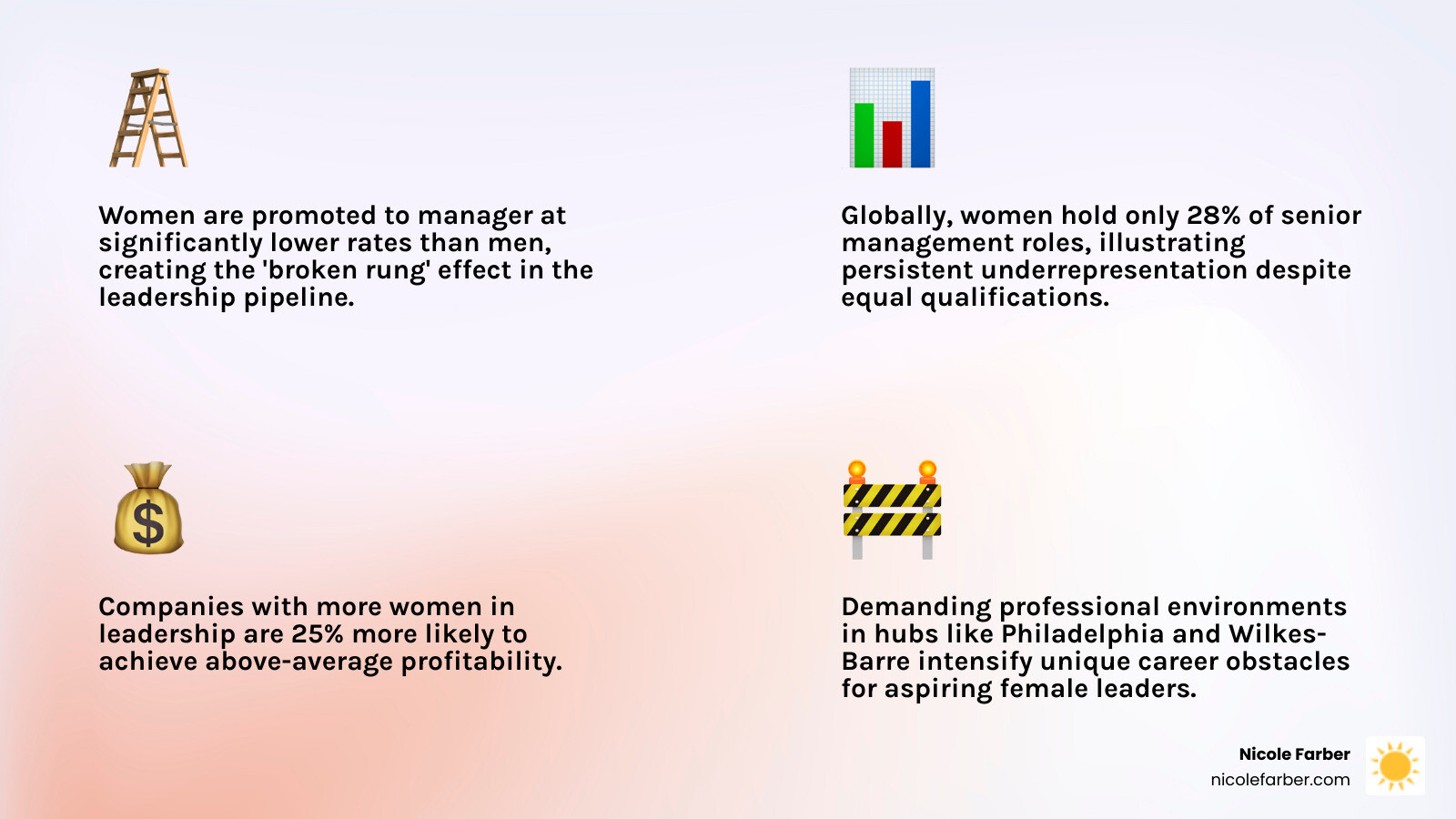
Developing female leaders is not just about fairness—it’s a business imperative that open ups untapped potential. Despite equal education and ambition, women remain underrepresented in leadership, holding only 10% of Fortune 500 CEO positions and 28% of senior management roles globally.
The biggest obstacle is the “broken rung”—the critical first promotion to manager, where women lag significantly behind men. This initial gap limits the entire leadership pipeline.
Yet, the business case is clear: companies with more women in leadership are more profitable, innovative, and collaborative. Female leaders foster cultures of trust and psychological safety. This isn’t just good ethics; it’s smart strategy, especially in demanding professional hubs like Philadelphia, New Orleans, and Wilkes-Barre.
As CEO of ENX2 Legal Marketing, I’ve spent over 15 years helping organizations from Luzerne County to Antigua Guatemala build stronger leadership pipelines by investing in women. The key is intentional, systematic action, including:
- Addressing the “broken rung.”
- Implementing mentorship and sponsorship programs.
- Creating flexible, targeted development opportunities.
- Building strong professional networks.
- Fostering an inclusive culture that challenges bias.
The Proven Value: Why More Women in Leadership Lifts Everyone
When women step into leadership, the entire organization transforms for the better. Developing female leaders isn’t just the right thing to do—it’s a strategic move that lifts everyone.

The benefits go far beyond the bottom line. Female leaders often bring changeal leadership styles that improve team collaboration, inspire mission-driven work, and boost collective intelligence. Their presence also builds organizational trust, as employees anticipate fairer treatment and greater equity for everyone. This positive shift leads to higher satisfaction, reduced burnout, and stronger commitment across all levels. For more on this, see our Business Growth Strategies Ultimate Guide.
The Bottom-Line Benefits of Gender Diversity
The numbers tell a powerful story. Gender diversity is a competitive advantage. According to extensive research by McKinsey, companies in the top quartile for gender diversity on executive teams are 25% more likely to achieve above-average profitability.
Diverse perspectives lead to better problem-solving and innovation. Whether you’re in Philadelphia, New Orleans, or Luzerne County, a leadership team that reflects your market’s diversity will understand customers better and spot opportunities others miss. This advantage helps attract top talent and gives you a strategic edge.
The Cultural Impact of Female Leaders
Beyond the numbers, female leaders create profound cultural shifts. They are more likely to foster genuine inclusivity and psychological safety, creating environments where all voices matter and people feel comfortable taking risks. I’ve seen this in organizations from Antigua Guatemala to Philadelphia.
The ripple effects are clear: higher organizational commitment, reduced employee burnout, and greater job satisfaction for all genders. Female leaders model respectful, effective leadership and inspire the next generation to reach higher. This is what Being a Good Leader in the Workplace is all about—creating an environment where everyone can flourish.
Navigating the Obstacle Course: Common Challenges and How to Address Them
The path to leadership for women often feels like a maze. While the benefits of developing female leaders are clear, we must acknowledge the real obstacles they face.

Key challenges include:
- The “Broken Rung”: The biggest roadblock is the first promotion to manager, where women are promoted less often than men, stalling the leadership pipeline.
- Unconscious Bias: Women often receive vague, subjective feedback in performance reviews, while men get specific, actionable advice. This bias devalues their contributions and hinders growth.
- The “Second Shift”: A high percentage of women manage the majority of household and childcare duties after a full workday, leading to exhaustion and impossible choices between career and family.
- Other Problems: Imposter syndrome, daily microaggressions, and a lack of visible role models also take a toll.
These pressures are intense in demanding environments like Philadelphia and New Orleans. Women from Wilkes-Barre to Luzerne County are pushing through, but they need organizational support. That’s why I’m passionate about Empowering Women Entrepreneurs to break through these barriers.
Identifying and Mitigating Unconscious Bias
Unconscious bias is a silent but powerful barrier. It appears in project assignments, mentorship opportunities, and performance reviews, where a woman might be called “aggressive” for behavior praised as “decisive” in a man. To combat this:
- Implement Bias Training: Make awareness an ongoing conversation, not a one-time workshop.
- Audit Processes: Regularly review promotion rates, pay scales, and performance data to spot and correct bias.
- Promote Objective Feedback: Shift from subjective personality critiques to specific, behavior-based feedback.
- Establish Accountability: Set and track diversity goals for leadership roles.
This work is central to effective Business Leadership Strategies.
Supporting Work-Life Integration and Well-Being
For many women, “work-life balance” is a myth. The reality is a “second shift” that leads to burnout. The solution isn’t balance, but integration—workplaces that acknowledge people have full lives.
- Offer Flexible Work: Remote options, flexible hours, and compressed workweeks are game-changers, allowing women to manage responsibilities without sacrificing their careers.
- Provide Family Support: Comprehensive parental leave and childcare support are essential infrastructure for retaining female talent.
- Prioritize Well-Being: Offer stress management resources and mental health services, and foster a culture that encourages their use.
Empathetic leadership is key. In demanding areas like New Orleans and Luzerne County, managers must ask what their team members need instead of assuming. When organizations prioritize integration, women can bring their full selves to work. If you need personalized support, Life Coaching for Women can help.
A Strategic Blueprint for Developing Female Leaders
To seriously commit to developing female leaders, we need a comprehensive blueprint, not just good intentions. The goal isn’t to change women; it’s to change the systems around them.

This requires a “whole systems” approach centered on culture, executive buy-in, and accountability. From my work with firms in Philadelphia and New Orleans, I’veseen that success comes from identifying potential early, providing challenging assignments, and creating psychological safety. Leaders must be held accountable for measurable progress on gender parity. Our Leadership Development Seminars help build this strategic framework.
Foster a Culture of Sponsorship and Mentorship
Mentorship is valuable, but sponsorship is a game-changer.
- A mentor is a trusted advisor who offers guidance and helps build confidence. They create a safe space for women, from Wilkes-Barre to Antigua Guatemala, to explore their ambitions.
- A sponsor is an advocate who uses their influence to create opportunities. They recommend you for high-visibility projects and speak up for you when you’re not in the room. A mentor prepares you; a sponsor opens the door.
Effective organizations formalize both, training senior leaders (including men) to be active allies. Structured programs are crucial because women are often conditioned against self-advocacy, and these relationships ensure their work gets the recognition it deserves.
Implement Flexible and Targeted Development Programs
Traditional, rigid leadership programs are a barrier for women juggling multiple responsibilities. A modern approach is essential.
- Identify Potential Early: Give high-potential women challenging assignments and coaching long before they are ready for the C-suite.
- Customize Content: Tailor programs to your context, whether you’re a law firm in Philadelphia or a startup in New Orleans, focusing on key competencies like strategic thinking.
- Offer Flexibility: Provide virtual and on-demand options. A professional in Luzerne County or Antigua Guatemala needs accessible formats that fit her life.
- Build Specific Skills: Offer workshops on negotiation, influence, and self-advocacy, paired with personalized executive coaching.
For leaders ready to advance, our CEO Coaching Services offer custom support.
Create Powerful Networking Opportunities
Networking isn’t about being transactional; it’s about building genuine relationships. Organizations must actively facilitate these connections, not just encourage them.
- Facilitate Internal Connections: Bring women together across departments to foster organic mentorship and collaboration.
- Support Professional Groups: Sponsor memberships and participation in women-led organizations.
- Guide Strategic Networking: Help women identify who they need to know to achieve their next career goal.
- Champion Local Initiatives: Support groups like Philadelphia Women in Business that build powerful community connections.
Key Competencies for High-Potential Women
For women navigating the path to leadership, certain competencies are vital. My work with leaders from Philadelphia to Wilkes-Barre shows that success hinges on a few key capabilities.

Research shows the most critical competencies for women to develop are managing organizational complexity and strategic thinking. These are foundational skills for thriving in leadership. Other essential skills include:
- Resilience: The ability to bounce back from setbacks, which is non-negotiable in demanding environments.
- Negotiation: Advocating effectively for yourself, your team, and your organization.
- Self-Advocacy: Articulating your ambitions and achievements to ensure you’re not overlooked.
- Influence: Inspiring action and building consensus.
These skills create a powerful foundation for developing female leaders who excel. For more guidance, explore our resources on Strategic Goal Setting.
Building Resilience and a Growth Mindset
Leadership is messy and full of setbacks. Resilience—the ability to bounce back—and a growth mindset—the belief that you can develop your abilities—are essential. A growth mindset transforms challenges into learning opportunities.
As a single mother building a business, I learned to view setbacks as temporary and specific, not permanent or personal. Instead of internalizing failure, ask, “What can I learn from this?” This builds the mental fortitude to lead and prevent burnout, especially in demanding hubs like Philadelphia and New Orleans. Often, Chaos Brings Opportunity for profound growth.
Mastering Self-Advocacy and Influence
Being good at your job isn’t enough; you must also be good at communicating your value. Your work can’t speak for itself—you have to.
Self-advocacy means promoting your achievements, seeking challenges, and making your career goals known. It includes negotiating for raises and promotions, even when it’s uncomfortable. Influence is about building consensus and inspiring action through a compelling vision. In my work from Wilkes-Barre to Antigua Guatemala, I’ve seen women who master influence transform their organizations. Every woman has a gift to offer; learn how to Choose to Embrace Your Gift and Let It Shine.
Frequently Asked Questions about Developing Female Leaders
Here are answers to common questions I hear from leaders about developing female leaders, based on my work from Philadelphia to Wilkes-Barre.
What is the single biggest barrier for women advancing into leadership?
The biggest barrier is the “broken rung”—the first promotion from an entry-level role to manager. Women are promoted at significantly lower rates than men at this critical stage. If they can’t get on the first rung of the leadership ladder, they can’t enter the pipeline for senior roles. This is a systemic issue that organizations must fix.
Are women as ambitious as men when it comes to leadership?
Yes, absolutely. Research shows women and men have equal interest in promotions and leadership development. A study we conducted found 81% of women were interested in leadership training. The problem isn’t a lack of ambition; it’s that organizations often assume what women want instead of asking. From New Orleans to Luzerne County, the ambition is there; it just needs opportunity.
How can small businesses with limited resources support the development of female leaders?
You don’t need a huge budget, just intentional commitment.
- Focus on Culture: Create an inclusive environment where women are valued. This costs nothing but effort.
- Start a Mentorship Program: Pair aspiring female leaders with senior staff. Informal but purposeful guidance can be transformative.
- Provide High-Visibility Projects: Offer challenging assignments that allow women to demonstrate their potential.
- Offer Flexibility: Flexible work arrangements are a low-cost, high-impact way to support women balancing career and personal responsibilities.
- Give Constructive Feedback: Ensure feedback is specific, actionable, and free of bias.
In small businesses, like those in Wilkes-Barre and Luzerne County, these intentional actions can create dramatic, visible change.
Conclusion: It’s Time to Open up Her Full Potential
The case for developing female leaders is undeniable. It’s not just about fairness; it’s about building stronger, more profitable, and more innovative organizations. Companies with more women in leadership see better financial results and healthier cultures that reduce burnout and lift everyone.
We’ve been honest about the barriers: the “broken rung,” unconscious bias, the “second shift,” and a lack of sponsorship. But from my own journey and my work with leaders from Philadelphia to Antigua Guatemala, I know these obstacles are surmountable.
Change requires intentional action: fixing broken systems, fostering sponsorship, offering flexible development, and teaching key competencies like strategic thinking and resilience. It means helping women find their voice and articulate their ambitions.
As a single mother who built a business through faith and perseverance, I know that with the right support, potential is limitless. The moral and business cases align. It’s time to stop acknowledging the problem and start taking concrete action. Invest in the women who are ready to lead, dismantle the systems holding them back, and create an organization where all talent can rise.
Ready to take the next step in your leadership journey or empower the women in your organization? Explore how we can support you with Life Coaching for Women.