Brotherly Love, Motherly Leads: Philadelphia Small Business Marketing Guide
- Marketing
- In the News
- June 26, 2026
Brotherly Love, Motherly Leads: Philadelphia Small Business Marketing Guide
Why Philadelphia Small Business Marketing Is More Competitive Than Ever
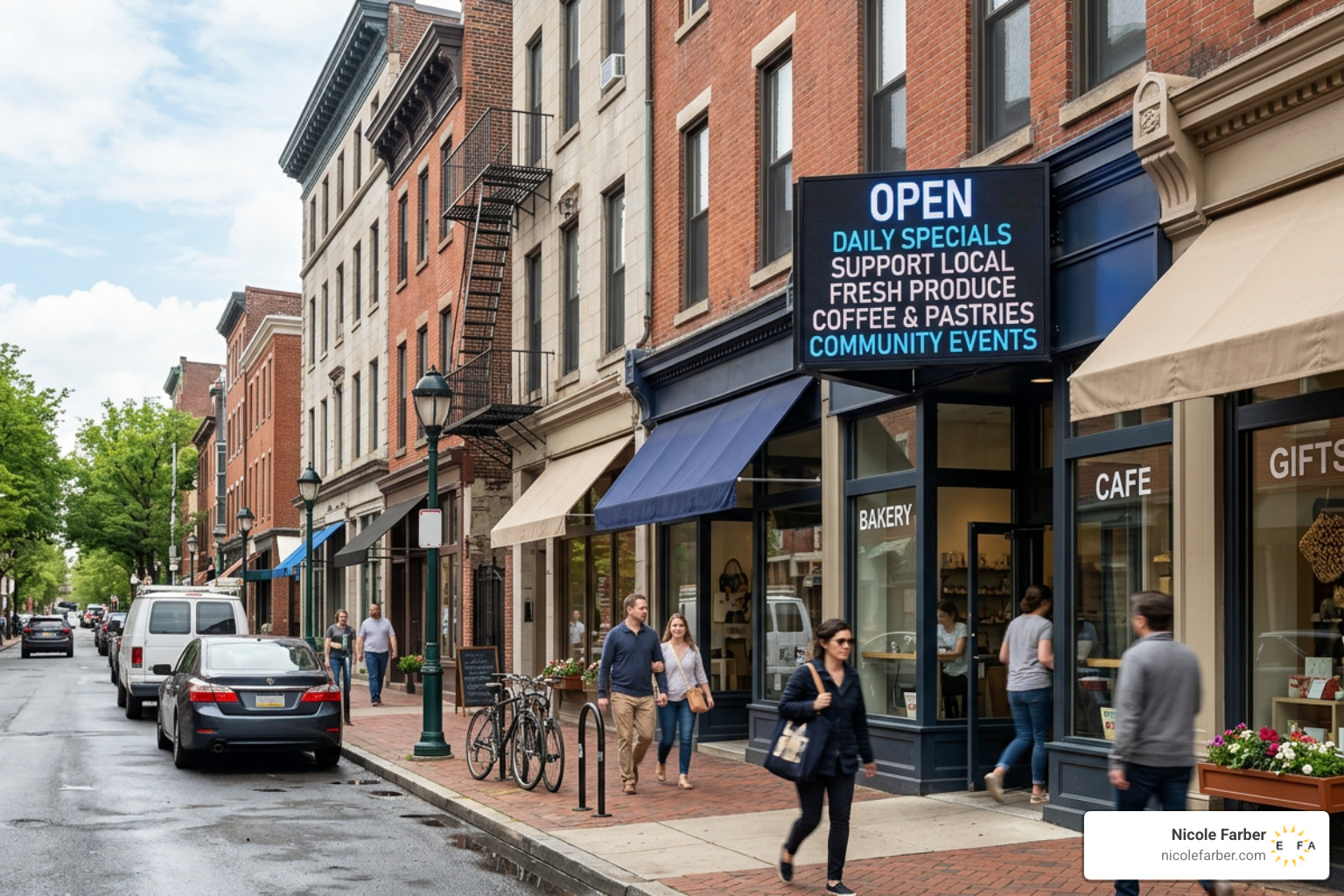
Philadelphia small business marketing has never been more critical — or more complex — for local owners trying to grow in one of the country’s most dynamic cities.
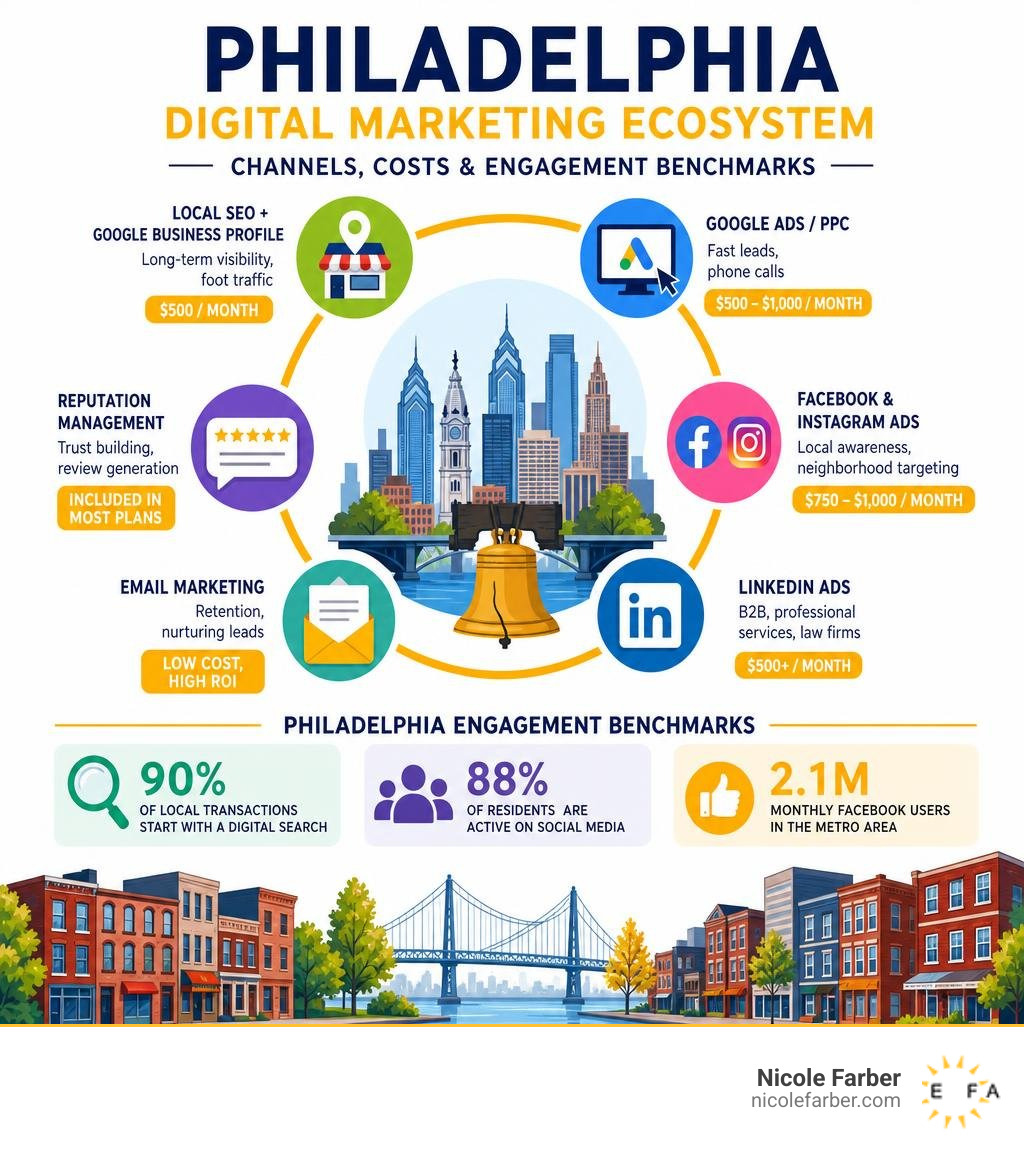
Here’s a quick snapshot of what works for Philadelphia small businesses right now:
| Marketing Channel | Best For | Starting Budget |
|---|---|---|
| Local SEO + Google Business Profile | Long-term visibility, foot traffic | $500/month |
| Google Ads / PPC | Fast leads, phone calls | $500-$1,000/month |
| Facebook & Instagram Ads | Local awareness, neighborhood targeting | $750-$1,000/month |
| LinkedIn Ads | B2B, professional services, law firms | $500+/month |
| Reputation Management | Trust building, review generation | Included in most plans |
| Email Marketing | Retention, nurturing leads | Low cost, high ROI |
Over 90% of local transactions in Philadelphia start with a digital search. With roughly 88% of residents active on social media, and Facebook alone reaching 2.1 million monthly users in the metro area, the opportunity is real — but so is the competition.
Philadelphia is not a generic market. Its tight-knit neighborhoods, passionate local identity, and mix of universities, law firms, healthcare systems, and small retailers create a marketing landscape that rewards specificity over scale. Generic campaigns built for other cities routinely fall flat here.
I’m Nicole Farber, CEO of ENX2 Legal Marketing, and with over 15 years of experience helping law firms and small businesses grow through smart Philadelphia small business marketing strategy, I’ve seen what moves the needle in this city — and what quietly drains your budget.
Easy Philadelphia small business marketing word list:
The Core Channels of Philadelphia Small Business Marketing
To build a marketing engine that doesn’t just burn cash, we have to look at the channels that yield the highest return on investment. In our decades of experience navigating the local business landscape—from the historic streets of Philly to the bustling corridors of Wilkes-Barre and New Orleans—we have found that the most successful campaigns integrate multiple digital touchpoints rather than relying on a single silver bullet.

When we design a cohesive strategy, we look at search engine optimization (SEO), paid advertising, social media, and email marketing. Each plays a distinct role in the buyer’s journey, steering prospects from initial awareness to a closed sale. According to the Marketing and sales | U.S. Small Business Administration – SBA, establishing a solid mix of these channels is essential to building a sustainable market presence.
For the growing community of female entrepreneurs, aligning these channels can be a massive game-changer. We love championing these efforts, which you can read more about in our guide on Philadelphia Women in Business.
Search Engine Optimization and Local Search Visibility
If your business isn’t visible when someone searches “near me” in Philadelphia, you are essentially invisible to over 90% of your potential customer base. Local SEO is the process of optimizing your online presence so that search engines direct local searchers straight to your door.
The cornerstone of local SEO is your Google Business Profile (GBP). This free listing is what powers Google Maps and the “Local 3-Pack” that appears at the top of search results. To optimize your GBP, you must:
- Ensure your Name, Address, and Phone Number (NAP) are 100% consistent across the entire web.
- Select the correct primary and secondary business categories.
- Upload high-resolution photos of your business, team, and projects regularly.
- Actively generate and respond to customer reviews.
Beyond your GBP, on-page and technical SEO are critical. We must ensure our websites are fast, mobile-friendly, and structured with clear sitemaps. Keyword research shouldn’t target broad national terms; instead, focus on geo-modified keywords like “family law firm Center City” or “HVAC repair Manayunk.” By pairing these technical foundations with AI-driven, highly localized content, we help small businesses build long-term organic authority and put your brand at the top of search engine results pages.
Paid Advertising and Social Media Strategies
While SEO is a long-term play, paid advertising offers immediate visibility. For Philadelphia businesses, Facebook and Instagram Ads present an incredible opportunity to reach highly specific demographics.
With approximately 88% of Philadelphia residents using at least one social media platform and over 72% accessing these networks via mobile devices, your creative assets must be designed for mobile first. Facebook’s 2.1 million monthly active users in the Philly area provide a massive pool of potential leads.
When running social ads, budget efficiency is key. The cost per thousand impressions (CPM) in Philadelphia typically ranges from $6 to $9 on Facebook and $6 to $15 on Instagram. To maximize this spend, we recommend scheduling ads to peak during hours of high engagement, notably lunch hours (12-2 PM) and evenings (7-9 PM).
For B2B businesses, professional service providers, and law firms, LinkedIn is a goldmine. With over 940,000 professionals actively using the platform in the greater Philadelphia region, targeted LinkedIn ads can put your offer directly in front of key decision-makers. Navigating these platforms can be overwhelming, but crafting targeted, high-impact social campaigns is essential to capturing attention and driving real business growth.
Hyper-Local Targeting: Winning the Philly Neighborhoods
One of the most unique aspects of Philadelphia small business marketing is the city’s intense neighborhood pride. Philadelphia is a collection of distinct communities, each with its own culture, demographic makeup, and local jargon. An ad that resonates in Fishtown might completely miss the mark in Chestnut Hill or South Philly.

This hyper-local reality isn’t unique to Philadelphia. Whether we are building campaigns for businesses in Wilkes-Barre, Luzerne County, New Orleans, or even our partners in Antigua Guatemala, understanding local dynamics is the key to unlocking growth. This is a core philosophy we detail in our guide on Leadership Strategies in Philadelphia, Wilkes-Barre, New Orleans & Antigua Guatemala. For businesses looking to anchor themselves in regional communities, connecting with resources like the Resource Directory • Luzerne County, PA • CivicEngage is a fantastic way to build local partnerships.
Geo-Targeting and Neighborhood-Specific Messaging
To win the battle for local market share, we must utilize advanced geo-targeting. Instead of targeting the entire city of Philadelphia with a broad radius, we can target specific postal codes or set up virtual perimeters (geofencing) around key locations.
For example, a restaurant near the Academy of Music can set up a geofenced ad campaign targeting theatergoers within a two-block radius during show times, offering a special late-night dessert discount.
When targeting neighborhoods like Fishtown, Manayunk, Center City, or University City, your ad copy must reflect that specific local identity. Use neighborhood-specific landmarks, reference local culture, and speak directly to the lifestyle of those residents. If you are targeting commuters, consider aligning your ads with commuter patterns, such as targeting regional rail users or specific highway corridors during peak rush hours.
Leveraging Local Events, Seasonality, and Community Engagement
Philadelphia consumers are incredibly community-oriented. In fact, local users show a 27% higher engagement rate with content related to local causes compared to standard promotional content. Aligning your brand with local charities, youth sports leagues, or neighborhood cleanups is not just ethical—it is highly effective marketing.
Seasonality and massive local events also offer incredible springboards for your campaigns. With major international events like the World Cup coming to Philadelphia in 2026, local businesses have a once-in-a-lifetime opportunity to capture the attention of both locals and tourists.
Additionally, align your campaigns with:
- Academic Calendars: University City and surrounding areas flood with students and parents during move-in weeks, graduations, and parents’ weekends.
- Sports Calendars: Philadelphians live and breathe their sports teams. Tying promotions to Eagles, Phillies, Sixers, or Flyers game days naturally boosts engagement.
- Weather-Based Triggers: Home service businesses (like HVAC or roofing) can run highly automated PPC campaigns that trigger during extreme heatwaves or winter storms.
Budgeting, ROI, and Competing with the Giants
A common misconception among small business owners is that you need a massive, corporate-sized budget to compete in the digital space. The beauty of digital marketing is that agility and smart targeting can easily outperform brute-force spending.
| Business Size | Annual Revenue | Recommended Marketing Budget (7-12%) | Social Media Share (15-30%) |
|---|---|---|---|
| Micro-Business | Under $250k | $17,500 – $30,000/year ($1,450 – $2,500/mo) | $220 – $750/month |
| Small Business | $250k – $1M | $30,000 – $120,000/year ($2,500 – $10,000/mo) | $375 – $3,000/month |
| Mid-Sized Local | $1M – $5M | $120,000 – $600,000/year ($10,000 – $50,000/mo) | $1,500 – $15,000/month |
To take your business from a local startup to a market leader, you need a clear financial roadmap. We outline this trajectory in our resource From Startup to Soaring: Unlocking Business Growth in Philadelphia. If you are looking for local funding or marketing support, programs like the Small Business Marketing Assistance Program can provide vital resources to help offset these initial costs.
Setting a Realistic Philadelphia Small Business Marketing Budget
Most successful Philadelphia small businesses allocate between 7% and 12% of their total revenue to marketing. If you are a newer business looking to scale aggressively, that number might lean closer to 15%. Within that overall marketing budget, we typically see social media advertising comprising 15% to 30% of the spend.
A realistic starting budget for a small business in Philadelphia is around $750 to $1,000 per month for paid channels. When starting out, we advise allocating your budget using a 60/25/15 rule:
- 60% to Core Platforms: Focus this on the high-intent platforms where your customers are most active (e.g., Google Ads or Facebook/Instagram).
- 25% to Secondary Platforms: Support your core campaigns with retargeting or secondary channels (like LinkedIn for professional networks).
- 15% to Experimental Campaigns: Keep a small portion of your budget reserved for testing new platforms, local event sponsorships, or creative ad formats.
To get the most out of your budget, we highly recommend working with a dedicated strategy expert. Consulting with an experienced business development advisor can help you audit your current spend and build a step-by-step roadmap to eliminate wasted ad dollars.
Measuring ROI and Tracking Campaign Success
We must never treat marketing as an expense; it is an investment. If you cannot track the exact return on your marketing spend, you are throwing money into a black hole.
To measure success, we must look beyond “vanity metrics” like likes, shares, or impressions. While high engagement is great, it doesn’t pay the rent. Instead, focus on:
- Conversion Rate: The percentage of website visitors who take a desired action (e.g., filling out a contact form or calling your office).
- Cost Per Lead (CPL): How much it costs you in ad spend to acquire a single qualified inquiry.
- Customer Acquisition Cost (CAC): The total marketing and sales spend required to land a paying customer.
- Phone Call Tracking: Utilizing unique tracking numbers to see exactly which ad campaigns are driving direct phone calls.
By setting up robust tracking in Google Analytics 4 (GA4) and integrating your lead forms with a CRM, you can trace a direct line from a specific click to a closed sale.
Building Your Growth Foundation: Consulting, Coaching, and Strategy
Marketing is not just about tools and algorithms; it is about leadership, vision, and strategic alignment. Without a strong foundation, even the most sophisticated digital campaigns will crumble.
To truly stand out, business owners must find their unique voice and learn to project authority. Whether you are pitching a new client, speaking at a community event, or presenting your brand online, working with a Public Speaking Coach in Philadelphia can help you build the confidence and presence needed to lead your market.
Choosing the Right Growth Partner for Philadelphia Small Business Marketing
As a business owner, you wear dozens of hats every single day. Trying to manage your own SEO, run paid ads, post on social media, and handle customer service is a recipe for burnout. At some point, you must decide how to scale your marketing efforts.
You generally have three options:
- Hiring a Freelancer: Great for executing specific, isolated tasks (like writing blog posts or designing graphics) at a lower cost, but they often lack the big-picture strategic vision.
- Hiring a Full-Service Agency: Ideal for businesses that want a completely “done-for-you” experience. Agencies bring a full team of specialists (SEO experts, copywriters, designers, and ad managers) to handle everything, allowing you to focus entirely on running your business.
- Partnering with a Business Consultant: Perfect for owners who want to maintain internal control but need expert, strategy-first guidance to identify blind spots, build roadmaps, and align marketing with overall business development.
If you are in the early stages of planning, looking into local educational resources like Starting a Business can provide a solid foundation for your operational and marketing strategies.
Compliance, Ethics, and Integrating Offline Channels
In our digital-first world, we must not forget the power of offline marketing. The most impactful campaigns are those that seamlessly integrate digital and traditional channels. For instance, you can use direct mail or print media featuring QR codes that drive users to a custom, high-converting digital landing page. In-store promotions, local event sponsorships, and vehicle wraps can also feed your digital funnel by driving local search volume.
However, as we expand our footprint, we must remain highly vigilant about compliance and ethics. Philadelphia small businesses must navigate:
- Data Privacy Regulations: Ensuring your website has a clear privacy policy and transparent data collection practices.
- Local Advertising Ordinances: Adhering to specific city guidelines regarding promotional signage and local business disclosures.
- Industry-Specific Rules: Law firms, medical practices, and financial advisors face incredibly strict ethical guidelines regarding advertising language, client testimonials, and case results.
To stay informed on modern, ethical marketing trends, tuning into resources like the Making Good: Small Business Marketing Podcast can offer valuable insights from industry experts.
Frequently Asked Questions about Philly Marketing
How do SEO, paid ads, and reputation management work together?
These three elements form the “triple threat” of local digital marketing. Paid ads capture immediate, high-intent traffic at the very top of search results. SEO builds your long-term organic authority, ensuring you appear in search results without paying for every click. Reputation management (generating positive reviews) acts as the trust builder; when a user clicks your organic listing or ad and sees hundreds of 5-star reviews, their likelihood of converting skyrockets.
How can small businesses compete with larger companies in Philadelphia?
Small businesses have a secret weapon: agility. While massive corporations have huge budgets, they are slow to adapt and their messaging is often sterile and generic. Small businesses can win by dominating hyper-local niches, using highly personalized neighborhood-specific storytelling, responding instantly to local events, and providing a level of genuine, community-focused customer service that big corporations simply cannot replicate.
What are the legal and compliance considerations for local marketing?
You must ensure your digital marketing complies with federal and state laws, including the CAN-SPAM Act for email marketing and TCPA regulations for text message marketing. Additionally, if you operate in a regulated industry (like law or medicine), you must ensure all ad copy is completely truthful, non-misleading, and approved by your state’s licensing board.
Conclusion
At the end of the day, successful Philadelphia small business marketing isn’t about chasing every new digital fad or outspending the competition. It is about building authentic relationships, understanding the unique heartbeat of our local neighborhoods, and executing a consistent, data-driven strategy.
Whether we are scaling a business right here in Philly, expanding throughout Wilkes-Barre and New Orleans, or establishing cross-border growth paths, success requires faith-driven leadership and a bulletproof plan. If you are ready to take control of your company’s future, we invite you to read our strategic guide on Business Development Plan 101: Philly to Antigua Guatemala.
Are you ready to stop guessing and start growing? Let us help you build a customized roadmap that turns local searchers into lifelong clients. Explore our core strategic framework at Nicole Farber | Building a Business Development Plan and take the first step toward scaling your business today.