Business Development Plan 101: Philly to Antigua Guatemala
- Entrepreneurship
- In the News
- May 29, 2026
Business Development Plan 101: Philly to Antigua Guatemala
Your Business Growth Starts Here — But Only If You Have a Plan

A business development plan is a focused, written roadmap that outlines exactly how your company will grow — new clients, new markets, new revenue streams — over a defined period of time (typically 12 to 24 months).
Here’s what you need to know at a glance:
| Question | Quick Answer |
|---|---|
| What is it? | A strategic document focused on growth opportunities, partnerships, and client acquisition |
| Who needs one? | Any business — including law firms — that wants predictable, sustainable growth |
| How is it different from a business plan? | A business plan covers all operations; a business development plan focuses only on growth |
| What does it include? | Goals, target audience, market research, tactics, KPIs, and budget |
| How long should it be? | Typically 15–25 pages, with a 2–3 page executive summary |
Here’s something most business owners learn the hard way: hoping for growth is not the same as planning for it.
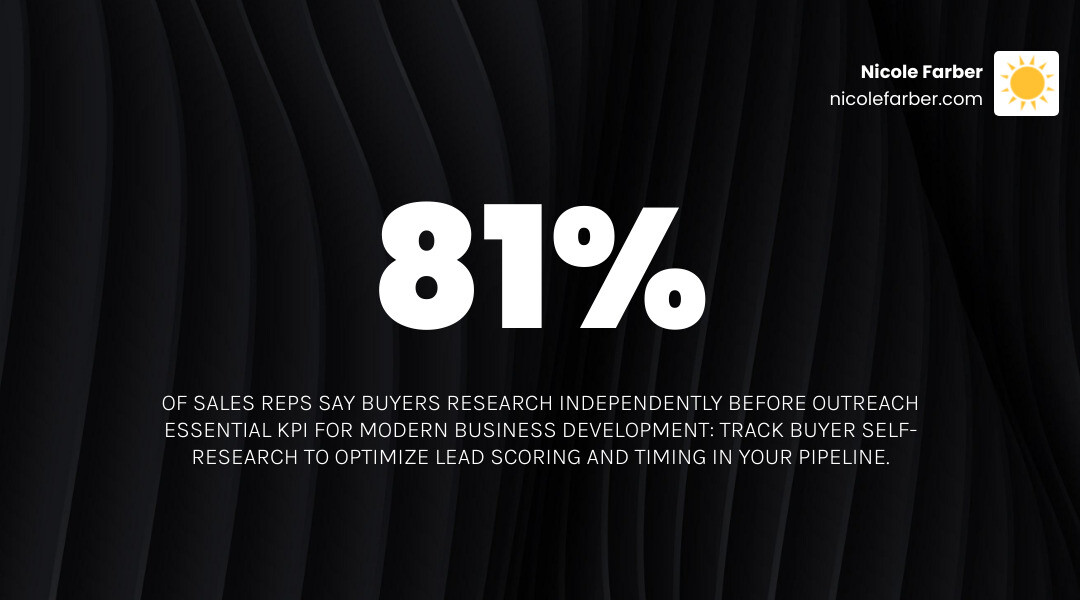
The market doesn’t wait — not in Philadelphia, not in New Orleans, not anywhere. Buyers are doing more research on their own before they ever contact you. Over 80% of sales professionals say they’ve had to rapidly adapt how they work just to keep up with shifting conditions. And more than half of your potential clients may quietly rule you out before they ever pick up the phone.
That’s not a sales problem. That’s a planning problem.
Whether you’re a law firm partner in Luzerne County trying to attract better clients, or a business owner with eyes on markets as far as Antigua Guatemala, the firms that grow consistently are the ones with a clear, written strategy guiding every move.
I’m Nicole Farber, CEO of ENX2 Legal Marketing, and with over 15 years of hands-on experience helping law firms and businesses build and execute a business development plan that actually produces results, I’ve seen what separates the firms that scale from the ones that stall. Let’s break down exactly how to build one that works for you.
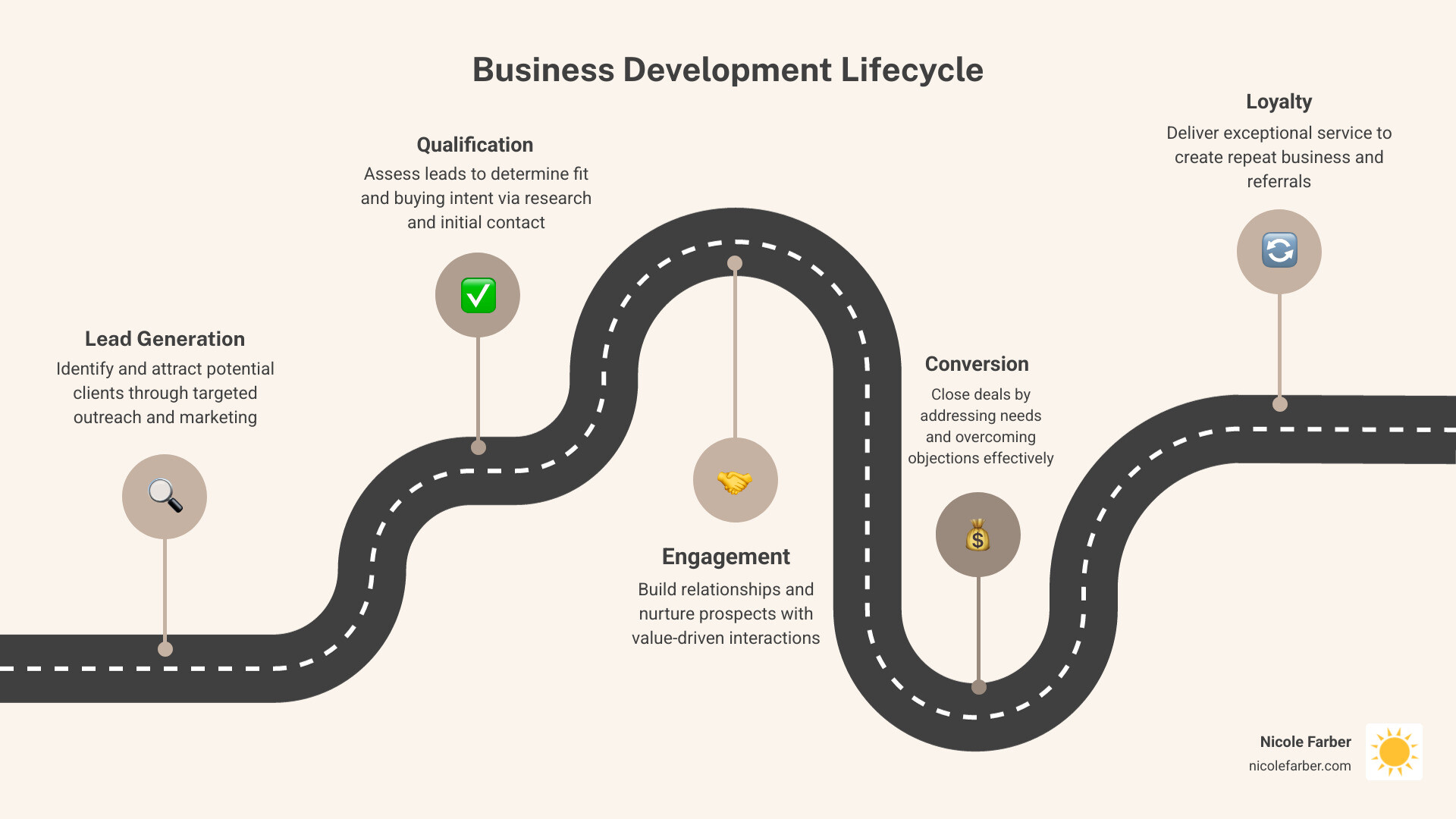
Defining the Business Development Plan vs. Traditional Business Plans

When we talk about a business development plan, it’s easy to confuse it with a traditional business plan. However, as we look ahead in May 2026, the distinction has never been more critical for survival. Think of a traditional business plan as the “Foundational Bible” of your company. It covers everything: your organizational structure, your daily operations, and your long-term 5-year financial projections. It’s what you take to a bank in Wilkes-Barre when you need a startup loan.
A business development plan, on the other hand, is your “Growth Engine.” While a business plan looks at the whole ship, the business development plan is the GPS focused entirely on finding new shores. It typically operates on a shorter timeline—usually 1 to 2 years—with quarterly checkpoints to ensure you aren’t drifting off course.
In a fast-moving market like Philadelphia, waiting five years to see if a strategy works is a recipe for obsolescence. We need to be agile. That is where the Business Development Plan Template for Strategic Growth becomes invaluable. It helps us focus on market expansion and revenue optimization rather than getting bogged down in the minutiae of office supplies or HR handbooks.
Traditional vs. Lean BD Plans
Not every firm needs a 50-page manifesto. Depending on your goals, you might choose between a Traditional or a Lean format.
| Feature | Traditional BD Plan | Lean BD Plan |
|---|---|---|
| Length | 15–25 pages | 1–2 pages |
| Focus | Comprehensive research, detailed financial modeling | High-level key partnerships, activities, and value props |
| Time to Create | Several weeks | As little as one hour |
| Best For | Large law firms, securing major investment | Startups, testing new markets like Antigua Guatemala |
Why Your Business Development Plan Drives Profitability
We often tell our clients that sustainable growth rarely happens by accident. It requires foresight. A well-crafted business development plan drives profitability by shifting the focus from “getting any client” to “getting the right client.”
In New Orleans, for example, the legal market is vibrant but competitive. If you are just “winging it,” you are likely chasing low-value leads that drain your resources. By Building A Business Development Plan, you establish a competitive advantage. You move from being a generalist to a specialist who understands the specific long-term value of relationship building.
Profitability isn’t just about revenue; it’s about the LTV:CAC ratio (Lifetime Value to Customer Acquisition Cost). Research shows that for a growth initiative to be truly profitable, your LTV should be at least three times your CAC. A strategic plan ensures you aren’t spending $500 in marketing to acquire a $400 client.
The Core Components of a High-Growth Strategy

To build a plan that actually moves the needle, we must move beyond vague intentions like “I want more clients.” We need to use “sales math” and SMART goals.
SMART goals are:
- Specific: Increase personal injury leads in Luzerne County.
- Measurable: Aim for a 20% increase.
- Achievable: Based on current staff and budget.
- Relevant: Aligns with our goal to dominate the local market.
- Time-Bound: Achieve this by December 2026.
Using a resource like the Ultimate Business Development Plan Template: A Step-by-Step Guide for Strategic Growth allows you to bridge the gap between ambition and execution. One of the most vital steps in this process is the SWOT analysis—assessing your Strengths, Weaknesses, Opportunities, and Threats.
In Luzerne County, an opportunity might be a gap in bilingual legal services, while a threat could be a new large-scale competitor moving into the Wilkes-Barre area. By identifying these early, we can allocate resources where they will have the most impact.
Identifying Your Target Audience and Market Analysis
Who are you actually talking to? If you try to speak to everyone, you end up speaking to no one. We use buyer personas to humanize our data. Are you targeting “Corporate Chris,” a mid-level manager in Philadelphia, or “Entrepreneur Elena” in Antigua Guatemala?
To size these opportunities, we use the TAM/SAM/SOM framework:
- TAM (Total Addressable Market): The total demand for your service globally.
- SAM (Serviceable Addressable Market): The portion of TAM within your reach (e.g., all law firms in Pennsylvania).
- SOM (Serviceable Obtainable Market): The portion of SAM you can realistically capture (e.g., law firms in Philadelphia and Wilkes-Barre).
Researching the Action plan – Antigua Guatemala, Guatemala, 2025 – 2027 shows us that international growth requires understanding local trends and government initiatives. You cannot apply a “Philly strategy” to a “Guatemala market” without adjusting for cultural nuances and buying intent.
Choosing Tactics for Your Business Development Plan
Once you know who you are targeting, how do you reach them? We recommend a mix of digital and traditional tactics.
- Networking and Referrals: Still the gold standard for law firms. However, networking has shifted. It’s no longer just about golf courses; it’s about LinkedIn and digital communities.
- Thought Leadership: Writing articles, speaking at events, and sharing expertise. This builds trust before the first phone call.
- Digital Marketing: SEO, social selling, and targeted advertising.
- Strategic Partnerships: Collaborating with non-competing firms to share leads.
If you find yourself overwhelmed, the best advice is to Stop Winging It And Use A Business Development Plan Template. It’s better to execute three tactics perfectly than to dabble in ten and see zero results.
Measuring Success: KPIs and Technology Integration
How do we know if we’re winning? We track Key Performance Indicators (KPIs). In 2026, we have access to more data than ever, but the key is not to drown in it. Focus on these essentials:
- Pipeline Value: The total dollar value of all active leads.
- Conversion Rate: The percentage of leads that become paying clients.
- Win Rate: How often you win a deal against competitors.
- Customer Lifetime Value (CLV): How much a client is worth over the entire relationship.
Technology is our greatest ally here. CRM (Customer Relationship Management) tools are no longer optional—they are the heartbeat of your business development plan. With AI-driven lead scoring, we can identify which prospects in New Orleans are “hot” and which are just browsing.
Essential Skills for Your BD Team
Building a plan is one thing; executing it requires a specific skill set. We look for:
- Business Intelligence: The ability to analyze data and find market gaps.
- Communication: Not just talking, but active listening and empathy.
- Project Management: Keeping the growth initiatives on schedule.
- Curiosity: A constant drive to understand the “why” behind market shifts.
Avoiding Common Pitfalls in Execution
Even the best plans can fail if they aren’t respected. One major pitfall is “Metric Overload.” If you try to track 50 different numbers, you’ll lose sight of the ones that actually matter. Another is “Siloed Teams”—when marketing is doing one thing in Wilkes-Barre while sales is doing something completely different in Philadelphia.
Consistency is key. Many firms start a business development plan with high energy in January, only to let it collect dust by May. This is why we advocate for a “Build A Business Plan And Stop Winging Your Startup” mentality. You must schedule regular reviews and be willing to pivot if the feedback from the market suggests your strategy isn’t resonating.
Frequently Asked Questions about Business Development
What is the difference between sales and business development?
This is the most common question we hear. Think of it this way: Sales is transactional and tactical. It’s about closing the leads that are already in the pipeline. Business Development is strategic and long-term. It’s about finding the pipeline in the first place, building the relationships, and qualifying the opportunities so that sales can eventually close them. BD is the “scout,” and Sales is the “closer.”
How often should I update my growth plan?
In May 2026, the world moves too fast for annual-only updates. We recommend quarterly reviews. This allows you to audit your performance, check your budget, and pivot if a new competitor enters the market or if a specific tactic (like a referral program in New Orleans) is performing better than expected.
Can I find free templates for my business?
Absolutely. The U.S. Small Business Administration (SBA) offers excellent foundational resources. However, for growth-specific needs, we recommend using industry-specific frameworks that account for the unique ethical and marketing requirements of the legal and professional services world.
Conclusion
Creating a business development plan is an act of faith and a commitment to your future self. As a single mother who built a business from the ground up, I know that the road from Philadelphia to Antigua Guatemala isn’t always easy, but it is always navigable if you have a map.
At our firm, we combine faith-driven leadership with hard data to help entrepreneurs and law firms find their unique voice and dominate their markets. Don’t let your growth be a matter of chance. Take the first step today by Building A Business Development Plan and watch how a little bit of structure can lead to a whole lot of freedom.
We are here to walk that path with you, every step of the way. Let’s get to work.