Beyond the Title: Unpacking What It Means to Be an Effective Leader
- Leadership
- In the News
- August 29, 2025
What Makes a Good Leader in the Workplace?

Being a good leader in the workplace is about more than a title; it’s about inspiring others, creating positive change, and building teams that thrive. Whether you’re running a law firm in Philadelphia or a business in New Orleans, effective leadership creates measurable results like better retention and productivity.
Key qualities of effective workplace leaders:
- Self-awareness – Understanding your strengths, weaknesses, and impact on others
- Integrity – Acting with honesty, consistency, and strong moral principles
- Vision – Creating and communicating a clear direction for the future
- Empathy – Genuinely caring about your team members and their success
- Communication – Listening actively and expressing ideas clearly
- Courage – Making difficult decisions and standing up for what’s right
- Resilience – Adapting to challenges while maintaining a positive outlook
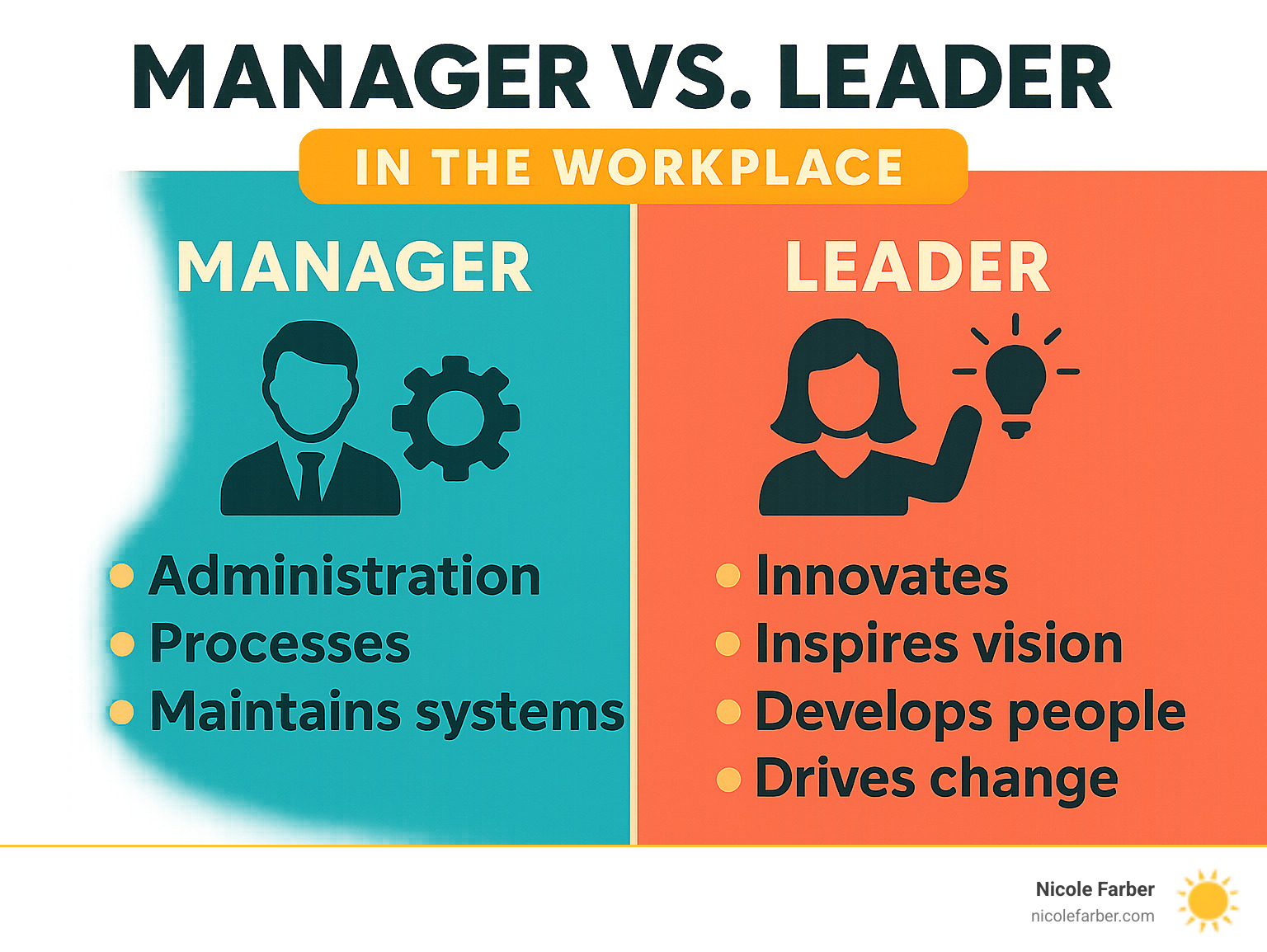
Research shows that managers influence 70% of team engagement. Strong leadership is the difference-maker, helping organizations outperform competitors. While managers organize to execute goals, leaders inspire a vision and drive change—a critical distinction we’ll explore.
I’m Nicole Farber, CEO of ENX2 Legal Marketing. With over 15 years of experience, I’ve seen how great leadership transforms organizations. I’ve learned that it starts with leading yourself first, then inspiring others to become their best.
The Foundation: Core Qualities of an Influential Leader
Think of the best leader you’ve worked with. Their impact likely came from a core set of qualities that anyone can develop, whether leading a legal team in Philadelphia or a small business in Wilkes-Barre.
- Self-awareness is the starting point. Understanding your own strengths and blind spots helps you recognize how your actions affect your team.
- Courage is about having difficult conversations, defending your team, and making tough but necessary decisions.
- Resilience helps you and your team bounce back from setbacks, modeling how to learn from failure instead of being crushed by it.
- Vision means painting a compelling picture of the future that gets people excited to be part of the journey.
- Learning agility is the ability to stay curious and adapt quickly, which is crucial in evolving markets from New Orleans to Luzerne County.
- Psychological safety is perhaps most important. It’s fostering an environment where people feel safe to speak up, share ideas, and admit mistakes without fear.
If you’re ready to develop these qualities further, I encourage you to explore more insights on How to Become an Effective Leader.

Why Integrity is Non-Negotiable for Being a Good Leader in the Workplace
Without integrity, leadership will eventually crumble. If people don’t trust you, nothing else matters.
- Honesty: Be transparent about challenges and straightforward in your communications.
- Ethical behavior: Do the right thing even when no one is watching, and maintain professional standards under pressure.
- Accountability: When things go well, celebrate the team. When they go wrong, take responsibility for your decisions and their outcomes.
- Leading by example: Model the behavior you expect. If you want dedication, demonstrate it yourself.
- Consistency: Be predictably fair and reliable in your values and decision-making to build trust and reduce anxiety.
Operating with a strong moral compass makes you the kind of leader people want to follow.
The Power of Empathy and Respect in Building Trust
Leadership is about people, and people thrive when they feel seen, heard, and valued.
- Compassion: Approach people with understanding, recognizing that they have lives and challenges outside of work.
- Active listening: Put distractions away and truly hear what someone is saying. When people feel heard, they feel valued.
- Valuing perspectives: Create space for diverse viewpoints to strengthen decision-making and innovation.
- Fostering belonging: Go beyond inclusion to make people feel they are an essential part of the team.
- Employee wellbeing: Check in on your people, respect boundaries, and support their overall wellness to create more engaged teams.
Research studies show that empathetic leadership directly impacts retention and performance. When you create a safe environment, you open up your team’s full potential. The respect you model becomes contagious, building a culture that attracts top talent.
Leadership vs. Management: Understanding the Critical Difference
While often used interchangeably, “leader” and “manager” have distinct roles vital for being a good leader in the workplace. Understanding this difference clarifies how we can best contribute.

A leader looks to the horizon and sets the direction, asking what and why. A manager ensures the team has the tools and clear steps to get there, focusing on the how and when.
- Vision vs. Execution: Leaders create the big picture that inspires, while managers break it down into actionable tasks.
- Inspiring vs. Organizing: Leaders motivate people with a sense of purpose. Managers organize people and systems to deliver results.
- People vs. Process: Leaders focus on developing individuals. Managers focus on ensuring processes run smoothly.
- Change vs. Stability: Leaders challenge the status quo and drive innovation. Managers ensure consistency and that daily goals are met.
Both roles are essential. You need visionaries and those who ensure the work gets done today. For more on balancing these roles, explore our Business Leadership Strategies.
| Aspect | Leader | Manager |
|---|---|---|
| Focus | Vision, Direction, Innovation, People | Process, Tasks, Execution, Systems |
| Role | Inspires, Develops, Guides, Challenges | Administers, Maintains, Organizes, Controls |
| Approach | Transforms, Motivates, Influences | Directs, Delegates, Monitors, Solves Problems |
| Outcome | Change, Growth, Commitment, Empowerment | Stability, Efficiency, Productivity, Compliance |
| Authority | Based on qualities, respect, influence | Based on job role, position, hierarchy |
How Leaders and Managers Collaborate for Success
The most successful organizations don’t pit leaders against managers; they ensure they work in tandem.
- Shared goals are the foundation. The leader articulates the why, and the manager translates it into action.
- Complementary skills are key. Leaders bring strategic thinking, while managers provide operational expertise. This dynamic works beautifully in firms from New Orleans to Luzerne County.
- Communication is the bridge. Leaders share the vision, and managers provide feedback from the ground up.
- Strategic alignment meets operational excellence. This ensures every task contributes to the bigger picture, leading to superior team performance.
From Boss to Coach: The Modern Manager’s Evolving Role
The old-school “boss” is obsolete. Today’s best managers are coaches, a shift that’s critical since 70% of the variance in team engagement is tied to the manager.
- Mentorship: They ask, “How can I help you reach your career goals?” and share knowledge to guide professional journeys.
- Employee development: They actively find training and stretch assignments to help people grow.
- Empowerment: They replace micromanagement with autonomy, giving teams the guidance and safety to take intelligent risks.
- Feedback culture: They give and receive constructive feedback regularly, not just during annual reviews.
This shift is essential for being a good leader in the workplace. For more on this coaching approach, consider our perspective as a Motivational Leadership Keynote Speaker.
The Art of Influence: How Being a Good Leader in the Workplace Drives Success
True leadership isn’t about title-based power; it’s about the influence you build through genuine connection. I’ve seen it transform businesses from Philadelphia to Wilkes-Barre.

Being a good leader in the workplace creates a powerful ripple effect. Employee retention improves because people feel valued. Productivity gains follow as motivated teams work with passion. This creates a positive work environment where trust and collaboration replace fear, sparking innovation. In fact, employee satisfaction increases by 50% when people have friends at work—and leaders are the architects of these connections. In challenging times, this is crucial, because Chaos Brings Opportunity.
Inspiring and Motivating Your Team
Inspiration grows from authentic connection and shared purpose. Leaders create the conditions for motivation to thrive.
- Communicating vision: Help your team see how their daily tasks contribute to something meaningful.
- Recognizing contributions: Offer a spontaneous “thank you” or public praise. These moments cost nothing but mean everything.
- Understanding individual drivers: Take time to learn what motivates each person, whether it’s growth, stability, or public recognition.
- Fostering purpose: Connect work to values by sharing client success stories or explaining the impact of process improvements.
- Celebrating wins: Create momentum by celebrating milestones, big and small.
- Empowering autonomy: Show trust by giving people ownership over their work. They will rise to the occasion.
Fostering a Culture of Innovation and Growth
An innovative culture requires courage. It means treating calculated failures as learning opportunities, not career-ending mistakes.
- Encouraging risk-taking: Create a safe environment where people feel comfortable trying new things.
- Supporting new ideas: Actively seek out different perspectives and create structured ways for innovation to emerge.
- Learning from failure: When something goes wrong, ask “what can we learn?” instead of “who’s to blame?”
- Continuous improvement: Empower people to suggest better ways of doing things. Small improvements compound over time.
- Cross-functional collaboration: Break down silos between departments to spark unexpected insights.
This approach is fundamental to Building a Successful Business.
Your Leadership Blueprint: Practical Steps to Cultivate Your Skills
Being a good leader in the workplace is a skill set cultivated through intentional effort and continuous learning. The most successful leaders I’ve worked with, from law firms in Philadelphia to businesses in New Orleans, are brutally honest about where they need to improve.

Your journey can start with self-assessment to create a clear starting point. Seek mentorship from leaders you admire to accelerate your growth. Commit to continuous learning through books, workshops, or formal education, as leadership is a journey, not a destination. Organizations recognize this, with 95% planning to maintain or increase spending on leadership development.
Find Your Authentic Leadership Style
Trying to copy someone else’s style rarely works. The best leaders are authentic.
- Strengths-based leadership: Focus on leveraging your natural talents and developing them into strengths.
- Situational leadership: Adapt your style to your team’s needs and the specific circumstances.
- Changeal leadership: Empower team members and foster idea-sharing to inspire people to achieve more than they thought possible.
- Coaching style: Focus on developing people, providing guidance, and empowering them to find their own solutions.
Embracing your authentic style allows you to lead with conviction. This is especially important for women in leadership, which is why I’m passionate about Empowering Women Entrepreneurs to find their unique voices.
Actionable Daily Habits for Being a Good Leader in the Workplace
Leadership is built through small, consistent daily habits.
- Build relationships: Genuinely care about your team members as whole people.
- Develop people: Look for daily opportunities to mentor, coach, and provide constructive feedback.
- Communicate clearly: Say what you mean, listen actively, and create an inclusive environment for sharing ideas.
- Create accountability: Set clear expectations and take ownership of both successes and failures.
- Lead by example: Demonstrate the dedication, integrity, and positive attitude you want to see in others.
- Foster a positive environment: Cultivate an atmosphere of trust and respect every single day.
- Inspire and motivate: Consistently communicate the vision and connect daily work to larger goals.
These habits are about the Process Before Promotion—building the skills before the title comes.
Conclusion
Being a good leader in the workplace is a lifelong journey, not a destination. It lives in the daily moments when we choose integrity over convenience, empathy over ego, and courage over comfort.
We’ve seen that effective leadership starts with self-awareness and that leaders inspire a vision while managers execute it. This distinction is what separates a team that functions from one that thrives. The ripple effects are clear: better retention, higher productivity, and a culture of innovation, whether you’re in Wilkes-Barre or Philadelphia.
Leadership grows through practice and the daily choice to show up authentically. As a single mother who built a business, I’ve learned that faith-driven leadership isn’t about being perfect—it’s about being real and leading from a place of service.
The daily habits we’ve discussed—building relationships, communicating clearly, and ensuring accountability—are simple but powerful when applied consistently. They transform not just our teams, but ourselves.
Your leadership journey is unique. Keep learning, keep growing, and never underestimate your impact. The world needs leaders who care more about others’ success than their own.
Explore more leadership insights and find practical strategies that can transform how you lead and inspire others.