Your Business Blueprint: Finding the Right Coach to Guide Your Entrepreneurial Journey
- Entrepreneurship
- In the News
- January 2, 2026
Why Every Entrepreneur Needs a Strategic Partner

Business coaches for entrepreneurs are professional partners who provide accountability, strategic insights, and proven frameworks to help you overcome obstacles, scale operations, and achieve sustainable growth. Here’s what they offer:
Top Benefits of Business Coaching:
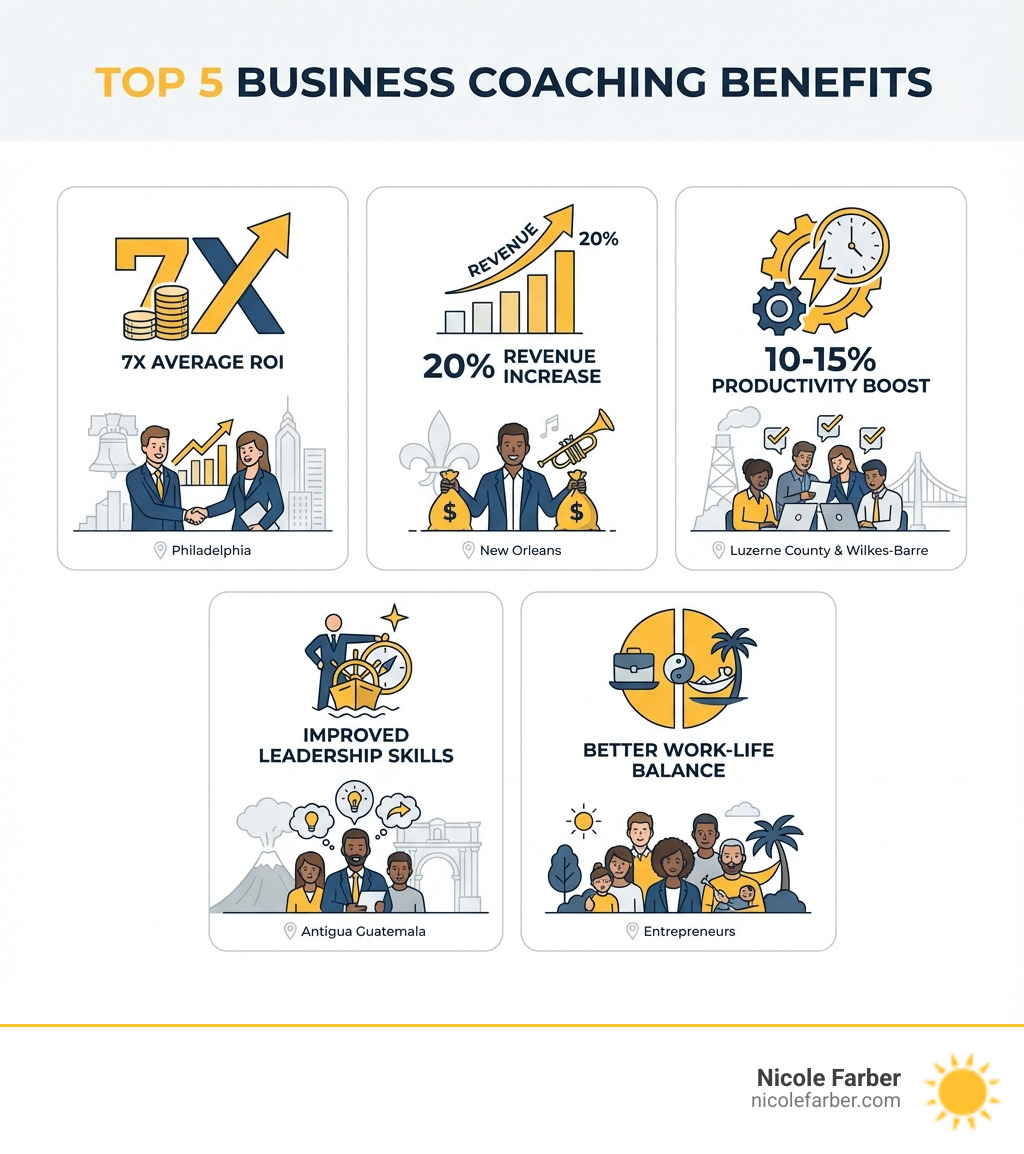
- Proven ROI: Average return of 7 times your investment
- Increased Revenue: Businesses see an average 20% revenue increase
- Higher Productivity: Companies report 10-15% productivity gains
- Strategic Clarity: Move from reactive firefighting to proactive planning
- Accountability Partner: Someone invested in your success who keeps you on track
- Expert Guidance: Steer challenges without costly trial-and-error
Every entrepreneur starts with a vision. You saw an opportunity, took a leap, and built something from nothing. But somewhere between the dream and the daily grind, many of us hit a wall.
Maybe you’re working 80-hour weeks but revenue has plateaued. Perhaps you’re drowning in operational details instead of leading strategically. Or you might be facing a critical decision—scaling your team, entering a new market, or pivoting your business model—and you need more than gut instinct to guide you.
You’re not alone in this struggle. Research shows that 99% of coaching clients say the experience has been valuable or very valuable, and 96% would repeat it. The most successful business leaders—from startup founders to Fortune 500 executives—don’t go it alone. They work with coaches who challenge them, hold them accountable, and help them see blind spots they can’t identify themselves.
The right coach doesn’t just offer advice. They partner with you to open up potential you didn’t know existed, turning overwhelm into clarity and vision into measurable results.
As Nicole Farber, CEO of ENX2 Legal Marketing with over 15 years of experience turning around struggling businesses, I’ve seen how business coaches for entrepreneurs transform not just companies, but lives—including my own journey as a single mother building a thriving agency while serving law firms and entrepreneurs across Philadelphia, Wilkes-Barre, New Orleans, Luzerne County, and beyond. Throughout this guide, I’ll share what I’ve learned about finding the right strategic partner to lift your entrepreneurial journey.
What is a Business Coach and Why Do You Need One?
At its core, a business coach is a strategic partner dedicated to your growth. Think of them as a seasoned guide who helps you steer the complex terrain of entrepreneurship. They don’t just tell you what to do; they work with you, providing an objective perspective that’s often impossible to achieve when you’re deeply immersed in your own business. They offer accountability, helping us stay true to our goals and commitments, and push us beyond our perceived limitations. This fresh perspective is crucial for gaining clarity, overcoming roadblocks, and ultimately, pushing the boundaries of what we thought was possible for our ventures. We dig deeper into how this partnership can foster an Entrepreneurial Mindset Development that drives sustainable success.

Signs You Might Need a Business Coach
How do you know if a business coach is right for you? Sometimes the signs are clear, sometimes they’re subtle nudges from our inner entrepreneur. If you’re experiencing stagnant business growth, feeling overwhelmed or burnt out, or facing a major business decision that feels too big to tackle alone, these are strong indicators. Perhaps you’re struggling to achieve a healthy work-life balance, finding it difficult to scale operations, or realizing you need new Business Leadership Strategies to lead your team effectively. If you desire consistent accountability and a structured approach to achieving your goals, a coach can be an invaluable asset.
Common Challenges a Coach Can Help You Overcome
Entrepreneurs, whether starting out in Philadelphia or expanding in Antigua Guatemala, face a myriad of challenges. A coach can provide custom support for many common problems. These often include limited access to funding or navigating complex financing options, poor financial planning that hinders profitability, and the constant battle for customer acquisition and retention. We also see entrepreneurs struggling with competitive pressures, inefficient operational processes, and significant leadership skill gaps as their companies grow. A coach helps identify these pain points and collaborates with you to develop actionable solutions, changing obstacles into opportunities for Building a Successful Business.
The Spectrum of Coaching: Types of Business Coaches for Entrepreneurs
Just as businesses come in all shapes and sizes, so do business coaches for entrepreneurs. There isn’t a one-size-fits-all solution; instead, the coaching world offers specialized expertise designed to meet specific needs. Whether you’re a startup founder in Luzerne County or an established enterprise in New Orleans, finding the right fit for your stage of business and particular challenges is key.

| Role | Primary Focus | Approach | Example Scenario |
|---|---|---|---|
| Business Coach | Personal and professional growth, skill development, goal achievement. | Helps clients find their own solutions, provides accountability, challenges perspectives. | An entrepreneur feels overwhelmed by daily tasks and struggles with delegation. A coach helps them identify limiting beliefs, develop a strategic plan for hiring, and implement effective delegation techniques, leading to increased productivity and a healthier work-life balance. |
| Mentor | Guidance based on personal experience, wisdom sharing. | Offers advice, shares personal stories, provides insights from their journey. | A young entrepreneur is launching their first tech startup. A mentor who successfully built and exited a similar company shares insights on market entry, fundraising, and common pitfalls to avoid, offering a roadmap based on their experience. |
| Consultant | Providing expert solutions to specific business problems. | Diagnoses issues, recommends specific strategies, and sometimes implements solutions directly. | A company is experiencing a significant drop in sales. A consultant analyzes their sales process, identifies bottlenecks in their CRM, and provides a detailed strategy for sales training and technology implementation to boost conversion rates and improve pipeline management. |
| Therapist | Addressing mental and emotional health, underlying psychological issues. | Provides a safe space for processing emotions, developing coping mechanisms, and healing. | An entrepreneur experiences severe anxiety and burnout due to the pressures of their business. A therapist helps them explore the roots of their stress, develop mindfulness practices, and build healthier boundaries to protect their mental well-being, allowing them to return to their business with renewed emotional resilience. |
| Trainer | Imparting specific skills or knowledge through structured instruction. | Delivers workshops, courses, or one-on-one instruction on a particular subject. | A small business owner wants to improve their social media marketing. A trainer conducts a workshop on platform-specific strategies, content creation, and analytics, providing practical tools and techniques the owner can immediately apply to their marketing efforts. |
How Coaching Differs from Mentoring and Other Advisory Roles
While all these roles can be incredibly beneficial, it’s important to understand their distinct approaches. Coaching, as we’ve discussed, focuses on drawing answers out of you, empowering you to find your own solutions with guidance and accountability. Mentoring, on the other hand, typically involves an experienced individual offering advice and insights based on their own journey and successes. They provide a roadmap, often saying, “This is what I did when I faced a similar challenge.” Other advisory roles, such as consultants, tend to be more directive, providing direct solutions and expertise for immediate problem-solving. Each approach has its merits, and understanding these differences helps us choose the right support for our current needs. We explore this further in our Business Leadership Mentor Tips 2025.
Common Types of Business Coaches
The landscape of business coaches for entrepreneurs is rich with specialization. Here are some common types you might encounter:
- Leadership Coach: Helps you refine your leadership style, build strong teams, and inspire your employees. This is particularly vital for growing businesses in places like Wilkes-Barre and New Orleans.
- Strategy Coach: Focuses on your business model, market positioning, and long-term planning, ensuring you have a clear roadmap for growth.
- Financial Coach: Guides you through budgeting, cash flow management, pricing strategies, and investment decisions to optimize your financial health.
- Marketing & Sales Coach: Assists with developing effective strategies to attract and retain customers, build your brand, and boost revenue.
- Mindset Coach: Works on your mental frameworks, helping you overcome limiting beliefs, build resilience, and maintain a positive outlook amidst entrepreneurial pressures.
- Executive Coach: Often works with established leaders, focusing on high-level decision-making, organizational development, and personal effectiveness.
- Women Entrepreneur Coaching: These coaches often provide specialized support, understanding the unique challenges and opportunities faced by women in business, offering custom strategies for growth and empowerment.
The ROI of Coaching: Key Benefits That Drive Success
Investing in a business coach isn’t just an expense; it’s a strategic investment with a proven return. The statistics speak for themselves: the average ROI for coaching is a staggering 7 times the amount invested. Businesses that actively use coaching services see an average revenue increase of 20%, while companies investing in coaching report a 10-15% increase in productivity. For entrepreneurs in busy markets like Philadelphia, expanding operations in Wilkes-Barre, or nurturing new ventures in New Orleans, these gains can be transformative. Beyond the numbers, coaching fosters improved leadership skills, sharpens decision-making capabilities, and helps us achieve that elusive work-life balance we all strive for. This is about making smart, Strategic Goal Setting a reality.
Gaining Strategic Clarity and an Actionable Plan
One of the most profound benefits of working with a coach is the shift from reactive firefighting to proactive strategic planning. We often get caught in the day-to-day operations, losing sight of the bigger picture. A coach helps us step back, gain clarity on our vision, and define achievable milestones. This process involves creating a robust Building a Business Development Plan that focuses our energy on high-impact activities, ensuring every effort contributes to our overarching goals. This structured approach helps us avoid the complexities that often stall growth, allowing for expansion without burnout.
Building Accountability and Open uping Your Leadership Potential
Let’s be honest: it’s easy to procrastinate when you’re only accountable to yourself. A business coach acts as that critical accountability partner, keeping us on track and challenging us to follow through on our commitments. This consistent push helps us overcome inertia, build confidence, and truly open up our leadership potential. Coaches help us understand our roadblocks and develop strategies for overcoming them, fostering a growth culture within our teams. This isn’t just about managing a business; it’s about becoming the leader your business needs, someone who knows How to Be a Good Leader and inspires their team to achieve greatness.
Your 6-Step Guide to Choosing the Perfect Business Coach
Choosing the right business coach is one of the most critical investments you can make in your entrepreneurial journey. It’s not just about finding someone with impressive credentials; it’s about finding a long-term partner who truly understands your vision and can propel you forward. This selection process requires due diligence and a clear understanding of your needs.
Step 1: Define Your Goals and Desired Outcomes
Before you even start looking, take a moment to reflect. What do you truly want to achieve? Are you aiming to increase revenue by 20% in the next year? Do you want to delegate more effectively to free up your time? Are you seeking to improve your leadership skills or develop new products? Be specific with your business goals and personal development objectives. Consider your short-term needs versus your long-term aspirations. The clearer you are about your destination, the easier it will be to find a guide who knows the way. This clarity is the first step towards working with a dedicated Goal Achievement Coach.
Step 2: Researching Potential Business Coaches for Entrepreneurs
With your goals in hand, it’s time to explore the vast world of business coaches for entrepreneurs. You can look for local coaches in areas like Philadelphia, Wilkes-Barre, New Orleans, or Luzerne County, or consider virtual options that offer global reach, potentially connecting you with expertise even in places like Antigua Guatemala. Research their education, experience, and credentials. Look for coaches with a proven track record, custom coaching plans, and client success stories that resonate with your aspirations. Online directories, professional associations like the International Coaching Federation (ICF), and LinkedIn are excellent starting points.
Step 3: The Interview: Key Questions to Ask
Once you’ve identified a few potential coaches, schedule introductory calls. This is your chance to assess compatibility and gather crucial information. Don’t be shy; ask probing questions to understand their approach and ensure they’re the right fit for you.
Here’s a list of questions we recommend asking:
- What areas of business and industries do you specialize in?
- Can you provide client success stories, and can I contact references?
- How is your coaching program structured, and what is a typical schedule like?
- How do you deliver feedback, and what’s your communication style?
- How will we measure progress and, ultimately, success?
- Do you offer group sessions or workshops, or is it strictly one-on-one?
Step 4: Understanding the Costs and Engagement Models
Business coaches for entrepreneurs offer a variety of pricing structures. You might encounter hourly rates, monthly retainers for ongoing support, or packaged programs designed for specific outcomes. Costs can vary significantly based on the coach’s experience, specialization, and the intensity of the program. It’s essential to align your investment with your budget and expected ROI. There are also free and low-cost resources available for local entrepreneurs, such as community mentorship programs or non-profit business development services, which can be great starting points for businesses in Philadelphia, Wilkes-Barre, and New Orleans.
Step 5: Check for Compatibility and Value Alignment
This step is often overlooked but is paramount to a successful coaching relationship. The “chemistry” between you and your coach is vital. Do you feel a sense of trust and rapport? Do their values align with yours and your company’s mission? A coach who shares similar values can help you achieve outcomes without compromising your principles. The best coaches challenge you supportively, making you feel capable while also pushing you to participate fully and reach for more.
Step 6: Due Diligence: How to Spot and Avoid Scams
Unfortunately, the growing popularity of coaching has attracted some less-than-reputable individuals. Be wary of red flags like high-pressure sales tactics, promises of “get rich quick” schemes, or vague assurances without a clear methodology. The U.S. Federal Trade Commission recommends searching online for the coach’s name and words like “review,” “scam,” or “complaint.” We also encourage you to check with your state attorney general for any registered complaints. A credible coach will have verifiable client success stories and professional references.
Frequently Asked Questions about Business Coaching
How do I evaluate the effectiveness of a business coach?
Evaluating your coach’s effectiveness starts with the first step: clearly defining your goals. From the outset, you and your coach should establish Key Performance Indicators (KPIs) and specific metrics you want to improve, such as revenue growth, profit margins, customer retention rates, or even team productivity. Regularly review your progress against these goals. Beyond the numbers, assess your personal growth in confidence, decision-making, and leadership capabilities. The commitment is a two-way street; your engagement and implementation of advice are crucial to seeing results.
How much do business coaching services cost?
The cost of business coaches for entrepreneurs can vary widely based on their experience, niche, location, and the type of engagement. Hourly rates can range from $75 to well over $500. Monthly packages, which often include multiple sessions and ongoing support, might be several thousand dollars. Group coaching programs are generally more affordable, offering a cost-effective way to gain insights and accountability. For those just starting or with limited budgets, various non-profit organizations offer free or subsidized coaching and mentoring services across the U.S., including in our communities in Philadelphia, Wilkes-Barre, and New Orleans.
What should I expect from my first few coaching sessions?
Your initial coaching sessions are typically a “findy phase.” This is where you and your coach will deep-dive into your current situation, clarify your overarching goals, and identify the specific challenges you’re facing. It’s a time for building rapport, establishing trust, and setting the framework for your coaching relationship. You should expect to leave these early sessions with initial action steps, a clearer understanding of your priorities, and a sense of renewed clarity about the path forward. It’s a collaborative process where your coach will ask thought-provoking questions to help you uncover your own solutions, not just hand you a pre-written plan.
Conclusion: Your Partner in Building an Empire
The entrepreneurial journey is exhilarating, challenging, and deeply personal. While the vision is yours alone, the path to achieving it doesn’t have to be. As we’ve explored, business coaches for entrepreneurs offer a strategic investment with a profound ROI, providing clarity, accountability, and the tools to open up your full potential. They are not just advisors; they are partners dedicated to your success.
I’ve learned through my own experiences, navigating the complexities of business as a single mother and leading a successful legal marketing agency serving clients from Philadelphia to Antigua Guatemala, that faith-driven leadership and real-world experience are invaluable. A great coach brings that same level of dedication, empathy, and practical insight to your table.
If you’re ready to transform your vision into victory, to move beyond overwhelm, and to build an empire that truly reflects your capabilities, then it’s time to consider a business coach. Take the next step in your entrepreneurial journey with specialized Women Entrepreneur Coaching, designed to empower business owners like you across Philadelphia, Wilkes-Barre, Luzerne County, New Orleans, and Antigua Guatemala. Let us help you in Empowering Business Owners to achieve unprecedented growth and lasting success.