From Seed to Success: Proven Strategies to Grow Your Business
- Entrepreneurship
- In the News
- January 23, 2026
Why Your Business Growth Strategy Matters More Than Ever

A strategy to grow business is not just about increasing revenue—it’s about building a sustainable, competitive, and resilient enterprise that thrives over time. Here’s what you need to know:
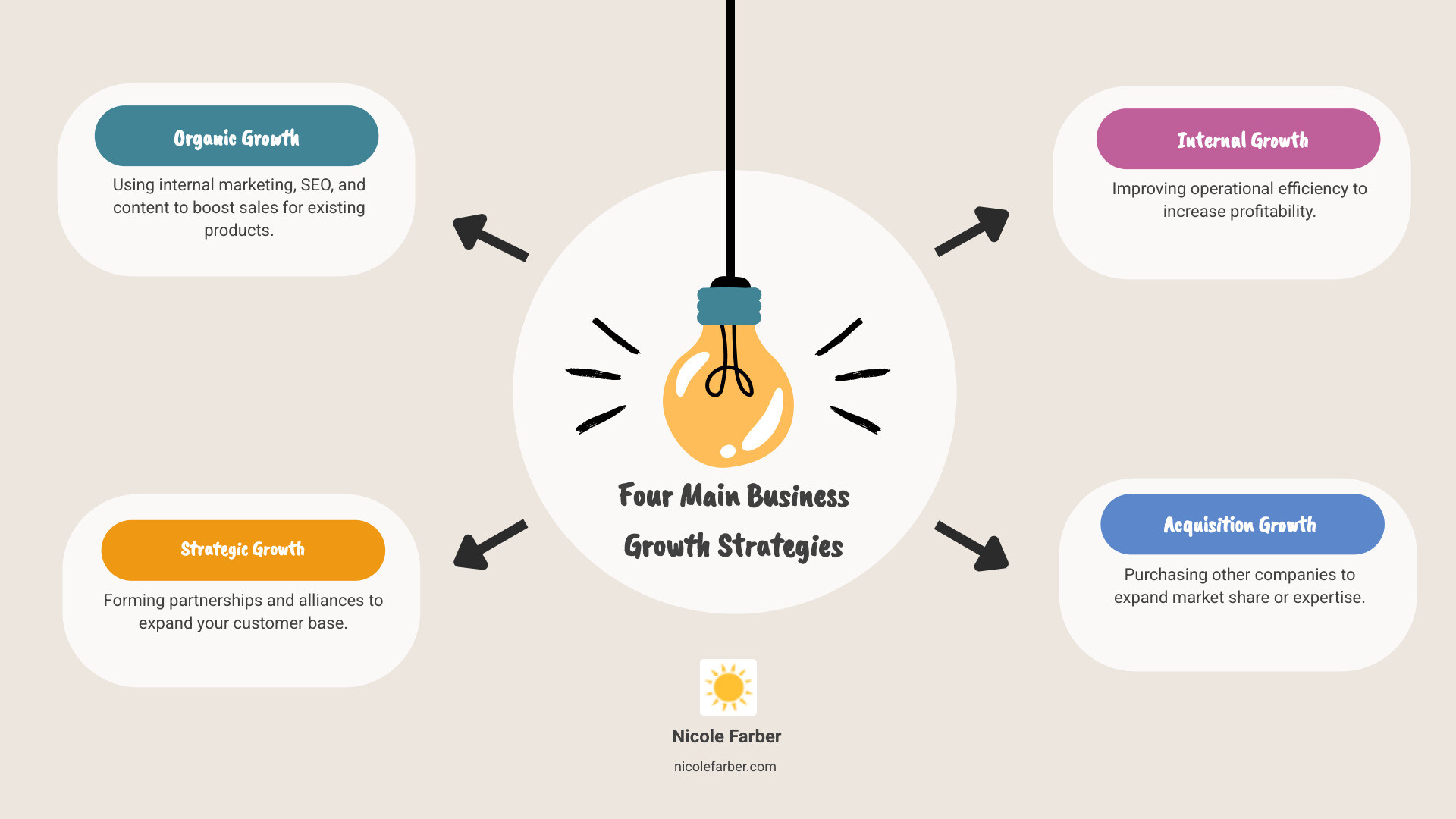
The Four Main Types of Business Growth Strategies:
- Organic Growth – Using internal marketing, SEO, and content to boost sales for existing products
- Strategic Growth – Forming partnerships and alliances to expand your customer base
- Internal Growth – Improving operational efficiency to increase profitability
- Acquisition Growth – Purchasing other companies to expand market share or expertise
The challenge? Only 25% of companies achieve sustainable growth over time. Yet those that do become growth outperformers, generating seven percentage points more in annual total shareholder returns than their peers.
Whether you’re running a law firm in Philadelphia, building a practice in Wilkes-Barre, expanding operations in New Orleans, serving clients in Luzerne County, or even managing a venture in Antigua Guatemala, the path to sustainable growth requires more than just hard work. It demands a clear strategy, bold decision-making, and the courage to invest in growth even during uncertain times.
The landscape has changed. Traditional marketing tactics alone won’t cut it anymore. Clients research online, compare options extensively, and choose firms based on values and authenticity—not just credentials. For law firms and professional services, this means your growth strategy must address everything from digital visibility to operational excellence to strategic positioning.
As Nicole Farber, CEO of ENX2 Legal Marketing with over 15 years of experience turning around law firms and businesses, I’ve witnessed how the right strategy to grow business transforms struggling practices into thriving enterprises. My approach combines proven frameworks with real-world execution, helping legal professionals in competitive markets build sustainable growth engines that attract quality clients and drive long-term success.
Every business leader understands that growth fuels innovation, engages employees, and drives performance. While achieving profitable, sustainable growth is difficult, it’s essential. Overcoming challenges, especially during uncertainty, can transform obstacles into Chaos Brings Opportunity. This guide explores core, advanced, and startup strategies to empower your business to move from seed to success.
The Four Foundational Pillars of Business Growth
When we talk about a comprehensive strategy to grow business, we often categorize approaches into four main types. These pillars, sometimes viewed through the lens of the Ansoff Matrix, help us understand where to focus our efforts, whether we’re serving clients in Luzerne County or expanding our reach to Antigua Guatemala. Choosing the right approach, or a combination of them, is paramount for building a successful business. For a broader perspective on expansion, you might also find insights in How to Grow Your Business (6 Strategies) and Building a Successful Business.

Organic Growth: Maximizing Your Core
Organic growth is the most traditional and sustainable way to expand by leveraging existing strengths to increase sales. This requires a strong focus on internal marketing and SEO-focused content.
- Internal Marketing and SEO: Optimize your online presence to attract customers naturally. For example, a software company generated 72% of its 2023 organic traffic from SEO-focused blogs. For businesses in Philadelphia and Wilkes-Barre, this means creating valuable blog content that answers client questions or explains legal processes. This content improves search rankings, bringing potential clients to your site.
- Content Marketing Examples: Beyond blogs, content marketing includes articles, videos, and social media posts that showcase your expertise, drive traffic, and build trust.
- Improving Existing Products and Services: Continually refine what you offer by listening to client feedback and staying ahead of industry trends to make your services more competitive.
Focusing on these areas yields a significant ROI without large capital injections, making the most of what you have. Explore more Key Strategies for Growing a Business.
Strategic Growth: The Power of Partnerships
Strategic growth involves forming partnerships or alliances to expand your customer base and market reach, allowing you to tap into new markets, share resources, and leverage complementary strengths.
- Benefits: Partnerships reduce customer acquisition costs, increase brand visibility, and provide access to new expertise or technologies, opening doors to new demographics.
- Examples: The Lyft and Taco Bell partnership created a unique customer experience and expanded both brands’ reach. For our clients, a law firm in New Orleans could partner with a real estate agency for joint seminars, or a Luzerne County business could cross-promote with a complementary service provider. These alliances are key to a robust Building a Business Development Plan.
Internal Growth: Optimizing from Within
Internal growth focuses on improving operational efficiency to increase profitability by finding ways to do things better, faster, and more cost-effectively.
- Operational Efficiency: Streamline processes, reduce waste, and improve productivity. For a service-based business, this could mean automating administrative tasks, creating efficient client intake systems, or refining project management workflows.
- Reducing Waste and Improving Profit Margins: Cut unnecessary expenses and optimize resource allocation to boost your bottom line. It’s about smart resource management that improves overall value.
- Process Improvement: Constantly evaluating and enhancing internal processes ensures smooth operations. This commitment to efficiency is a cornerstone of our philosophy: Process Before Promotion.
- Employee Satisfaction and Culture: Efficient operations also boost employee satisfaction. Clear processes make employees more productive and contribute to a positive company culture, fostering innovation.
Acquisition Growth: Expanding Through Integration
Acquisition growth involves purchasing other companies to expand market share, product lines, or expertise. It’s a fast track to gaining a competitive edge or entering new markets.
- Key Considerations: Acquisitions require careful due diligence, strategic alignment, and effective integration planning to ensure the combined entity creates greater value.
- Examples: Unilever’s acquisition of Dollar Shave Club helped it enter the male grooming market. For businesses in Wilkes-Barre or Philadelphia, a law firm might acquire a smaller practice to expand its footprint or specialize in a new area of law.
- Advantages: Acquisitions provide immediate access to new customers, technologies, and talent. They can also eliminate competitors and create economies of scale, boosting market share and profitability. Explore these Advantages of strategic partnerships and acquisitions for market share growth.
Core Strategies for Market Dominance
Beyond the foundational pillars, mastering core strategies for market dominance is crucial for any business aiming for long-term success. This involves a deep understanding of your market, a keen eye on the competitive landscape in regions like Luzerne County and New Orleans, and a commitment to continually Unlock Business Potential. These strategies help ensure your business thrives, not just survives.

Developing a Market Penetration Strategy to Grow Business
Market penetration focuses on increasing sales of existing products or services within your current market by selling more to existing customers or attracting new ones.
- Pricing Strategies: Adjusting prices is a powerful tool. Lower prices can attract new customers, while premium pricing can improve brand perception.
- Bundling Products: Offering product or service bundles can encourage higher sales volume and gain traction in new market segments.
- Increasing Brand Loyalty: Loyalty programs, exceptional customer service, and community engagement strengthen client relationships, leading to repeat business. For a Philadelphia business, this means becoming the go-to expert in your niche.
- Gaining Market Share from Competitors: Directly compete for rivals’ customers through aggressive marketing, superior service, or unique value propositions.
Crafting a Product Development Strategy to Grow Business
To stay relevant and capture new markets, businesses must continuously innovate through product development and diversification.
- Creating New Products/Services: Develop entirely new offerings to meet evolving customer needs or enter new market segments.
- Improving Existing Products/Services: The most cost-effective method is often improving what you already have. For businesses in Wilkes-Barre and Antigua Guatemala, this could mean refining legal services or developing new programs based on client feedback.
- Diversification: Adjust your product mix to keep pace with changing trends. This opens new markets and reduces reliance on a single offering. It’s about knowing when Its Time to Hit the Reset Button and Get Creative.
Market Development: Conquering New Territories
Market development is a strategy to grow business that captures new market share by introducing existing products to new markets.
- Entering New Geographic Areas: Expand from a local base in Luzerne County to new cities, states, or international locations like Antigua Guatemala. This requires thorough market research into local demands.
- Targeting New Demographics: Identify and target underserved demographics. For instance, a law firm could develop specialized services for a specific immigrant community or industry.
- Creating Marketing Strategies for Specific Segments: Focusing on specific market segments is more effective than appealing to a massive group, allowing for custom messaging and efficient resource allocation. This entrepreneurial mindset is vital, as highlighted in Entrepreneurial Mindset Development.
Becoming a Growth Outperformer: Advanced Frameworks
To truly stand out, we must go beyond basic growth strategies and accept advanced frameworks that transform us into growth outperformers. Only 25% of companies sustain growth over time, but these outperformers achieve significantly higher total shareholder returns. This requires a through-cycle growth mindset, making bold moves even amidst economic uncertainty.
Innovating in the Core and Pursuing Adjacencies
Growth outperformers know that while innovation is critical, 80% of growth comes from maximizing the core business. The other 20% comes from expanding into adjacencies and building breakout businesses.
- Innovating in the Core: This means finding new ways to deliver value within your existing market. The strongest growers permeate an innovation mindset throughout the company.
- Identifying Adjacent Opportunities: Adjacencies are areas related to your core business that offer new growth avenues. Companies identify these by leveraging customer relationships, utilizing existing capabilities, expanding in the value chain, creating disruptive business models, or using AI to scan online data for growth ideas.
- Breakout Businesses: These are new ventures outside the core with significant growth potential. They require capital and strategic talent, like moving a CTO to lead the new business.
The goal is a dynamic approach to growth, as outlined in The growth code: Activating pathways to growth. Companies growing in all directions are twice as likely to outperform peers.
The ‘Shrinking to Grow’ Strategy
Sometimes, taking a step back is the best way forward. The ‘shrinking to grow’ strategy involves portfolio reallocation, pruning less attractive business parts to focus on high-growth areas.
- Divesting Non-Core Assets: If business units are underperforming or misaligned with your vision, divesting them frees up capital and talent.
- Focusing on High-Growth Areas: Reinvest proceeds from divestitures into areas with higher growth potential. For example, a law firm in New Orleans or Philadelphia might sell a less profitable practice to invest in a booming niche like mass torts.
- Talent Management: When pruning a business, retain key talent and integrate them into new growth entities. Don’t shut off projects and the talent with them.
This courageous strategy can significantly improve long-term profitability and focus.
Leveraging Sustainability as a Growth Accelerant
Sustainability is no longer just a cost or compliance issue; it’s a powerful growth accelerant.
- ESG Integration: Integrating Environmental, Social, and Governance (ESG) priorities creates a competitive advantage. Companies embedding sustainability show a five-percentage-point outperformance in Total Shareholder Returns (TSR), and seven points with ESG in the mix.
- Attracting Modern Consumers: Consumers in Luzerne County and Antigua Guatemala are increasingly conscious of a company’s social and environmental impact. A strong sustainability commitment attracts clients, improves brand reputation, and fosters loyalty.
- Innovation and Efficiency: A focus on sustainability often drives innovation, leading to greater efficiency and new market opportunities.
As highlighted in The Week in Charts, the trend towards sustainable practices is undeniable and offers clear benefits.
Building a High-Growth Culture and Capabilities
Achieving sustainable growth is about people, culture, and capabilities. Growth drives performance, culture, and employee satisfaction, helping retain top talent and foster innovation.
- Dynamic Resource Allocation: Actively choose growth by allocating capital and talent where they can have the greatest impact.
- Building an Innovation Culture: Embed an innovation mindset company-wide, encouraging risk-taking and learning from failures. The culture should reward experimentation.
- Setting Bold, Zero-Based Goals: Start from scratch to set peak-performance goals for each revenue driver. This approach can yield goals 40% higher than traditional strategies.
- Turning Measurement into an Advantage: Systematically measure progress with digital metrics and analytics to assess impact, double down on successes, and pivot from failures.
- Building Internal Capabilities: Prioritize developing growth-related skills like marketing and analytics. Empower Your Team with the tools and knowledge to succeed.
- Overcoming Myths: Challenge myths like growth being only for good times or solely about marketing. It’s an enterprise-wide effort.
- Combining Multiple, Smaller Initiatives: Significant impact often comes from many smaller, well-executed initiatives, creating a constant flow of growth.
- Leadership: Leaders must consistently discuss growth targets and verify that growth bets are working. For more guidance, see our Business Leadership Strategies Guide.
A Startup’s Playbook: A Specialized Strategy to Grow Business
Startups face unique challenges and opportunities. While the foundational and advanced strategies apply, their execution requires a specialized playbook. Whether launching in Wilkes-Barre, scaling in Philadelphia, or establishing a presence in Antigua Guatemala, startups need to differentiate from the start, as many fail due to lack of market need or capital, as highlighted in Reasons startups fail. This is where an Entrepreneurship Speaker Guide 2025 can inspire.
Finding Your Niche with the Blue Ocean Strategy
For startups, identifying a core value proposition and differentiating is paramount. The Blue Ocean Strategy is a powerful framework for this.
- Red Oceans vs. Blue Oceans: “Red oceans” are crowded markets with fierce competition. “Blue oceans” are new, uncontested market spaces with high growth potential.
- Creating Uncontested Market Space: Startups can create new demand rather than competing head-to-head. This involves focusing on value innovation, challenging industry assumptions, simplifying to add value, and identifying gaps competitors have missed.
By doing so, startups can carve out unique niches and avoid direct competition. Learn more about What is the Blue Ocean Strategy?.
Agile Methodology and OKRs for Peak Performance
Startups thrive on speed, adaptability, and clear objectives. Agile methodology and Objectives and Key Results (OKRs) are crucial tools.
- Agile Methodology: Agile provides flexibility by breaking work into short cycles (“sprints”), allowing startups to quickly incorporate customer feedback and adapt to market changes. It emphasizes collaboration and continuous improvement, ensuring startups build what customers need.
- Objectives and Key Results (OKRs): OKRs provide a framework for setting ambitious, measurable goals. They align the team, foster transparency, and encourage ambitious goals, keeping everyone focused and accountable.
Implementing OKRs helps startups stay on track and ensures all efforts contribute to growth. For more on achieving goals, visit Goal Achievement Coach.
Scaling Sustainably Without Burning Out
Scaling a startup is exciting but perilous. Rapid expansion without proper controls can lead to disaster, as seen with companies like Peloton (quality issues) or WeWork (cash flow struggles).
- Product-Market Fit: Before scaling, ensure strong product-market fit by verifying user retention and demand. Expanding an unproven product is a recipe for failure.
- Monitoring Burn Rate: Understand your cash flow and strategize accordingly. If revenue lags, slow down and focus on profitability.
- Building for Consistency: Maintain product reliability as you grow. Scaling too quickly can hurt quality.
- Strategic Automation: Automate strategically (e.g., billing, FAQs) but retain human elements where impactful, like customer service.
- Flexible Infrastructure: Invest in scalable technology like cloud storage and flexible CRM systems that grow with you.
- Talent Acquisition and Management: Hire adaptable team members who can thrive in a dynamic environment. A strong team is critical for scaling.
Sustainable scaling is about controlled growth, ensuring your infrastructure, finances, and team can support expansion without burning out. Our Small Business Leadership Guide 2025 offers further insights.
Conclusion
Starting on a strategy to grow business is a rewarding journey. We’ve covered foundational pillars (organic, strategic, internal, acquisition), core strategies for market dominance (penetration, product/market development), advanced frameworks for outperformance, and a specialized startup playbook.
Growth is a conscious choice requiring courage, innovation, and bold moves. It’s about evaluating, adapting, and investing in your future. For leaders in competitive markets like New Orleans or Luzerne County, an expert partner is crucial.
We believe every business has potential for transformative growth by building a solid foundation, embracing innovation, and fostering a progress-driven culture. As Nicole Farber, we are dedicated to empowering business owners to achieve sustained success.
Ready to define your growth path and propel your business to new heights? Take the next step in defining your growth path with expert business strategy coaching. Your journey from seed to success starts now. For a comprehensive overview, our Business Leadership Ultimate Guide is an excellent resource.