Boost Your Business with Smart Leadership Strategies
- Leadership
- In the News
- October 6, 2025
Why Small Business Leadership Matters More Than Ever

Small business leadership is the force that transforms struggling ventures into thriving enterprises. While many small business owners battle inflation, the best leaders find ways to grow stronger through challenges.
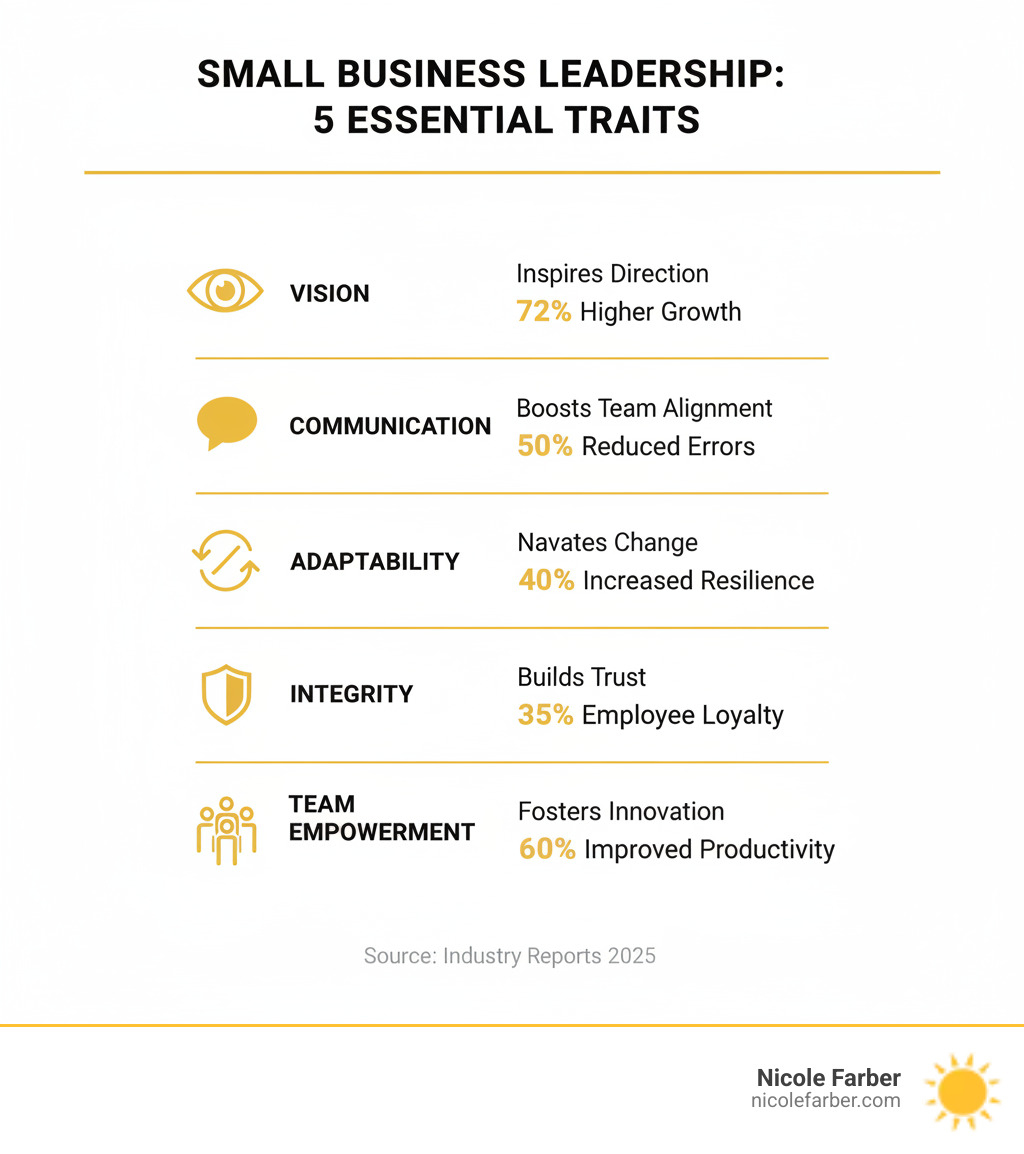
Core elements of effective small business leadership include:
- Vision Setting – Creating a clear, motivating direction for your team.
- Strategic Thinking – Making decisions for long-term growth, not just short-term fixes.
- Team Empowerment – Delegating effectively while building trust.
- Crisis Management – Staying calm and adapting to unexpected challenges.
- Communication Mastery – Keeping everyone aligned through transparent dialogue.
Though small business confidence has dipped, some leaders are turning obstacles into opportunities. The difference is mastering leadership, not just management.
With over 15 years of experience guiding businesses through tough times, including the global pandemic, I’ve seen how leadership skills can make or break an organization. I’m Nicole Farber, CEO of ENX2 Legal Marketing, and I’ve helped businesses from Philadelphia to New Orleans transform their leadership and achieve sustainable growth.
Foundations of Effective Small Business Leadership

Effective small business leadership isn’t about a fancy title; it’s about being the person your team trusts to guide them toward success. The transition from a hands-on owner to a true leader is one of the most important you’ll make, whether you’re in a Philadelphia law firm or a New Orleans startup. The skills that made you a successful entrepreneur aren’t the same ones you need to lead a growing team, but once you master these foundations, everything else falls into place.
For deeper insights, check out Business Leadership Strategies for proven approaches.
The Leader’s Core Responsibilities
Effective small business leadership involves more than just making decisions. You are the architect of your business’s future.
- Vision and Mission: This is your North Star. It’s a clear picture of the problems you solve and where you’re headed, guiding your team through any challenge.
- Strategic Direction: Take a 30,000-foot view to identify strengths and weaknesses. Set priorities that drive long-term growth, not just short-term fixes.
- Financial Stewardship: With rising costs, understanding your numbers is non-negotiable. You must be able to read financial statements and know what drives profitability.
- People Management: This is where leadership comes alive. It’s about hiring great talent, keeping them engaged, and involving them in problem-solving.
- Fostering Culture: Culture is the environment you create. Whether in Wilkes-Barre or managing remotely, a positive culture directly impacts your bottom line.
For practical guidance, explore how to become an effective leader.
Essential Traits for Success
Certain traits consistently separate thriving businesses from struggling ones. These are skills you can develop with intention.
- Resilience: Small business ownership is a test of resilience. Successful leaders don’t avoid problems; they bounce back faster and stronger.
- Empathy: Understanding the feelings of your employees and customers is crucial for building strong relationships and making better decisions.
- Confidence: This isn’t about having all the answers; it’s the steady assurance to make decisions during uncertain times.
- Accountability: Model accountability by owning your decisions, good or bad. This fosters a culture of solutions, not blame.
- Openness to Learning: The business landscape changes fast. As business leadership research shows, staying open to new approaches keeps your team motivated and your business relevant.
How to Develop and Refine Your Leadership Skills
Small business leadership is a journey of continuous growth. The most successful leaders I’ve worked with, from Philadelphia to New Orleans, never stop learning. Think of leadership development as building muscle; every challenge and success becomes part of your toolkit. The key is committing to improvement by actively seeking feedback, finding mentors, and admitting you don’t have all the answers—which often makes you a stronger leader.
Defining Your Small Business Leadership Style
There is no single “perfect” leadership style. What works for a tech startup in Wilkes-Barre might not work for a family restaurant in Luzerne County. The magic is understanding different approaches and knowing when to use them.
| Leadership Style | Best For | Potential Pitfalls | Example Scenario |
|---|---|---|---|
| Autocratic | Crisis situations, new employee training, time-sensitive decisions | Can stifle creativity, reduce employee engagement, create dependency | A restaurant during dinner rush needs quick, clear directions |
| Democratic | Creative projects, strategic planning, team building | Can slow decision-making, may not work with inexperienced teams | Brainstorming new service offerings with experienced staff |
| Laissez-Faire | Highly skilled, self-motivated teams, creative work | Risk of lack of direction, accountability issues, potential chaos | Giving seasoned professionals autonomy on client projects |
| Changeal | Growth phases, change management, inspiring innovation | Can be overwhelming, requires high energy, may neglect details | Leading a company through digital change |
| Servant Leadership | Building culture, developing people, long-term growth | May be seen as weak, can be taken advantage of, slower results | Mentoring employees and prioritizing their professional development |
Effective leaders practice situational leadership, adapting their style to the situation. Your authenticity is your secret weapon; don’t try to be someone you’re not. Understand your natural tendencies and learn to stretch them when needed. For more on developing your authentic approach, explore Business Leadership: The Ultimate Guide.
Actionable Steps for Skill Improvement
Ready to improve your leadership skills? Here’s your roadmap:
- Join a peer advisory group: Learning from other business owners who understand your challenges is powerful. Networks connect leaders from Philadelphia to New Orleans.
- Find a mentor or coach: An outside perspective can help you see blind spots and open up your potential. Consider CEO Coaching Services to accelerate your growth.
- Invest in leadership courses: Look for programs that offer practical skills you can implement immediately.
- Practice active listening: Put down your phone, make eye contact, and truly hear what your team is saying. It’s a simple but challenging skill to master.
- Read widely: Stay informed on leadership and business topics to make better decisions. Every hour you spend improving yourself multiplies across your organization.
How to Develop and Refine Your Leadership Skills
Leading a small business is a journey of continuous growth. The most successful leaders I’ve worked with, from Philadelphia law firms to New Orleans entrepreneurs, never stop learning. They view setbacks as learning opportunities and actively seek feedback from their teams, customers, and mentors. Continuous improvement is your competitive edge.
Mentorship is invaluable. An experienced business coach or peer group can save you time and stress. For personalized guidance, explore CEO Coaching Services.
Defining Your Small Business Leadership Style
There’s no single “best” leadership style. The most effective approach depends on your business, team, and the specific situation. Think of it as choosing the right tool for the job.
| Leadership Style | Best For | Potential Pitfalls | Example Scenario |
|---|---|---|---|
| Autocratic | Crisis situations, new employees needing clear direction | Can stifle creativity and employee engagement | Emergency response or tight deadline projects |
| Democratic | Creative teams, experienced employees, strategic planning | Can slow down decision-making when speed is needed | Brainstorming sessions or policy development |
| Laissez-Faire | Highly skilled, self-motivated teams | May lead to lack of direction or accountability | Research and development projects |
| Changeal | Growing businesses, change management | Requires high energy and can be overwhelming | Company pivots or expansion phases |
| Servant Leadership | People-focused cultures, long-term relationship building | May be seen as weak in highly competitive environments | Team development and retention efforts |
Situational leadership means adapting your style to what your team needs. Authenticity is key; your team can sense when you’re being genuine. Accept your natural strengths while working on areas for improvement. For a deeper dive, check out Business Leadership: The Ultimate Guide.
Actionable Steps for Skill Improvement
Here are five concrete steps to take your leadership to the next level:
-
Join a peer advisory group through Nicole Farber’s network, connecting leaders from Philadelphia to New Orleans to share challenges.
-
Find a mentor or coach with Nicole Farber’s guidance to accelerate your growth and avoid common pitfalls.
-
Take leadership courses or workshops offered by Nicole Farber to gain frameworks and tools you can apply immediately.
-
Practice active listening in every interaction. This simple shift can transform your relationships and decision-making.
-
Read widely on leadership and business, including resources from Nicole Farber. Dedicate 15 minutes a day to learning something new.
How to Develop and Refine Your Leadership Skills
Leading a small business is a journey of continuous growth. Successful small business leadership comes from a commitment to lifelong learning. Seeking feedback from your team and peers provides invaluable insights, while mentorship can save you years of trial and error. Use leadership development programs and self-assessment tools to identify your strengths and areas for improvement. Adapting to change and learning from failure are essential survival tools.
For personalized guidance, explore CEO Coaching Services designed for business owners ready to level up their leadership.
Defining Your Small Business Leadership Style
There’s no single “best” leadership style. Situational leadership—adapting your style based on what your team needs—often works best.
| Leadership Style | Best For | Potential Pitfalls | Example Scenario |
|---|---|---|---|
| Autocratic | Crisis situations, quick decisions, new employees | Low morale, stifled creativity, high turnover | Emergency response when kitchen equipment fails during dinner rush |
| Democratic | Team buy-in needed, complex problem-solving | Slower decision-making, analysis paralysis | Planning a company expansion with input from all departments |
| Laissez-Faire | Highly skilled, self-motivated teams | Lack of direction, missed deadlines | Managing experienced designers on individual client projects |
| Coaching | Employee development, skill-building | Time-intensive, may not work with resistant employees | Helping a team member develop skills for a future promotion |
| Servant Leadership | Building trust, value-driven organizations | May be seen as weak, slower results | Creating a supportive culture where employees feel valued |
Authenticity matters more than perfecting any single style. Leading with integrity and staying true to your values builds trust. For comprehensive insights, check out Business Leadership: The Ultimate Guide.
Actionable Steps for Skill Improvement
Ready to strengthen your leadership? Start by joining a peer advisory group. Connecting with other leaders from Philadelphia to New Orleans makes the journey less lonely. Finding a mentor or coach can be transformative; expert guidance from someone invested in your success can accelerate progress for business owners in places like Wilkes-Barre and throughout Luzerne County. Taking leadership courses keeps your skills sharp. Practicing active listening is a powerful tool your team will notice. Finally, reading widely on leadership expands your perspective. The best leaders are continuous learners.
Building a Motivated and Productive Team

Your team is your business’s heartbeat. Small business leadership shines brightest when building relationships and creating an environment where people want to do their best work. Unlike large corporations, you have the advantage of personal connection. This is your secret weapon for building a team that’s not just productive, but genuinely invested in your success. A motivated team starts with communication, a positive environment, and trust. For more on this, check out being a good leader in the workplace.
The Power of Communication and Motivation
Communication is a two-way street. It’s about creating transparency and clear goals so everyone understands their role.
- Active listening shows your team their opinions matter, building trust faster than any formal exercise.
- Regular feedback, incorporated into daily interactions, fosters continuous growth.
- Celebrating wins, big and small, fuels motivation and creates positive momentum.
- Sharing your company vision creates a shared purpose. When your team understands the “why,” their work becomes more meaningful. Share your vision with your team to foster this crucial connection.
Creating a Thriving Workplace Culture
Culture grows from your daily actions as a leader. It cannot be faked.
- Promoting work-life balance is essential to prevent burnout. This means flexible schedules and respecting after-hours boundaries.
- Encouraging collaboration breaks down silos, leading to faster problem-solving and creative solutions.
- Investing in professional development through mentoring and coaching shows you’re committed to your team’s growth, building loyalty and capability.
- Leading by example is the most powerful way to shape culture. Your team mirrors your commitment, resilience, and work ethic.
- Building a culture of safety and trust means creating an environment where people feel safe to share ideas, admit mistakes, and ask for help. Businesses from Philadelphia to Wilkes-Barre have found that prioritizing both physical and psychological safety makes productivity and morale soar.
Navigating Challenges and Empowering Your Team

Small business leadership isn’t always easy. Challenges like economic pressures and delegation are opportunities to build a more resilient team. Leaders from Philadelphia to New Orleans have learned that mastering crisis management and seeking external advice are superpowers, not signs of weakness. For more strategies, explore Overcoming Business Challenges.
Overcoming Common Small Business Leadership Problems
With 86% of small business owners struggling with inflation and 84% seeing increased operating costs, it’s a tough environment. Reports show that confidence has dipped. However, the best leaders see these challenges as puzzles to solve, not walls to hit.
Burnout is a real threat when you wear every hat. Delegating is not just for your well-being; it’s crucial for your business’s long-term sustainability.
The isolation of leadership is exhausting. Peer groups connecting leaders from Wilkes-Barre to New Orleans provide invaluable support and can be a game-changer.
Effective Delegation and Employee Empowerment
Trusting your team is essential for growth. Your way isn’t the only way—and often not the best way.
- Match tasks to talents. This helps employees excel and ensures work is done more effectively.
- Provide autonomy. Giving employees ownership boosts their confidence and accountability.
- Avoid micromanagement. Step back to create space for innovation and growth that can’t happen when you’re hovering.
- Foster ownership. Offer public praise for successes and support during roadblocks. This creates a culture where everyone feels invested.
These skills can empower others beyond your business, fostering social entrepreneurship in communities from Luzerne County to Antigua Guatemala.
Frequently Asked Questions about Small Business Leadership
How is leadership in a small business different from a large corporation?
In a small business, leadership is more hands-on and personal. Your decisions have an immediate impact, and you wear multiple hats, from strategist to mentor. This allows you to build strong, direct relationships and shape the culture personally, which is a powerful motivator for your team.
What is the single most important skill for a small business leader?
While many skills are vital, communication is the most critical. It’s the foundation for setting a clear vision, motivating your team, navigating crises, and building trust. Without strong communication, even the best business strategies can fail.
How can I lead effectively with a very small budget?
Effective leadership doesn’t require a big budget. The most powerful tools are free:
- Lead by example with integrity and a positive attitude.
- Foster a positive culture with open communication and genuine recognition.
- Empower your team with autonomy and trust.
- Use free learning resources like podcasts, blogs, and networking events in communities from Philadelphia to New Orleans. Seeking mentorship, like the guidance offered by Nicole Farber, is a smart, low-cost investment in your growth.
Conclusion
We’ve covered the essentials of small business leadership, from core responsibilities to navigating challenges. Leadership is an ongoing journey of learning and adapting. Every day is an opportunity to grow, whether you’re leading a team in Philadelphia, building a business in Wilkes-Barre, or expanding to New Orleans.
Strong leadership directly creates sustainable growth. When you invest in your skills, you improve your business and positively impact your employees and community.
For entrepreneurs, especially women in demanding fields like law, seeking guidance is wisdom. As a leader who has walked this path, I know the challenges. My coaching and speaking services offer real-world, faith-driven insights to help you refine your approach.
Your leadership journey doesn’t have to be a solo climb. Take the next step in your leadership journey with our development seminars and find how the right guidance can accelerate your growth.