Everything You Need to Know About Faith-Based Life Coaching
- Faith
- Word of the Day
- August 21, 2026
Everything You Need to Know About Faith-Based Life Coaching
Why Faith Based Life Coaching Helps Turn Values Into Action

Faith based life coaching is a forward-looking partnership that helps people set goals, make decisions, and build habits in line with their Christian beliefs. It combines practical coaching tools, such as accountability and action planning, with prayer, Scripture, and reflection on God-given purpose.
In simple terms, a faith-based coach helps a client move from feeling stuck to taking meaningful next steps while keeping faith at the center. It is not therapy or a replacement for licensed mental health care. Instead, it focuses on present choices, future goals, and spiritual alignment.
| Faith-based life coaching often helps clients with | What that can look like |
|---|---|
| Purpose and direction | Clarifying priorities during a career, leadership, or life transition |
| Fear and self-doubt | Replacing unhelpful thought patterns with faith-rooted perspective |
| Accountability | Turning goals into clear, consistent weekly actions |
| Relationships and boundaries | Communicating with more clarity, wisdom, and grace |
| Work and leadership | Leading a business, team, or practice in a way that matches personal values |
For business owners and law firm leaders, this can be especially useful when growth brings hard choices, pressure, and competing demands. The goal is not simply more productivity. It is a more intentional way to lead, serve clients, and build a sustainable life around what matters most.
I am Nicole Farber, a business leader with more than 15 years of experience helping organizations grow through change, leadership, and strategic marketing. My perspective on faith based life coaching connects practical self-leadership with the discipline, encouragement, and purpose needed to move forward.
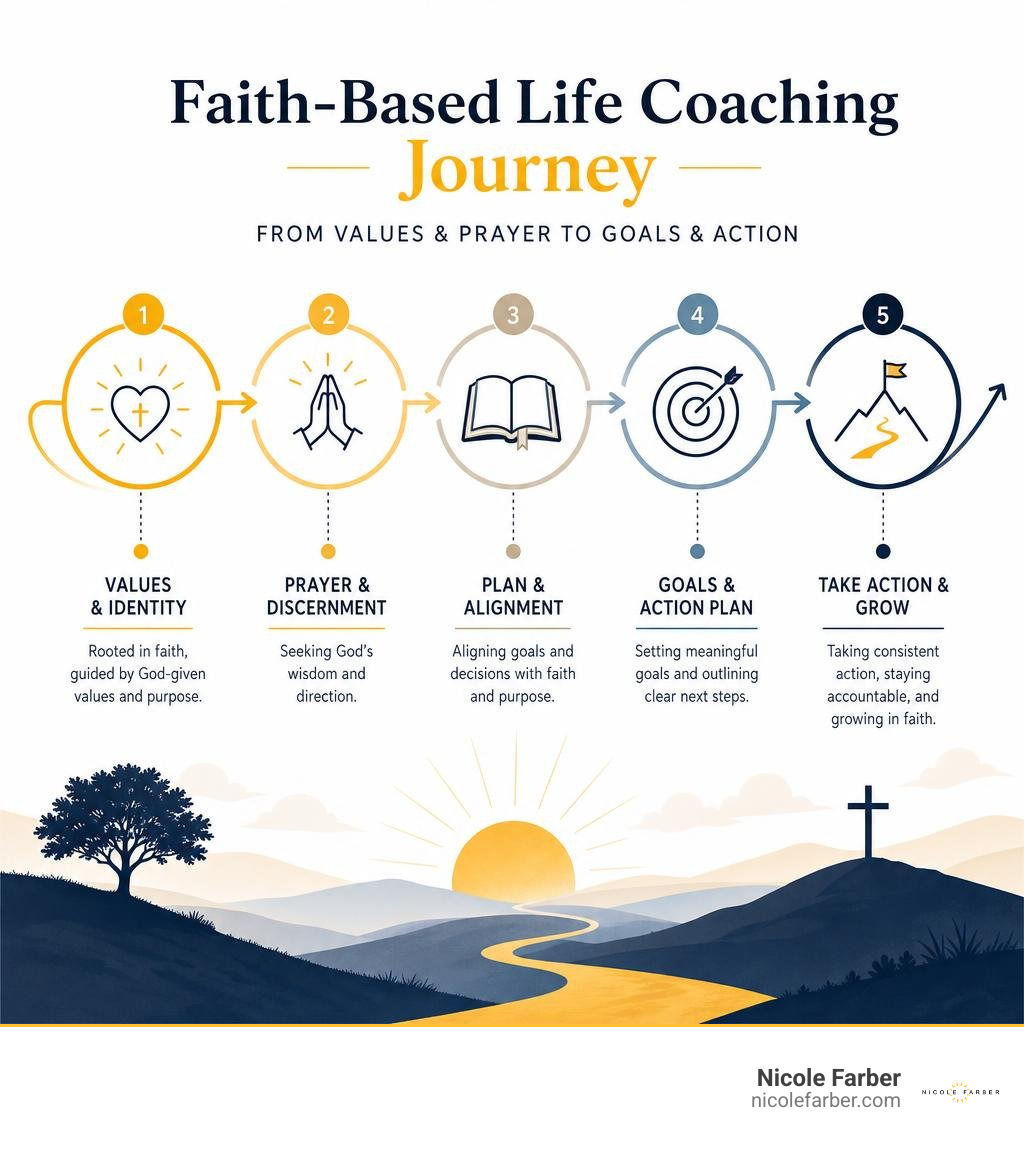
Faith based life coaching terms at a glance:
What Is Faith Based Life Coaching?
At its heart, faith based life coaching is the practice of guiding individuals from where they are today to where God is leading them tomorrow. While secular coaching focuses on human effort, willpower, and personal ambition, faith-centered coaching invites the Holy Spirit into the conversation. It recognizes that true, lasting personal transformation is rooted in God’s grace and biblical truth.
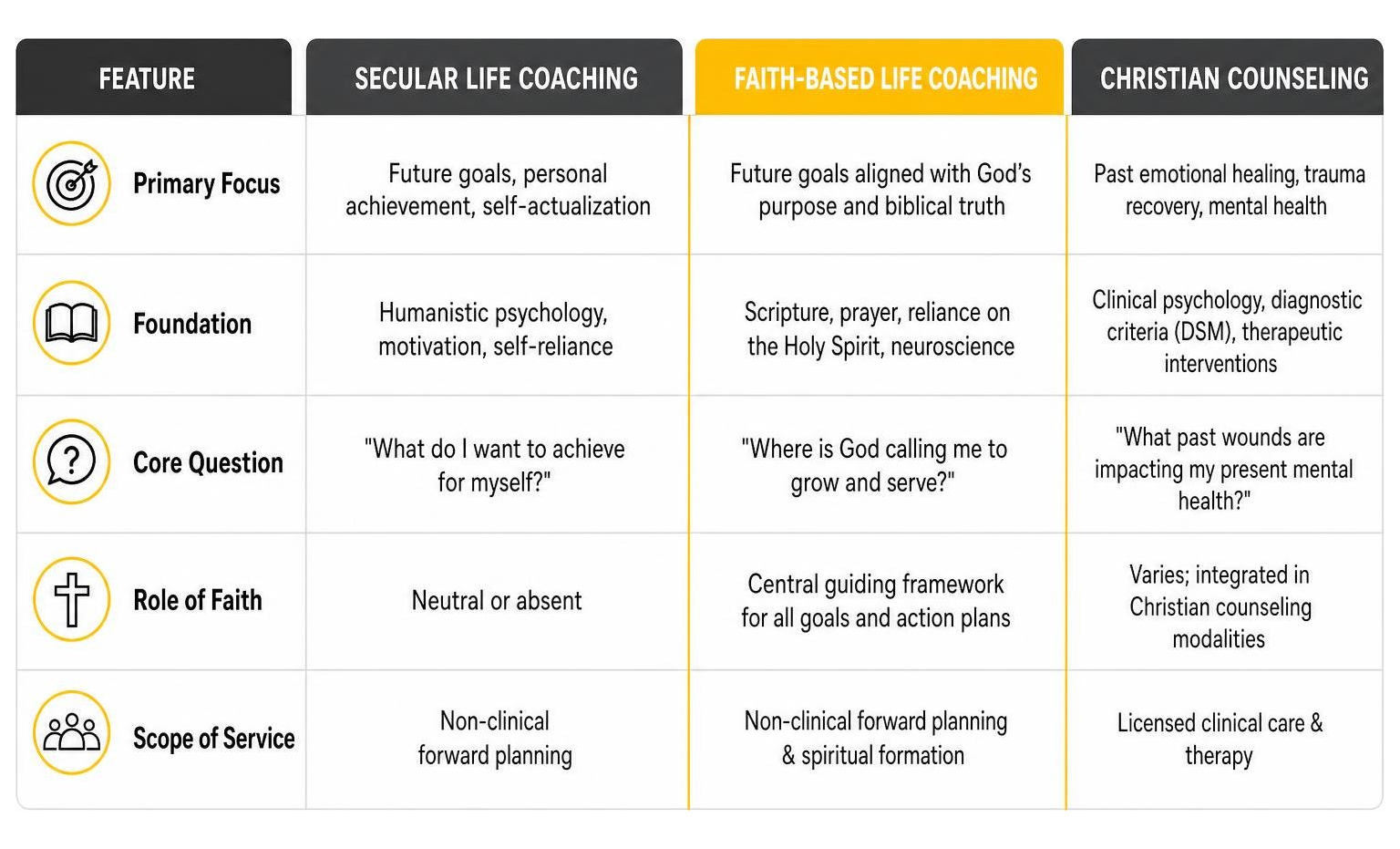
It is equally essential to distinguish coaching from counseling. Clinical counseling or psychotherapy looks backward to heal emotional wounds, resolve trauma, or diagnose and treat mental health conditions. In contrast, life coaching looks forward. It helps high-functioning individuals build momentum, refine their vision, set actionable goals, and overcome internal barriers.
Whether you are seeking professional guidance through life coaching in Philadelphia, PA or working with a coach in Luzerne County, the core methodology remains forward-focused and solution-driven.
| Feature | Secular Life Coaching | Faith-Based Life Coaching | Christian Counseling |
|---|---|---|---|
| Primary Focus | Future goals, personal achievement, self-actualization | Future goals aligned with God’s purpose and biblical truth | Past emotional healing, trauma recovery, mental health |
| Foundation | Humanistic psychology, motivation, self-reliance | Scripture, prayer, reliance on the Holy Spirit, neuroscience | Clinical psychology, diagnostic criteria (DSM), therapeutic interventions |
| Core Question | “What do I want to achieve for myself?” | “Where is God calling me to grow and serve?” | “What past wounds are impacting my present mental health?” |
| Role of Faith | Neutral or absent | Central guiding framework for all goals and action plans | Varies; integrated in Christian counseling modalities |
| Scope of Service | Non-clinical forward planning | Non-clinical forward planning & spiritual formation | Licensed clinical care & therapy |
Core Pillars of Faith Based Life Coaching
When working with a professional faith-based life coach, the process rests upon four essential pillars that ensure balanced growth:
- Biblical Worldview: All guidance, goal-setting, and problem-solving align with Scripture. Instead of measuring success purely by worldly status or wealth, success is defined by faithful stewardship and obedience to divine calling.
- Spiritual Discipline: Growth requires intentional structure. Coaches assist clients in establishing consistent devotional routines, active prayer habits, and meaningful scripture study that refresh the mind daily.
- Identity in Christ: Overcoming imposter syndrome and negative self-talk begins by remembering who you are in Christ. Unshakable confidence comes from knowing your worth is already secured, not from temporary accomplishments.
- Action-Oriented Goal Attainment: Faith without works is dead. Coaching provides structured accountability, breaking complex dreams into practical weekly milestones.
Who Benefits Most from Faith Based Life Coaching?
Many individuals reach seasons where life feels good on paper, yet they know deep down that God has called them to higher levels of impact. Working with a christian life coaching professional offers massive value to:
- Entrepreneurs & Business Leaders: Executives in major metropolitan hubs like Philadelphia or New Orleans who want to scale their organizations without sacrificing their spiritual integrity or family life.
- Individuals Navigating Major Transitions: Professionals changing careers, parents stepping into new life stages, or leaders taking on public ministry roles.
- People Overcoming Stagnancy: High-capacity men and women who feel stuck in decision paralysis, routine burn-out, or fear of visibility.
- Anyone Seeking Purpose Clarity: Individuals who want to distinguish between their overarching life calling and their immediate seasonal assignments.
From community members in Wilkes-Barre to international mission leaders in Antigua Guatemala, the desire for purposeful, faith-aligned growth is universal across the USA and beyond.
The Christ-Centered Coaching Model and Spiritual Integration
How does a Christ-centered coaching session actually operate? Unlike secular approaches that rely entirely on human intellect, a Christian life coach acts as a facilitator, holding space for divine revelation and guidance.
The process begins by inviting the Holy Spirit into each meeting through prayer. Scripture serves as the primary compass for clarifying values, examining motives, and testing priorities. When setting strategic objectives, client and coach do not just ask, “Is this goal smart?” They ask, “Is this goal aligned with God’s revealed will and my personal spiritual formation?”

By integrating continuous reflection with practical action planning, coaching creates space where personal development and spiritual discipline reinforce one another seamlessly.
Overcoming Fear, Self-Doubt, and Limiting Beliefs
One of the most powerful aspects of modern faith-based coaching is the integration of neuroscience with biblical truth. Our brains possess a filtering network known as the Reticular Activating System (RAS). The RAS acts as a gatekeeper, determining what information enters our conscious awareness based on our deepest core beliefs.
When a person harbours subconscious beliefs rooted in fear, inadequacy, or past failure, their brain actively filters for evidence that validates those fears. In coaching, we learn how to renew the mind—a principle highlighted in Romans 12:2. By aligning our focal thoughts with Scripture, we re-wire subconscious patterns, calm nervous system overwhelm, and step into newfound confidence.
When fear suggests you aren’t qualified to launch that new venture or take that step of faith, a coach helps you recognize nervous system hesitation and return to spiritual truth. Learning to walk by faith not by sight becomes a daily, biological, and practical habit rather than just a nice idea.
Navigating Boundaries Between Faith and Professional Standards
Maintaining high professional ethics is vital in faith-based life coaching. While coaches openly weave biblical wisdom into their frameworks, they must maintain clear operational boundaries:
- Non-Clinical Disclosures: Coaches clearly state that life coaching is non-diagnostic and does not replace clinical therapy, medical treatment, or mental health counseling. If a client exhibits signs of clinical depression, deep unresolved trauma, or severe anxiety, an ethical coach refers them to a licensed practitioner.
- Active Listening Over Preaching: A coach is not a pastor giving a Sunday sermon or an advisor telling a client what to do. Life coaching relies on powerful open-ended questioning and active listening, empowering the client to hear God’s voice for themselves.
- Confidentiality & Respect: Client sessions are held in strict confidence, adhering to standard professional guidelines established by global coaching bodies.
When seeking professional guidance across areas like Philadelphia, New Orleans, Luzerne County, or abroad, individuals look for dedicated, professional, and boundary-honoring care.
Training, Certifications, and Accreditation Pathways
As the demand for qualified coaches rises, formal training and accreditation have become essential for establishing professional credibility and mastering client delivery skills.
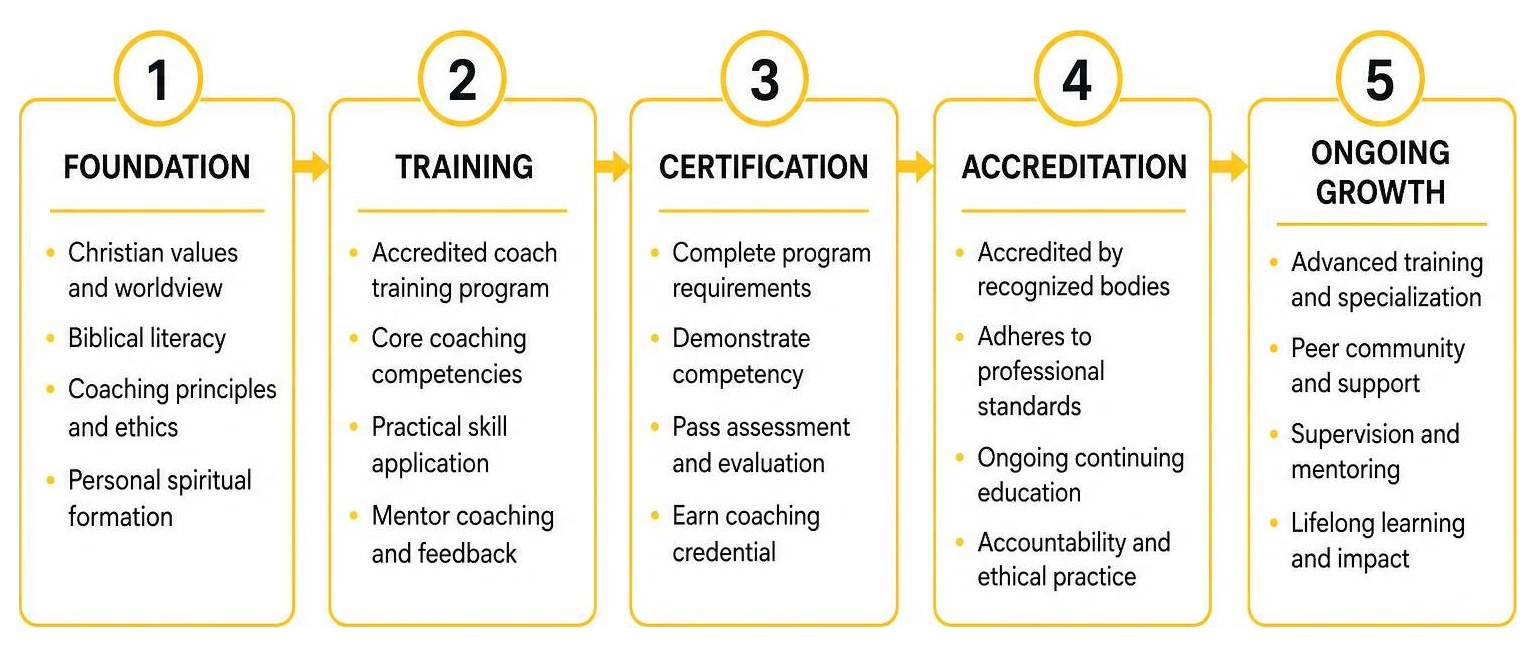
Several globally recognized organizations set the standards for Christian life coach education:
- International Coaching Federation (ICF): The premier global governing body for professional coaching, offering gold-standard accreditation for training institutes. You can learn more about its credentialing standards through the International Coaching Federation.
- Christian Coaches Network International (CCNI): A premier professional organization dedicated specifically to equipping, credentialing, and connecting Christian coaches worldwide.
- International Christian Coaching Institute (ICCI): A leading network providing ascending credential tiers, including Certified Associate (CACLC), Certified Professional (CPCLC), and Certified Master (CMCLC) Christian Life Coach designations.
- The Association for Coaching: An international professional body accrediting comprehensive psychospiritual formation programs.
Aspiring coaches can explore foundational training options and comprehensive certification models to build their skills.
Choosing the Right Training Program
When selecting a certification program, prospective students should carefully evaluate time commitments, financial investments, and accreditation standards:
- Time Commitment: Comprehensive certification models typically span 4 months of intensive study, requiring roughly 5 to 7 hours per week. This includes self-paced masterclasses, live virtual instruction, peer coaching practicums, and mentor evaluation.
- Tuition Expectations: Programs range from tuition-free ministry models that charge small administration fees up to advanced 4-month professional certification experiences ranging between $2,000 and $14,000 depending on depth, business training, and dual accreditations.
- Curriculum Depth: Look for programs that teach practical coaching methodologies, active listening skills, business establishment strategies, and robust faith-based life coach certification standards.
How to Discern Your Calling as a Life Coach
Determining whether you are called to become a life coach involves spiritual discernment, self-assessment, and practical exploration:
- Recognize Your Spiritual Gifts: Do people naturally seek you out for encouragement, discernment, wisdom, and strategic direction? A strong desire to lift others up is often the first indicator of a coaching calling.
- Audit Your Life Experience: God rarely wastes our seasons of testing. Your personal triumphs over adversity, career transitions, or family challenges can serve as the very foundation for helping others navigate similar paths.
- Seek Mentorship and Training: Begin by taking introductory courses, listening to educational podcasts, and enrolling in an accredited christian coaching certification program.
Real-World Impact: How Spiritual Coaching Transforms Lives
What kind of tangible, real-world results can someone expect from faith-based life coaching? The transformation reaches far beyond temporary motivation—it reconstructs daily habits and life foundations.

When client goals are anchored in faith, growth happens across four main pillars of life:
- Faith & Spiritual Maturity: Establishing steady devotional habits, eliminating spiritual doubt, and operating from a deep sense of divine partnership.
- Fitness & Body Stewardship: Treating physical health and wellness as stewardship rather than vanity, overcoming emotional eating, and building sustainable energy habits.
- Relationships & Emotional Regulation: Setting healthy boundaries without guilt, communicating with humility, and creating emotional safety at home and work.
- Finances & Career Self-Respect: Managing money with purpose, breaking free from fear-based financial paralysis, and pursuing career advancement with honor.
Clients working with dedicated faith-based life coaches consistently report breakthroughs in clarity, confidence, and peace.
Case Studies and Real-World Transformations
Consider the real-world impact seen across various industries and leadership roles:
- Executive Leadership Alignment: A law firm owner in Philadelphia was overwhelmed by 70-hour workweeks, causing strain on his family and health. Through structured faith coaching, he audited his weekly calendar, delegated operational tasks, established healthy boundaries, and realigned his leadership style with faith-based business leadership principles. Within six months, firm revenue grew while his weekly working hours dropped by 20%.
- Overcoming Career Stagnancy: A professional in New Orleans felt trapped in a unfulfilling career track due to fear of failure. By applying mindset renewal tools, clearing unhelpful thought patterns, and taking step-by-step actions, she launched a successful consulting practice rooted in her core values.
- Restoring Family & Personal Peace: A busy parent in Luzerne County engaged in regular accountability sessions to rebuild daily habits. By shifting from reactive stress to structured morning devotionals and intentional evening routines, she restored peace and emotional balance within her household.
Frequently Asked Questions About Faith-Based Coaching
What is the main difference between faith-based life coaching and counseling?
Life coaching is action-oriented, forward-looking, and focused on setting goals, building habits, and stepping into future divine purpose. Counseling is clinical, diagnostic, and backward-looking, focusing on healing past emotional trauma, treating clinical depression or anxiety, and resolving psychological conditions.
Do I need professional certification to become a Christian life coach?
While certification is not legally mandated in all regions to call yourself a life coach, obtaining an accredited certification from recognized credentialing bodies (such as the ICF, CCNI, or ICCI) is vital. It equips you with proven coaching methodologies, establishes your professional credibility, ensures high ethical standards, and helps protect client safety.
What is the average time commitment for a faith-based coaching certification program?
Most comprehensive online certification programs run for approximately 4 months. Students should expect to commit roughly 5 to 7 hours per week to complete on-demand masterclasses, participate in live weekly virtual instruction, complete peer coaching hours, and engage in mentorship feedback.
Conclusion: Stepping Into Your God-Given Purpose
Living a life of impact, clarity, and peace is not an accident—it is the result of intentional choices, spiritual discipline, and divine alignment. Whether you are seeking a coach to help you navigate a critical transition, or feeling called to step up and coach others, faith based life coaching provides the practical structure and biblical grounding needed to flourish.
When you align your daily work, leadership, and personal habits with God’s higher vision, self-doubt fades, clarity arises, and lasting transformation begins.
Explore more faith-based leadership guidance to continue your journey toward purposeful leadership and holistic growth today!