Grow Your Practice: A Lawyer’s Guide to Building a Referral Empire
- Marketing
- In the News
- November 28, 2025
Why Your Law Firm Needs a Referral Empire

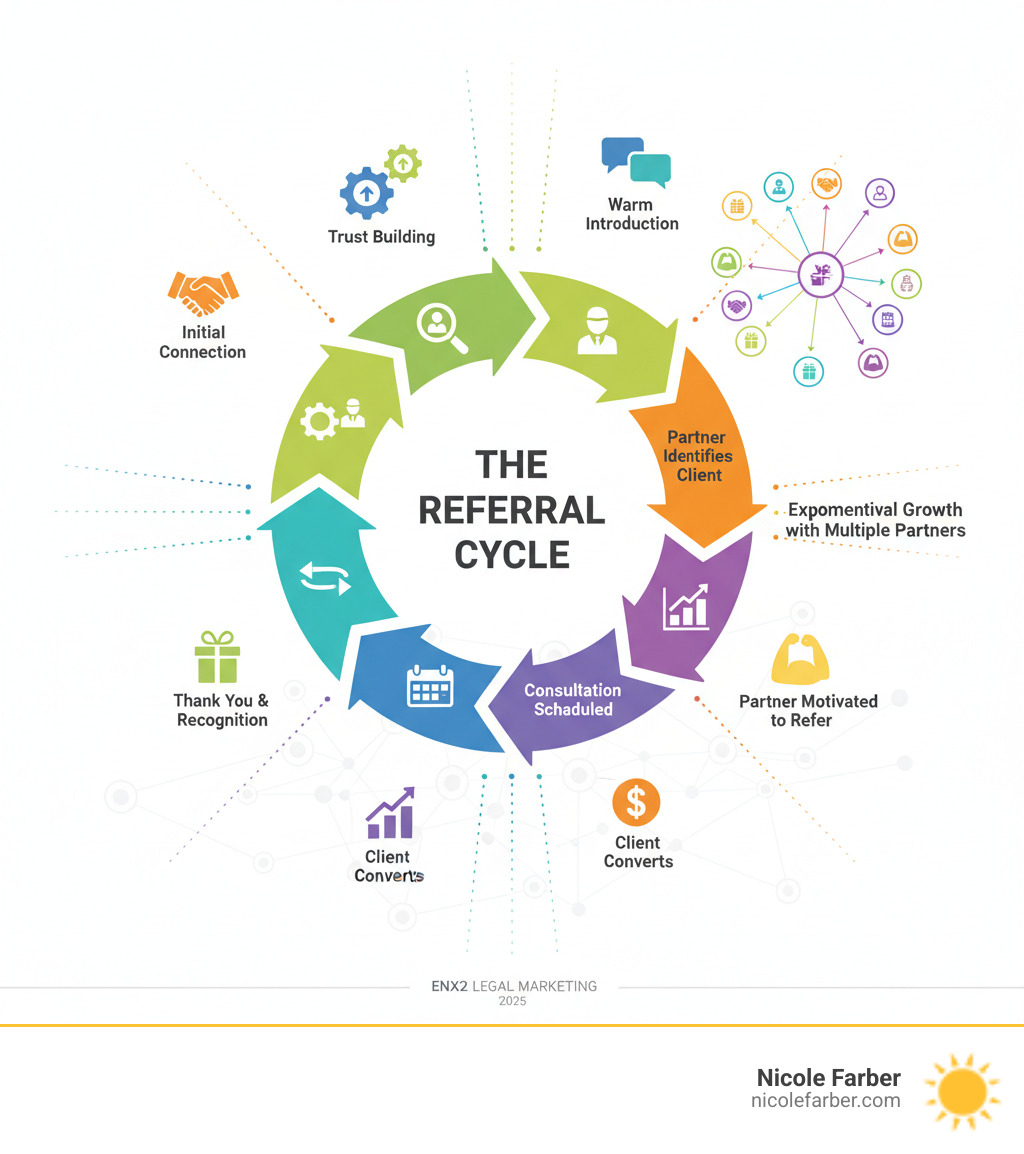
Building a referral network means creating strategic relationships with professionals who regularly connect you with high-quality clients. Here are the key steps:
Key Steps to Building a Referral Network:
- Identify ideal referral partners – non-competing professionals who serve your target clients (accountants, real estate agents, financial planners).
- Connect strategically – reach out with personalized communication and offer value first.
- Nurture relationships – maintain regular contact through follow-ups and genuine support.
- Ask respectfully – be specific about your ideal client and make referrals easy to give.
- Show appreciation – thank partners, reciprocate referrals, and recognize their contributions.
- Measure and improve – track referral sources and conversion rates to adjust your approach.
Many law firm partners find traditional marketing overwhelming and unpredictable. You pour money into ads and still wonder where your next quality client will come from. There’s a better way.
Referrals are the most powerful way to grow a law practice. Studies show that the vast majority of businesses find referrals to be the best source of new customers. They cost little besides your time and bring in desirable clients who already trust you because someone they respect vouched for you.
The difference between a few random referrals and a referral empire is an intentional system. Most lawyers hope for referrals; successful lawyers build for them.
A structured referral network is a self-sustaining engine for growth. Your partners understand your ideal client, actively look for opportunities to connect you, and become champions of your practice. This is about authentic relationships that benefit everyone.
I’m Nicole Farber, CEO of ENX2 Legal Marketing. For over 15 years, I’ve helped law firms grow through strategic client development and building a referral network that transforms practices. From Philadelphia’s competitive market to helping attorneys in Wilkes-Barre, I’ve seen how a strong referral system creates sustainable growth that advertising alone can’t match.
Step 1: Identifying Your Ideal Referral Sources
Just as you’d assemble a team of specialists for a complex case, building a referral network requires picking partners who bring unique value. Before reaching out, you must know who you’re looking for. This is about strategically identifying professionals who encounter your ideal clients but offer different services.

Analyze your client’s journey: What other professionals do they work with before, during, or after needing your services? Understanding this landscape helps you create a clear profile of your ideal referral partner, making your networking efforts focused and effective.
Non-Competing Professionals: Your Power Partners
Your power partners serve the same clients you do but offer complementary services. They are your natural allies. For an estate planning attorney, this could be an accountant or financial planner who advises on matters that intersect with legal needs.
- Accountants and CPAs often uncover needs for tax, business, or estate planning law.
- Financial planners guide clients through life events like retirement or business succession that have legal components.
- Real estate agents are referral goldmines. Every transaction involves contracts and potential disputes. An agent in Philadelphia’s competitive market or New Orleans’ unique property landscape can be an invaluable source.
- Therapists and counselors work with clients in family law or personal injury cases where mental health and legal needs intersect.
- Medical doctors, especially for personal injury attorneys, are often the first point of contact for accident victims. A trusted doctor in the Wilkes-Barre area can be a valuable partner.
- Insurance brokers deal with claims and coverage disputes that frequently require legal expertise.
Successful partnerships require clear boundaries. A Scope of Practice worksheet can help articulate your expertise and when a referral is best for the client, making the relationship mutually beneficial.
Other Lawyers and Law Firms
Surprisingly, other law firms can be your strongest referral partners. No firm can be an expert in everything. By focusing on a niche, other firms will refer clients whose needs fall outside their expertise. A corporate law firm might send you a personal injury case, and you can reciprocate.
Geographic expansion also creates opportunities. A Philadelphia-based firm can partner with a firm in New Orleans for Louisiana-specific cases or collaborate with a firm in Antigua Guatemala for international matters. These relationships often begin in professional circles like bar associations and legal events in places like Luzerne County. For more strategies, see our guide on Client Acquisition for Lawyers.
Your Existing Client Base and Community
Your existing clients are a powerful, often overlooked referral source. Happy clients become your most enthusiastic advocates, and their referrals come with built-in trust.
The foundation is exceptional customer service. Exceeding expectations through clear communication and empathy creates “raving fans.” Don’t hesitate to ask satisfied clients for testimonials; a glowing review from someone in Wilkes-Barre can be a deciding factor for a new client.
Your wider community—friends, family, and local leaders—can also be fantastic sources. The power of word-of-mouth in your social circles in New Orleans or professional networks in Philadelphia is significant. To learn more about turning clients into advocates, read our article on Building a Successful Business. Investing in genuine relationships turns your community into a part of your referral empire.
Step 2: Strategies for Building a Referral Network
Knowing who to connect with is the first step; how you build those relationships is next. Building a referral network is a continuous process grounded in trust, reciprocity, and a long-term vision. It’s about cultivating genuine connections, not just collecting business cards.

The best referral relationships feel like partnerships, not transactions. When you genuinely care about your partners’ success, referrals flow naturally. This long-term approach is a Key Strategy for Growing a Business, as the strongest networks are built on time, attention, and authenticity.
Mastering the Art of Connection and Nurturing
Initial outreach must be personal. Generic emails are instantly deleted. Instead, research your potential partner. Look at their website, LinkedIn profile, and recent articles. Mention something specific that shows you’ve paid attention.
The most important principle is to adopt a “give before you get” mindset. Offer value first without expecting anything in return. Share a relevant article, introduce them to a helpful contact, or offer a useful insight. Generosity builds trust and a desire to reciprocate.
Face-to-face connections are still powerful. Attend networking events, whether it’s a Chamber of Commerce breakfast in Luzerne County, a legal conference in Philadelphia, or a business mixer in New Orleans. After the initial connection, consistent nurturing keeps relationships alive. A quick check-in email, a shared industry insight, or a lunch invitation keeps you top-of-mind as a valuable resource.
Schedule time for this work—perhaps two hours a week—for outreach and follow-ups. For more guidance, explore our resource on Building a Business Development Plan. You might also host a small workshop for potential partners on a relevant legal topic to showcase your expertise and provide value.
Leveraging Digital Platforms and Professional Groups
Building a referral network happens both online and offline. LinkedIn is an essential tool for professional connections. Use it to find potential partners in your area, like financial planners in Wilkes-Barre or real estate agents in New Orleans. But don’t just send a connection request; engage with their content first by commenting on or sharing their posts. When you do connect, personalize your request.
Beyond LinkedIn, participate in online forums and social media groups where your ideal partners gather. Share your expertise and answer questions to build your reputation. This resource on What are the best ways to build a referral network for your business? offers more practical guidance.
When it comes to professional groups, you have two main options:
- Formal business referral groups (like BNI or LeTip) offer a structured environment with regular meetings, membership fees, and industry exclusivity. The commitment is significant, but the accountability can produce consistent results.
- Informal networks give you flexibility and control. You build these relationships organically through individual outreach and industry events. Referrals stem from genuine trust rather than a quota system.
As a Marketing Speaker for Law Firms, I’m often asked which is better. The most successful attorneys often use both. A formal group provides a foundation, while an informal network offers depth and flexibility. The key is to show up consistently, contribute genuinely, and build relationships that benefit everyone.
Step 3: Activating and Maintaining Your Network for Long-Term Growth
Once you’ve built relationships, you need to activate and nurture them. This is where building a referral network becomes a sustainable growth engine for your practice, strengthening your reputation in Philadelphia, Wilkes-Barre, and beyond.

The Strategic Ask: How to Request Referrals Respectfully
Asking for referrals doesn’t have to be awkward. The key is timing and specificity. Ask when a client expresses delight with your service or after you’ve consistently provided value to a partner. You’ve earned the right to ask through your actions.
Be specific. Instead of saying, “Send me anyone who needs a lawyer,” say, “I’m focusing on helping small business owners in the Philadelphia area with intellectual property.” This clarity makes it easy for partners to spot ideal referrals.
Make the referral process effortless. Provide a simple referral kit with your bio, contact info, and expertise. Using scheduling tools can also remove friction. This thoughtful approach aligns with Strategic Goal Setting for practice growth.
Showing Appreciation and Fostering Reciprocity
Gratitude keeps your network active. Every referral deserves genuine appreciation. A handwritten thank-you note or a thoughtful gift, like a gift certificate to a restaurant in Wilkes-Barre, shows you value the connection.
Most importantly, practice reciprocity. Actively look for opportunities to send business to your partners. When a client needs a service your partner provides, make the introduction. This creates a virtuous cycle of mutual support. This is what Empowering Your Team looks like when your network is an extension of your team.
Measuring Success and Avoiding Common Pitfalls in building a referral network
You can’t improve what you don’t measure. Track key metrics like the number of referrals, conversion rates, and client value. Use source tracking to identify which partners send the best referrals. Reviewing this data quarterly helps you prioritize your efforts, whether it’s with an accountant in Philadelphia or a real estate agent in New Orleans.
Avoid these common pitfalls:
- Not vetting partners: A bad referral can damage your reputation. Ensure your partners’ values and service quality align with yours.
- Being too transactional: Focus on genuine connection and mutual support, not just what you can get.
- Failing to communicate: Stay in touch consistently with valuable content or a quick check-in. Don’t disappear for months.
- Giving up too soon: Building a strong network takes time and persistence. It’s a long-term investment, not a quick fix.
By tracking efforts and avoiding these mistakes, you can steer the Overcoming Business Challenges of referral generation.
Frequently Asked Questions about Building a Referral Network for Lawyers
What’s the difference between a referral network and a formal business referral group?
Building a referral network is about creating your own informal web of professional relationships. These are connections you make organically with people like an accountant you met at an event in Luzerne County. These relationships are flexible, personal, and managed on your own terms without fees.
A formal business referral group (like BNI or LeTip) is a structured organization with rules, regular meetings, and membership fees. They typically allow only one person per profession in each chapter, making you the exclusive attorney. Members are expected to exchange referrals, which can generate consistent business but requires a significant time and financial commitment. Many successful attorneys in Philadelphia and beyond use a combination of both.
How much time should I dedicate to building my referral network?
Consistency is more important than intensity. Dedicate 2-3 hours per week to network building. This is far less time than chasing cold leads. Break it down into manageable tasks: spend time on LinkedIn, schedule one coffee meeting a week (in-person in Wilkes-Barre or virtual with a contact in New Orleans), and use the rest for follow-ups. As your network matures, you’ll spend more time nurturing existing relationships, and the referrals will compound.
How can I build a network if I’m a new lawyer or new to a city?
Starting from scratch can feel overwhelming, but your newness is an asset. You bring fresh energy and a willingness to connect.
- Get involved: Join your local bar association and volunteer for a committee. Don’t just pay the dues; show up.
- Use your alumni network: Reach out to alumni in your new city, like Philadelphia. Most attorneys remember starting out and are happy to offer advice.
- Collaborate: Offer to co-present a webinar with an established professional. You bring fresh knowledge; they bring an audience.
- Focus on quality: Build one or two strong relationships at a time. Offer value first by sharing an article or making an introduction. Your enthusiasm is a powerful asset.
Every successful lawyer in Wilkes-Barre or New Orleans started somewhere. Consistent, genuine relationship-building is what sets them apart.
Conclusion: From Network to Empire, Your Path to Sustainable Growth
Committing to building a referral network is more than a marketing task; it’s a fundamental shift in how your practice grows. You are creating a sustainable system that brings you ideal clients and makes your professional life more rewarding.
Referred clients close faster and become loyal advocates. Beyond the metrics, you’re building a community of trusted professionals who want you to succeed—from a financial planner in Philadelphia to a real estate agent in Wilkes-Barre or a fellow attorney in New Orleans.
Creating a referral empire requires patience, consistency, and a commitment to serving others. The long-term benefits are substantial: reduced marketing costs, higher-quality clients, and a stronger professional reputation. The most successful lawyers understand that authentic connection is the foundation of everything. They give freely and find that generosity is returned tenfold.
As a motivational speaker and business leader, I’ve learned that your greatest strength is your ability to build relationships that matter. Every genuine connection, whether in Luzerne County or with international partners in Antigua Guatemala, is an investment in your future. This approach aligns with the principles of Faith-Based Business Leadership, leading with integrity and serving others first.
Your referral empire starts with a single conversation. It grows into a sustainable practice built on trust and mutual respect.
If you’re ready to transform your practice and build a referral network that serves your goals, I invite you to explore our Business Coaching for Lawyers. Together, we’ll create a customized strategy for your unique vision of growth.