How to Start Your Own Law Firm: A Step-by-Step Blueprint for Success
- Entrepreneurship
- In the News
- December 29, 2025
Why Building a Law Firm is Your Path to Professional Freedom

Building a law firm is one of the most rewarding—and challenging—decisions a lawyer can make. If you’re considering this journey, you’re not alone. Many driven attorneys are ready to move beyond traditional firm structures to create something of their own.
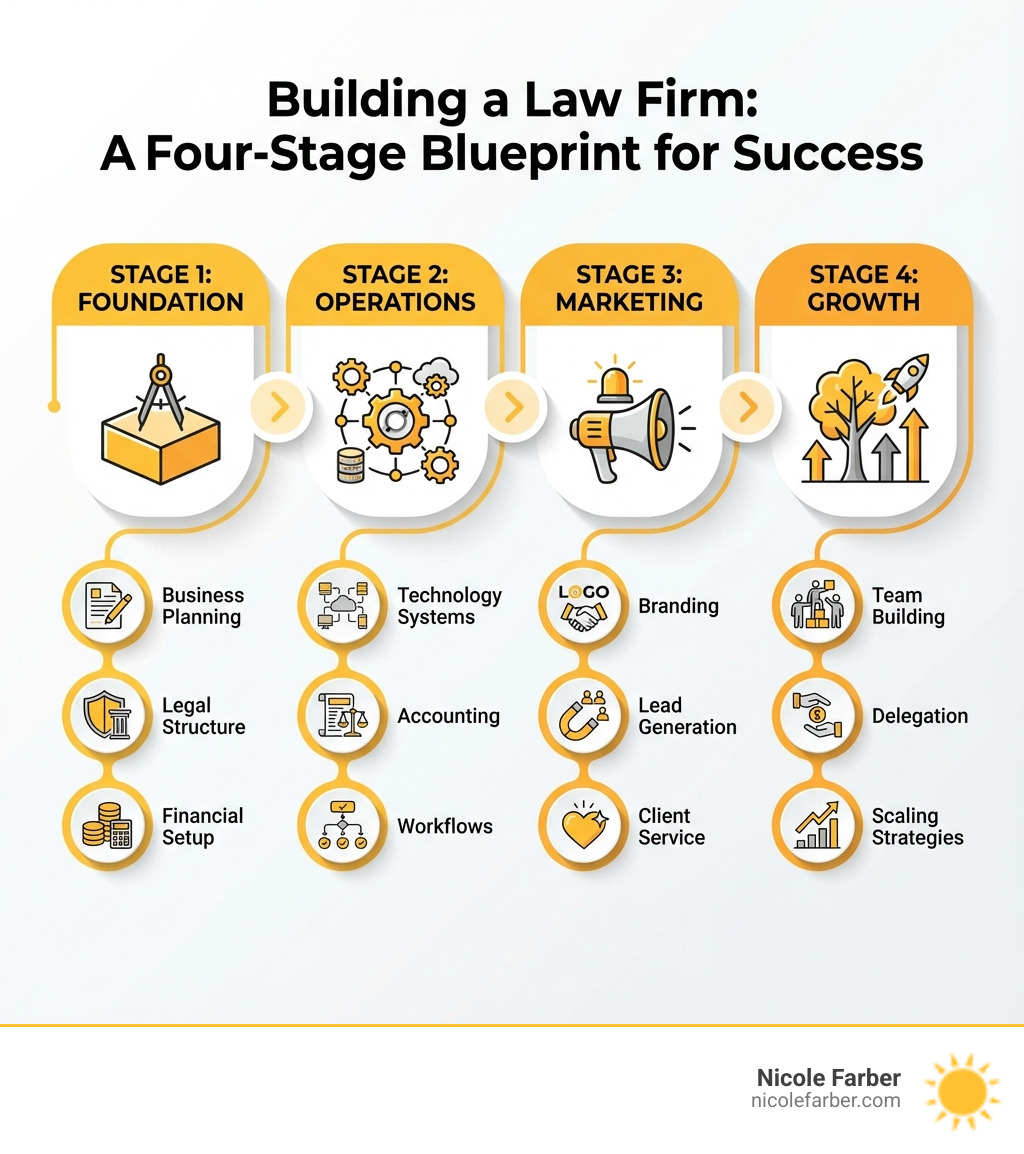
Here’s what building a law firm requires:
- Foundation: Legal structure, business plan, and financial planning
- Operations: Technology systems, accounting, and workflow processes
- Marketing: Brand identity, website, and client acquisition strategies
- Growth: Team building, delegation, and scaling systems
You’re ready to start your own law firm. More than that, you’re ready to start a healthy law firm that brings you satisfaction and purpose. But as one legal entrepreneur noted, “Starting a law firm can be financially and emotionally rewarding—when done the right way.”
The reality is simple: You’ll need to think like both a lawyer and a business owner. The legal expertise you’ve developed is only part of the equation. Success requires planning your finances, marketing your services, managing operations, and delivering exceptional client experiences—all while practicing law.
The stakes are high. Research shows that 67% of law firms don’t even respond to potential client inquiries. Meanwhile, firms that accept technology for client intake and communication earn up to 39% more revenue per lawyer than those that don’t. The difference between struggling and thriving often comes down to treating your practice as a business, not just a legal service.
Whether you’re a recent graduate or a seasoned attorney going solo, this guide will walk you through the four critical stages: laying your foundation, building efficient operations, attracting clients, and scaling for growth. We’ll cover everything from choosing your legal structure in Pennsylvania to marketing your practice in communities like Philadelphia, Wilkes-Barre, and New Orleans—or even running a virtual firm from Antigua Guatemala.
I’m Nicole Farber, CEO of ENX2 Legal Marketing, and I’ve spent over 15 years helping law firms and businesses succeed through strategic marketing and business development. Building a law firm requires more than legal knowledge—it demands business acumen, marketing expertise, and the courage to lead, which is why I’m passionate about guiding attorneys through this transformative process.
Stage 1: Laying the Foundation for Your Practice
Before we can open our doors and start practicing law, we need to ensure we have a solid foundation. This involves crucial steps like defining our business plan, choosing the right legal structure, securing financial resources, and selecting a strategic location. These initial decisions will shape every aspect of our firm’s future. As Clio’s guide to starting a law firm emphasizes, “A passion for practicing law is essential, but you’ll also need to know how to run the business side of your firm. That is where your business plan comes in.”
Navigating Legal and Administrative Requirements
One of our first tasks is to steer the essential legal and administrative requirements for starting a law firm. This begins with determining our business entity choice. We can opt for a sole proprietorship, a partnership, a limited liability company (LLC), or a professional corporation (PC). Each structure has different implications for liability and taxation, so it’s wise to consult with an accountant and legal advisor to choose the best fit for our vision.
Regardless of the structure, we’ll need to ensure our firm is properly licensed and in good standing with the state bar association in our chosen jurisdiction, whether that’s Pennsylvania for Philadelphia or Wilkes-Barre, Louisiana for New Orleans, or the local authorities in Antigua Guatemala. We’ll also need to obtain a federal employer identification number (EIN) from the Internal Revenue Service, which is essential for tax purposes, especially if we plan to hire employees.
Crucially, we must secure appropriate insurance. Professional liability (malpractice) insurance is non-negotiable. Some states may even have mandatory insurance requirements or disclosure rules. Beyond malpractice, we should consider business insurance like a Business Owner’s Policy (BOP) to protect our assets. While resources like ISBA Mutual offer solutions, we must research what’s available and required in our specific operating locations.
Crafting Your Law Firm Business Plan
A comprehensive business plan is our roadmap to success. It’s not just a document for lenders; it’s a living guide that clarifies our goals and strategies. Our plan should articulate our firm’s mission statement and vision, providing direction and purpose. What kind of impact do we want to make in our community, be it Luzerne County or New Orleans?
We need to define our niche practice area. Specializing, for example, in real estate law in Philadelphia or personal injury in Wilkes-Barre, allows us to focus our expertise and marketing efforts. This requires a thorough target market analysis: who are our ideal clients? What are their needs? Where can we find them? Understanding their demographics and pain points is crucial.
Our business plan should also outline our competitive advantages—what makes our firm unique? Perhaps it’s our client-centric approach, our innovative use of technology, or our deep community ties. Finally, it must include realistic financial projections, detailing anticipated revenue, startup costs, and ongoing expenses. A SWOT analysis (Strengths, Weaknesses, Opportunities, Threats) can help us gain a clearer perspective. For more guidance on this critical step, explore Building a Business Development Plan.
Financial Planning and Securing Funding
Building a law firm requires careful financial planning. We need to create a detailed startup budget that covers everything from office furniture and technology to initial marketing efforts and bar dues. Beyond startup costs, we must project our operating expenses for at least the first six to twelve months, ensuring we have enough capital to sustain the firm until revenue stabilizes. This includes rent, salaries, insurance, supplies, marketing, and client file expenditures.
Our financial plan should also set clear revenue goals. How much do we need to earn to cover expenses and generate profit? Funding options typically include personal savings, small business loans specifically custom for attorneys, or a business line of credit to manage early cash flow. As Clio notes, “No matter how much money you currently have, what practice area you’re in, or how long you’ve spent practicing, you’ll need a budget to help your law firm succeed.” For a deeper dive into this, refer to Chapter 2 – How to create a law firm budget. Financial prudence is paramount; we must monitor our cash flow diligently to avoid pitfalls.
Choosing a Strategic Location
The right location can significantly impact our firm’s success. We have several options, from a traditional physical office to a fully virtual setup. When considering a physical space, factors like proximity to our target clients, accessibility to courthouses, and parking availability are key. For instance, a firm in Philadelphia specializing in family law might benefit from being near the family court, while a personal injury firm in New Orleans might prioritize easy client access.
However, the rise of technology has made virtual offices increasingly viable, especially for niche practices or those serving a dispersed client base, such as a firm operating from Antigua Guatemala. Co-working spaces offer a hybrid solution, providing professional meeting rooms and administrative support without the overhead of a dedicated office. We must weigh the costs against the benefits for our specific practice area and client needs. As one guide suggests, don’t overlook the importance of setting up a proper workspace, whether physical or virtual, for long-term productivity and professionalism. Find more details on workspace setup in Chapter 7 – How to set up your new law firm workspace.
Stage 2: Building a Law Firm with Efficient Operations and Technology
Once our foundation is solid, our attention turns to building an efficient, technology-driven operational framework. This stage is about working smarter, not just harder.

Operational systems and a robust technology stack are no longer luxuries; they are crucial for running an efficient law firm. Embracing workflow automation and modern tools can significantly boost our firm’s efficiency. In fact, firms using online credit card payments, client portals, and client intake solutions together consistently earned over 20% more revenue per lawyer each month—and as much as 39% more in August—compared to firms who hadn’t adopted these technologies. This statistic highlights the undeniable link between technology adoption and increased profitability.
Essential Systems and Technology for a Modern Firm
A modern law firm thrives on its technology. Our core should be a comprehensive legal practice management software. Tools like Clio or MyCase (linked in research as examples) can manage cases, client communications, billing, and scheduling, streamlining our operations significantly. This software helps us stay organized and focused on legal work.
Document management is another critical component. We need secure, cloud-based storage so our team, whether in Philadelphia, New Orleans, or working remotely from Antigua Guatemala, can access documents remotely by authorized staff. Implementing a consistent naming system and utilizing software that tags and categorizes documents automatically based on matter or case will keep us organized. For insights into cloud-based document management, check out this resource. Secure client portals improve client experience and communication, while modern communication tools ensure seamless internal and external interactions.
Mastering Legal Accounting and Compliance
Accurate and compliant legal accounting is non-negotiable. We must implement clear billing methods, whether hourly, fixed-fee, or contingent, and robust invoicing systems. Automated invoicing, clear billing cycles, electronic billing, and tracking payment history are best practices for smooth operations. For tools to manage this, explore online billing and invoicing solutions.
Time tracking and expense tracking are fundamental for accurate billing and financial reporting. We need to carefully record every billable hour and expense. Trust accounting is particularly critical and highly regulated. We must strictly segregate client funds from our firm’s operating accounts, often in Interest on Lawyer Trust Accounts (IOLTA). Maintaining thorough records of all trust transactions and preventing commingling of funds are ethical and legal imperatives. While specific rules vary by jurisdiction, resources like the ARDC Client Trust Fund Handbook (from Illinois, but principles apply broadly) highlight the importance of meticulous record-keeping. Finally, using real-time financial Reporting helps us monitor our firm’s financial health and make data-driven decisions.
Streamlining Your Client and Case Workflows
Efficiency in client and case workflows is key to client satisfaction and our firm’s profitability. Our client intake process should be as smooth and welcoming as possible. Digital, logic-based intake forms and automated follow-up emails can simplify client acquisition. Securely storing intake documents from the outset helps build an organized practice.
For case management, we should create consistent workflows for managing legal cases from start to finish. This includes developing case progression templates, setting calendar deadlines with automatic reminders, and tagging relevant documents to each matter. Task management tools ensure nothing falls through the cracks. By streamlining these processes, we improve our workflow efficiency and free up more time for practicing law. For strategies on attracting and managing clients, check out our guide on Client Acquisition for Lawyers.
Stage 3: Attracting and Delighting Clients
With our operations in place, our focus shifts to the lifeblood of any law firm: clients. This stage is about effective branding, strategic marketing, and delivering an exceptional client experience.

The modern legal industry is highly competitive, and clients have more choices than ever. To stand out, we need to actively attract and then truly delight our clients. A staggering 76% of consumers would stop doing business with a company after just one bad experience. This statistic underscores the critical importance of every client interaction.
Building a Powerful Brand and Marketing Strategy
Our firm’s brand is more than just a logo; it’s the sum of what people think about us. A powerful brand identity, reflected in our logo design, website, and all communications, helps us stand out. As one expert notes, “Attorneys who take branding seriously and have the foresight to learn and market around what they truly stand for will set themselves up for longevity in an unpredictable industry.”
A professional website is our 24/7 storefront, showcasing our expertise and making it easy for potential clients to find us. Search Engine Optimization (SEO) for lawyers is crucial to ensure our firm appears prominently in online searches, especially for local clients in Philadelphia, Wilkes-Barre, or New Orleans. Content marketing, through blogs and articles, establishes us as thought leaders. We must also engage in social media, always adhering to ethical guidelines. For expert guidance on honing our marketing approach, consider working with a Law Firm Marketing Coach. Networking in our local communities, like Wilkes-Barre, can also be invaluable for building connections and referrals.
Effective Strategies for Building a Law Firm’s Client Base
Generating leads and converting them into clients is an ongoing process. We can employ various lead generation tactics, from traditional networking to digital advertising. Building strong referral networks is often the most cost-effective way to acquire clients; learn more about this in Building a Referral Network.
Responsiveness is a critical differentiator. A study revealed that 67% of law firms didn’t respond at all to test emails. This is a massive opportunity for us to stand out by simply returning calls and emails promptly. Online reviews and testimonials are powerful social proof, and offering free consultations can be an effective way to engage potential clients and demonstrate our value.
The Heart of a Thriving Practice: Client-Centric Service
At the core of a thriving law firm is a client-centric approach. Client-centricity is a philosophy that places clients at the heart of every decision and action. We must strive for a deep understanding of our clients’ needs, preferences, and objectives, recognizing that they are often experiencing significant stress.
Mapping the client journey helps us identify touchpoints where we can improve their experience. Empathy in practice, combined with clear and consistent communication standards, builds trust and rapport. We must aim to exceed expectations at every turn, ensuring clients feel heard, respected, and well-represented. This means providing support, expert guidance, and the assurance of tenacious representation. As the saying goes, “A satisfied client is the best advertisement.” By empowering our team to prioritize client satisfaction, we create loyal advocates. Learn how to Empower Your Team to achieve this.
Stage 4: Leadership, Growth, and Scaling Your Practice
Once our firm is established and attracting clients, the journey shifts toward sustainable growth, effective leadership, and thoughtful scaling. This is where our vision truly expands.
As our firm grows, our role evolves from solely practicing law to leading a team and strategically expanding our operations. This requires a strong leadership mindset.
Strategies for Sustainable Law Firm Growth
Sustainable growth means more than just increasing revenue; it means expanding thoughtfully and adapting to the ever-changing legal landscape. We can scale operations by refining our processes and leveraging technology to handle increased caseloads. Expanding practice areas, perhaps moving into a new niche in New Orleans or a specialized corporate law in Philadelphia, can open new revenue streams.
Adapting to market changes is vital. The legal industry is constantly evolving, with new technologies and regulations emerging regularly. Continuous learning is non-negotiable; we must attend continuing legal education (CLE) programs, participate in professional development opportunities, and foster a culture of learning within our firm. This commitment to staying current ensures our firm remains competitive and relevant. For more guidance on this, explore Key Strategies for Growing a Business.
The Art of Delegation and Building a Winning Team
We can’t do it all ourselves, nor should we. The art of delegation is crucial for growth. This means strategically hiring staff—whether associates, paralegals, or administrative assistants—to support our growing practice. We should hire proactively as we gain new clients, rather than waiting until we’re overwhelmed.
Outsourcing non-core tasks, such as legal research, social media management, or even certain administrative functions, to virtual assistants or specialized agencies, allows us to focus on high-value legal work. Building a strong company culture is equally important. A positive culture, where trust and empowerment are valued, attracts and retains talent, making our firm a desirable place to work. For insights into developing leadership skills and team dynamics, consider Business Coaching for Lawyers.
Creating Your Professional Support Network
No lawyer is an island, especially when building a law firm. Creating a robust professional support network is essential for our success and well-being. This includes seeking mentorship from more experienced attorneys who can offer invaluable advice and guidance.
Networking with peers, both within our specific practice area and across the legal community, opens doors to referrals and collaborative opportunities. Joining local bar associations, such as the Philadelphia Bar Association or the Luzerne County Bar Association, provides professional development, ethical guidance, and networking events. These connections can be a lifeline, offering advice, support, and even a sounding board during challenging times. Building this support system is a key aspect of effective leadership. Learn more about How to Become an Effective Leader in the legal field.
Frequently Asked Questions about Building a Law Firm
How much does it cost to start a law firm?
The cost to start a law firm can vary significantly, but it’s often more accessible than many realize. While some firms might require substantial capital, a lean startup approach can launch a firm for “around a few thousand dollars for the first year.” Key startup costs include business registration fees, bar dues, malpractice insurance, initial technology expenses (computer, software), basic office setup (even virtual), and a marketing budget to attract early clients. Ongoing operational expenses like rent (if applicable), utilities, and salaries are also crucial to factor into the first-year budget. Careful financial planning and budgeting are essential to ensure adequate funding.
How do you attract your first clients?
Attracting your first clients involves a multi-faceted approach. Leverage your personal network—friends, family, and former colleagues—and actively seek professional referrals from other attorneys or related service providers. A strong online presence, including a professional website optimized with local SEO, is vital for visibility in areas like Philadelphia or New Orleans. Community involvement and participation in local events can also build trust and recognition. Finally, content marketing (blog posts, articles) can establish your expertise, and offering free consultations can be an effective way to engage potential clients and demonstrate your value.
What is the biggest challenge when starting a law firm?
The biggest challenge when starting a law firm often lies in balancing the dual roles of being a lawyer and a business owner. As one expert put it, “You’ll need to learn how to think like a business owner—in addition to practicing law.” This means navigating client acquisition, managing cash flow, overseeing operations, and handling administrative tasks, all while delivering high-quality legal services. This can lead to significant time management demands and the need to overcome initial business challenges. For strategies to tackle these problems, explore Overcoming Business Challenges.
Conclusion: Your Blueprint for a Fulfilling Legal Career
Building a law firm is an ambitious yet incredibly rewarding endeavor. We’ve outlined the four critical stages: laying a robust foundation, establishing efficient operations and technology, attracting and delighting clients, and fostering leadership for sustainable growth. From crafting a compelling business plan and mastering trust accounting to building a powerful brand and empowering our team, each step is crucial for success.
The journey of entrepreneurship in law offers unparalleled personal and professional fulfillment. It’s an opportunity to shape our own legacy, build a practice aligned with our values, and make a profound difference in the lives of our clients. This path demands resilience, strategic thinking, and a commitment to continuous learning, but the rewards of creating something of our own are immense.
For expert guidance on your journey, embracing principles of Faith-Based Business Leadership, and to ensure your firm thrives, consider working with a legal marketing and business development expert like Nicole Farber. Her insights and experience can provide the strategic direction and inspiration you need. Nicole is a Trusted Speaker for Attorneys Available for Events in United States and can help you steer the complexities of building a successful law firm.