Build a Business Plan and Stop Winging Your Startup
- Entrepreneurship
- In the News
- April 1, 2026
Build a Business Plan and Stop Winging Your Startup
Why Every Startup Needs to Build a Business Plan Before Launch

To build a business plan, follow these essential steps:
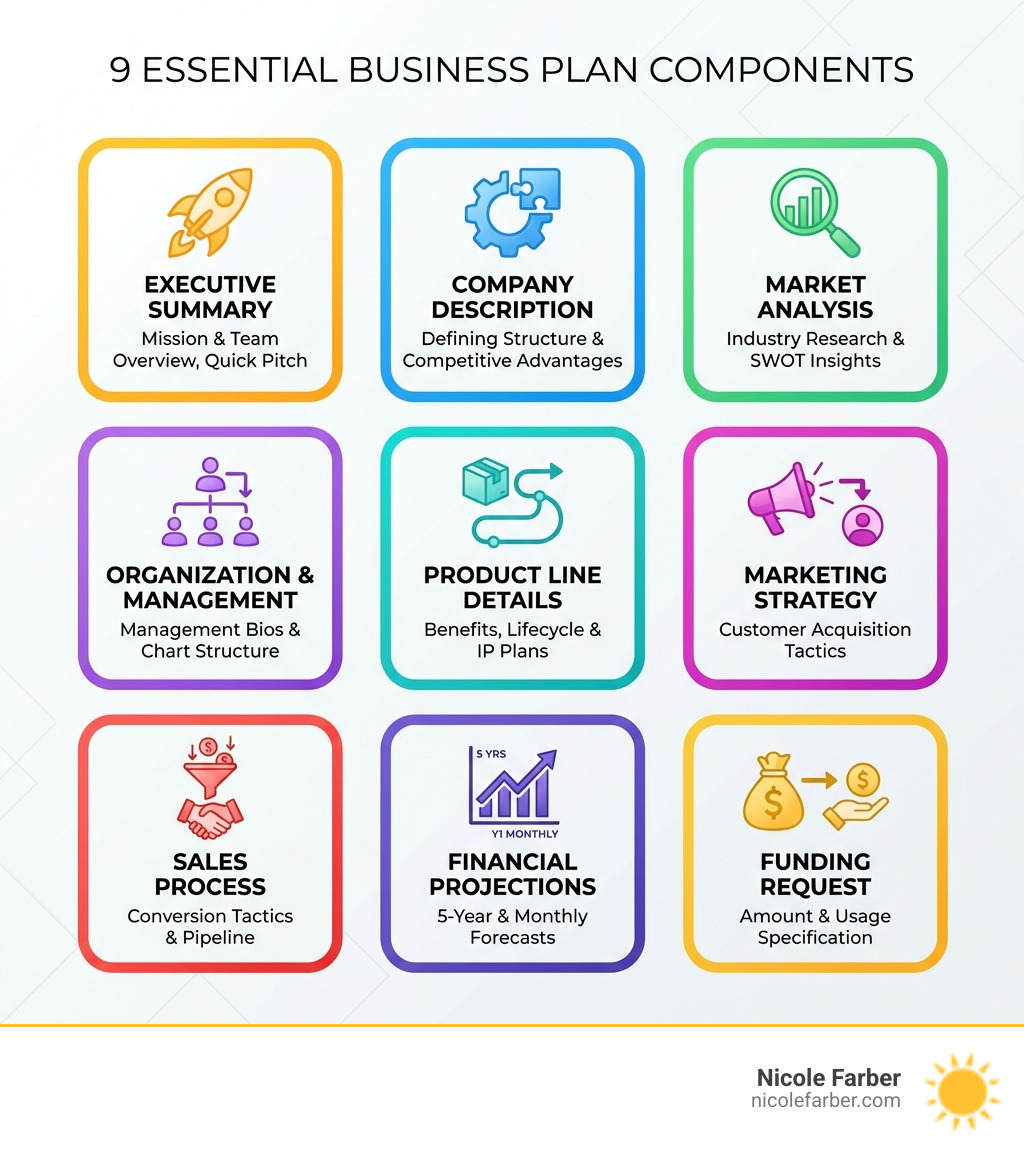
- Executive Summary – Your elevator pitch covering mission, product, team, and financial outlook (3-5 paragraphs)
- Company Description – Define your business structure, problems solved, and competitive advantages
- Market Analysis – Research industry trends, target customers, and competitor SWOT analysis
- Organization & Management – Detail your legal structure, team bios, and organizational chart
- Product or Service Line – Describe benefits, lifecycle, and intellectual property plans
- Marketing & Sales Strategy – Outline how you’ll attract and retain customers
- Financial Projections – Include 5-year forecasts with monthly details for year one
- Funding Request – Specify amount needed, use of funds, and repayment terms
- Appendix – Add supporting documents like resumes and licenses
About half of small businesses don’t make it to their 5th anniversary. The difference between those that survive and those that fail often comes down to one thing: planning.
When you build a business plan, you’re not just creating a document for investors. You’re creating a roadmap that helps you avoid costly mistakes, set realistic goals, and make smarter decisions with your limited resources.
Think of your business plan as your substitute teacher. It answers critical questions when you’re not there to answer them yourself. Where are we going? How will we get there? Why will customers choose us?
Without a plan, you’re flying blind. You might have passion and drive, but you lack the strategic foundation that turns ideas into profitable, sustainable businesses.
A solid business plan forces you to think through every aspect of your venture before you invest time and money. It reveals gaps in your strategy. It helps you secure financing. And most importantly, it keeps you focused when the inevitable challenges arise.
Whether you’re opening a law firm in Philadelphia, launching a startup in Wilkes-Barre, or exploring business opportunities in New Orleans or Luzerne County, the principles remain the same.
As Nicole Farber, I’ve spent over 15 years helping law firms and businesses develop strategic plans that drive real growth, and I know that when you build a business plan with clear goals and actionable steps, you set yourself up for long-term success.
Why You Must Build a Business Plan to Succeed
Many entrepreneurs are tempted to “wing it,” especially in the early, high-energy days of a startup. We often see talented individuals in Wilkes-Barre and Philadelphia who have a brilliant idea but lack the structure to carry it through. The reality is that Building a Successful Business requires more than just passion; it requires a calculated approach to risk and resource management.
A business plan serves as your operational roadmap. It helps you determine if your business idea is actually viable before you quit your day job or drain your savings. By documenting your strategy, you can identify potential pitfalls early on, which is a critical part of Overcoming Business Challenges. Whether you are navigating the competitive landscape of Luzerne County entrepreneurship or preparing for a major Philadelphia market entry, your plan is what keeps your team aligned and your eyes on the prize.
The Dangers of “Winging It”
The statistics are sobering: about half of small businesses are not around to see their 5th anniversary. When we fail to build a business plan, we often fall victim to the “winging it” trap. This leads to:
- Resource Waste: Spending money on marketing that doesn’t reach your target or hiring staff before you have the revenue to support them.
- Lack of Focus: Chasing every “shiny object” or new idea instead of sticking to a core strategy that drives growth.
- Unclear Value Proposition: If you can’t explain why you’re better than the competition, your customers won’t know either.
Setting Realistic Milestones
Success doesn’t happen overnight. It is the result of Strategic Goal Setting. Your plan should include specific performance metrics and growth tracking. Ask yourself:
- What does success look like at the six-month mark?
- How many clients do we need to break even?
- What are our key performance indicators (KPIs)?
By setting these milestones, you can measure your progress and pivot when necessary.

The Core Components of a Professional Business Plan
A professional plan is more than just a collection of ideas; it is a structured document that follows a standard format. This structure is important because it’s what bankers and investors expect to see. If you are looking for a reliable SBA Writing Guide, you will find that a traditional business plan typically includes several key sections.
Crafting an Attention-Grabbing Executive Summary
The executive summary is arguably the most important part of your plan. It is the first thing a reader sees, and if it doesn’t capture their attention, it might be the only thing they read. Think of it as your elevator pitch in written form.
In 3-5 paragraphs, you should cover:
- Mission Statement: What is the “why” behind your business?
- Leadership Team: Who is at the helm? Investors often bet more on the team than the idea itself.
- Growth Plans: Where do you see the company in five years?
- Financial Highlights: If you’re an existing business, include brief revenue data. If you’re a startup, mention your funding needs.
How to Build a Business Plan for Your Product Line
When you build a business plan, you must go deep into what you are actually selling. This isn’t just a list of features; it’s a description of benefits.
- Customer Benefits: How does your product solve a specific problem for someone in New Orleans or Antigua Guatemala?
- Product Lifecycle: Where is your product now, and what are the plans for future versions?
- Intellectual Property: Do you have patents, trademarks, or copyrights? Protecting your ideas is vital.
- R&D Plans: What are you doing to stay ahead of the curve?
Conducting Market Research and Competitive Analysis
You cannot build a business in a vacuum. You need to understand the world your business will live in. This requires thorough market research and industry analysis. For those of us working in New Orleans or the unique business climate of Antigua Guatemala, local context is everything.
You can utilize resources like the Kirstein Business Library Research tools to find information on your customers and industry trends. We recommend looking for themes: What are the current gaps in the market? What are the emerging trends that you can capitalize on?
Analyzing Your Competition
A common mistake is claiming “we have no competition.” Everyone has competition. If it’s not a direct competitor, it’s an indirect one. Use a SWOT analysis to evaluate your competitors:
- Strengths: What do they do better than anyone else?
- Weaknesses: Where do they fall short? This is your opportunity to shine.
- Opportunities: Are there market segments they are ignoring?
- Threats: Are there new regulations or technologies that could hurt them (and you)?
Understanding Your Ideal Customer
Who is your “Avatar”? You need to know your target market better than they know themselves. Use validation data—interviews, surveys, and industry reports—to prove that there is a real demand for what you’re offering. If you are starting a law firm, are you targeting corporate clients in Philadelphia or families in Luzerne County? Your marketing must be tailored to their specific needs.
Marketing, Sales, and Operational Strategy
Once you know who your customer is, you need a plan to reach them. This is where your marketing and sales strategy comes into play. We believe that your brand is your character—it’s what people say about you when you’re not in the room.
According to industry statistics, firms that are willing to look seriously at the best CRM tracking software are now converting 30 percent more leads. This is a game-changer. For more on this, check out our Business Growth Strategies Ultimate Guide.
| Strategy Component | Traditional Approach | Modern Lead Conversion |
|---|---|---|
| Lead Tracking | Manual spreadsheets | Automated CRM systems |
| Marketing | Broad, generic ads | Targeted social media & retargeting |
| Sales | Cold calling | Value-based relationship building |
| Client Feedback | Occasional surveys | Consistent client roundtables |
Strategic Marketing for Law Firms and Startups
For law firms and professional services, marketing is about building trust. We recommend:
- Social Media: Use LinkedIn for B2B networking and YouTube to humanize your brand.
- Networking: Building relationships in your local community, whether that’s in Wilkes-Barre or New Orleans.
- Intake Systems: Having a consistent process for how a lead becomes a client. If your intake process is messy, you are leaving money on the table.
Common Mistakes When You Build a Business Plan
Even the best entrepreneurs make mistakes. Here are the most common ones to avoid as you build a business plan:
- Unrealistic Goals: Don’t project $10 million in revenue in year one if you have no marketing budget.
- Lack of Research: Assuming you know what the customer wants without actually talking to them.
- Static Documents: A business plan is a living document. If you write it and put it in a drawer, it’s useless.
- Jargon Usage: Write in plain English. Your plan should be understandable to someone outside your industry.
Financial Projections and Funding Requests
This is the section that many people dread, but it is the backbone of your plan. You need to show that your business is financially viable. For new businesses, you won’t have historical data, but you must share a clear budget.
We recommend using a Financial Projections Template to help you organize your thoughts. Your projections should cover the next five years, with the first year broken down by month or quarter.
Justifying Your Funding Request
If you are seeking money from investors or a bank, you need to be very specific.
- Amount Needed: Exactly how much do you need over the next five years?
- Use of Funds: Are you buying equipment, hiring staff, or paying for marketing?
- Debt vs. Equity: Do you want a loan, or are you willing to give up a piece of your company?
- Future Plans: How will you pay back the loan or provide a return for your investors?
Maintaining a Living Document
Your business plan should be reviewed and updated regularly. We suggest a monthly review of your milestones. As the economy changes—whether in the US or Antigua Guatemala—your plan must adapt. Celebrate your achievements, but be honest about where you are falling short.
Frequently Asked Questions about Business Planning
How long should a business plan be?
There is no “perfect” length, but quality always beats quantity. A standard plan is usually 15 to 25 pages. Keep it concise yet comprehensive. If you have extra documents like resumes or contracts, put them in the appendix to keep the main body of the plan easy to read.
Who should write the business plan?
As the founder, you should be the primary author. You can—and should—seek help from mentors, accountants, or consultants, but the vision must be yours. If you don’t write it, you won’t truly own the strategy.
How often should I update my plan?
At a minimum, you should review your plan annually. However, for a fast-growing startup, quarterly or even monthly reviews are better. If there is a major shift in the market or your industry, update the plan immediately to reflect your new reality.
Conclusion
Building a business plan is the first step toward turning your dream into a reality. It’s the difference between “winging it” and leading with intention. At Nicole Farber, we are dedicated to empowering entrepreneurs and law firm leaders to reach their full potential through faith-driven leadership and strategic excellence.
Whether you are just starting out in Philadelphia or looking to expand your reach in New Orleans, a well-crafted plan is your greatest asset. It provides clarity, attracts support, and keeps you grounded when things get tough. Don’t wait until you’re in the middle of a crisis to figure out your strategy. Unlock your business potential with expert leadership coaching and start building your roadmap to success today. We are here to help you every step of the way.