An Essential Guide to Strategic Business Growth
- Entrepreneurship
- In the News
- April 13, 2026
An Essential Guide to Strategic Business Growth
Open uping the Power of Strategic Business Growth

Strategic business growth is more than simply increasing revenue. It represents a deliberate, sustainable approach to expanding your business while ensuring resilience and long-term success. This means making smart choices today to build a stronger tomorrow, which is especially important for law firm partners looking to stand out in a crowded market, whether they serve clients in Philadelphia, Wilkes-Barre, New Orleans, or beyond.
So, what exactly drives this kind of purposeful expansion?
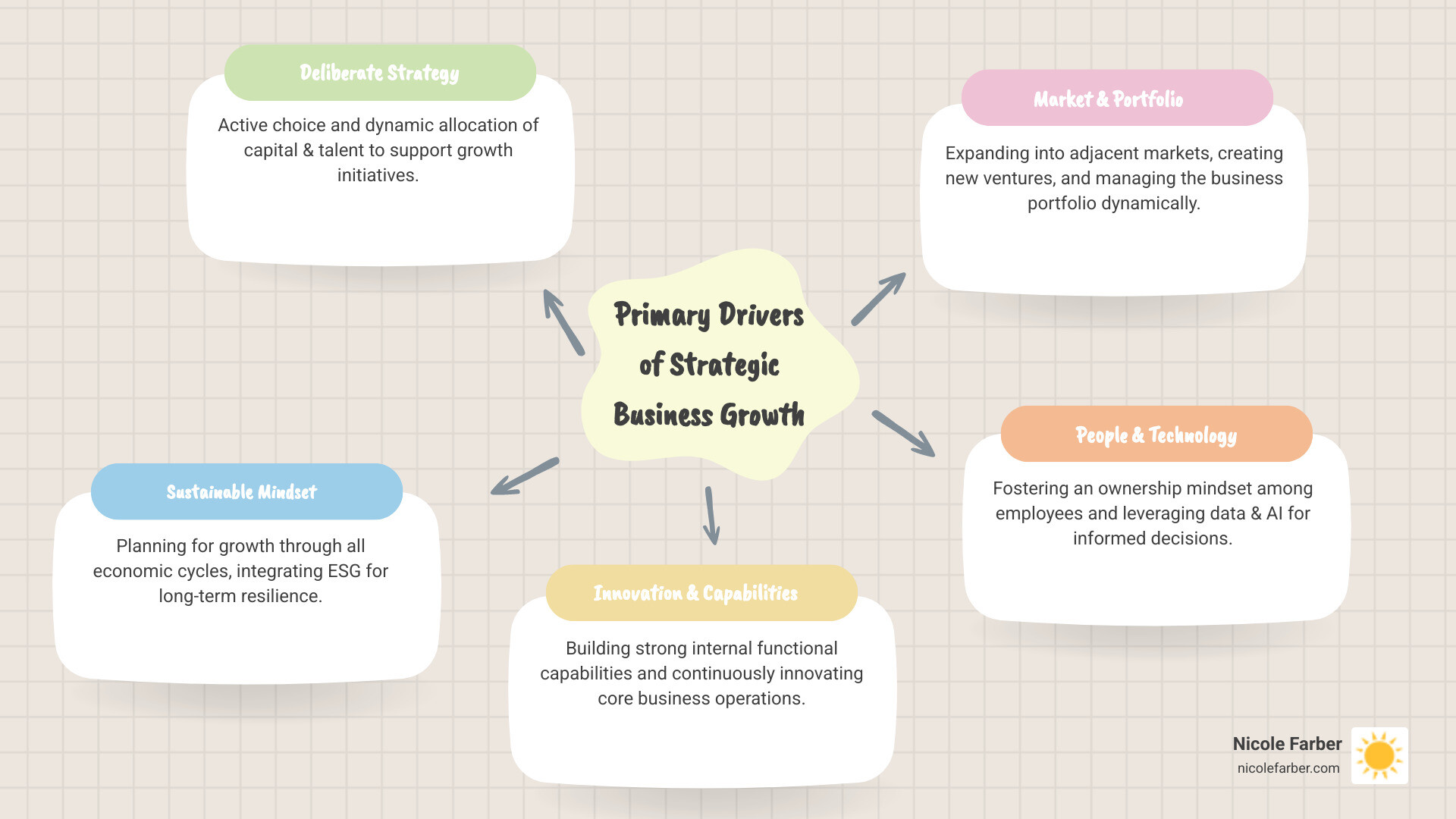
- Active Choice and Resource Allocation: Deliberately choosing to grow and committing capital and talent to support that decision.
- Through-Cycle Mindset: Planning for growth that persists through various economic conditions, not just during favorable periods.
- Dynamic Resource Management: Continuously reallocating capital and talent to the most promising areas of opportunity.
- Functional Capability Building: Developing key internal strengths in areas like marketing, digital infrastructure, and innovation.
- Core Business Innovation: Continuously improving and maximizing the value of your main business operations.
- Adjacency and Breakout Businesses: Expanding into related markets or creating entirely new ventures.
- People-Centric Initiatives: Engaging employees with an ownership mindset to drive growth from within.
- Sustainability as an Accelerant: Integrating environmental, social, and governance (ESG) factors into your strategy for competitive advantage.
- Dynamic Portfolio Management: Regularly assessing and adjusting your business portfolio, including divesting less attractive assets to reinvest in better ones.
- Leveraging Data and Technology: Using insights and automation to make informed decisions and streamline operations.
Growth is the lifeblood of any successful enterprise. It drives performance, fosters a positive culture, helps retain top talent, and fuels innovation. However, achieving sustainable growth is tough. Research shows that only about 25 percent of companies manage to grow consistently over time. Those that do often generate significantly higher annual total shareholder returns than their peers. This kind of growth requires courage, clear planning, and a willingness to make bold moves even when things feel uncertain.
As CEO of ENX2 Legal Marketing, Nicole Farber has over 15 years of experience guiding law firms and businesses toward meaningful, lasting growth. Her track record includes successfully navigating economic challenges and empowering clients across the USA to pursue ambitious growth initiatives with clarity and conviction.
The Fundamental Framework of Strategic Business Growth
Understanding the various types of growth is the first step in formulating a robust strategy. Business growth generally falls into four primary categories: organic, strategic, internal, and acquisition. Each offers distinct pathways and requires a custom approach. For a deeper dive into these concepts, explore our Business Growth Strategies Ultimate Guide.
- Organic Growth: This involves expanding from within your existing operations. Think of it as nurturing your current products and services while planting new seeds in your established market. Companies using content marketing and SEO to reach clients in cities like Philadelphia and New Orleans are leveraging organic growth. Research highlights that around 80% of growth across multiple sectors involves maximizing core business accounts.
- Strategic Growth: This involves forming alliances, partnerships, or joint ventures to expand. A great example is a ride-sharing service partnering with a fast-food chain to offer integrated customer experiences, creating mutual benefit.
- Internal Growth: This focuses on improving operational efficiency and productivity. Manufacturing companies, for instance, constantly work to reduce waste and streamline processes to increase profitability.
- Acquisition Growth: This is achieved by acquiring other companies or assets. A large consumer goods company acquiring a smaller competitor to enter a new market segment quickly exemplifies this approach.
Implementing Strategic Business Growth through Organic Channels
To achieve sustainable growth, businesses must first strengthen their core operations. This means focusing on what you do best and making it even better. Research unequivocally states that 80 percent of growth comes from maximizing the value of your core. This is not just about maintaining the status quo; it demands continuous improvement and innovation within existing offerings. For law firms in Luzerne County or anywhere else, this might mean enhancing specialized legal services, improving client communication, or refining case management processes.
Key organic strategies include:
- Market Penetration: Selling more of your existing products or services to your current customer base. This could involve loyalty programs, competitive pricing, or targeted marketing efforts. For a legal marketing firm, this means deepening relationships with current law firm clients by offering additional services they have not yet explored.
- Product Development: Creating new products or services for existing markets. This could be introducing a new legal tech solution or offering specialized marketing packages for emerging legal niches. The best opportunities are natural extensions of your core expertise.
- Customer Retention: Keeping existing clients happy and engaged is often more cost-effective than acquiring new ones. Investing in exceptional customer service and client experiences is paramount.
By continuously strengthening the core, businesses accelerate growth through robust capability-building programs, ensuring teams are always at the forefront of their industry. A strong core is the foundation upon which all other growth strategies are built. To learn more about how to make these strategies work for you, check out our Strategy to Grow Business guide.
Measuring Success in Strategic Business Growth Initiatives
What gets measured gets managed. In any growth initiative, accurate measurement is paramount. A combination of Key Performance Indicators (KPIs) and financial metrics helps track progress and ensure efforts are yielding the desired results.
For growth outperformers, the numbers tell a compelling story:
- Sustainable growth outperformers generate seven percentage points more annual total shareholder returns (TSR) than their peers.
- Companies that deliver growth and profits show a five-percentage-point outperformance in TSR.
- Adding ESG (Environmental, Social, and Governance) performance into the mix yields seven points of outperformance in TSR.
- Half of “triple outperformers” (companies growing revenues and profits while improving sustainability scores) reached or exceeded 10 percent annual revenue growth between 2017 and 2021.
- An extra 5% of revenue per year correlates with an additional 3-4% of total shareholder returns.
These statistics underscore the importance of growing profitably and sustainably, not just growing for its own sake. Establishing clear KPIs for every growth initiative, from client acquisition rates to the success of new digital marketing campaigns, enables regular measurement and analysis. This meticulous approach is central to our Strategic Goal Setting framework.
Financial Resilience and Cash Flow Optimization
Growth mode is an exhilarating time. Onboarding new clients, generating additional revenue, and expanding market presence are all positive indicators. But who is watching the bottom line? Growth strategies inherently increase spending and complexity, making robust financial management more critical than ever. Cash flow problems remain the number one reason businesses fail. Effective expense management and cash flow optimization are not just good practices; they are survival mechanisms during periods of expansion. Our guide to Building a Business Development Plan emphasizes these foundational elements.
Managing Costs for Sustainable Expansion
Sustainable growth requires a forward-looking cost strategy. Instead of simply cutting expenses across the board, which can stifle innovation and essential investments, the focus should be on refining spending by eliminating waste. This means identifying and removing inefficiencies like unused software subscriptions or redundant processes, while still protecting crucial investments in marketing, client retention, and technology upgrades.
Operational efficiency is key. If a client onboarding system cannot handle an influx of new clients efficiently, you risk losing them before they even get started. Similarly, if expense tracking and management systems lack automation for workflow, approvals, and fraud detection, money could be leaking without anyone noticing.
Here is a comparison of typical cost considerations for organic versus acquisition growth:
| Feature | Organic Growth | Acquisition Growth |
|---|---|---|
| Upfront Cost | Generally lower, invested over time | Significantly higher, immediate capital outlay |
| Pace of Growth | Slower, gradual buildup | Faster, immediate market share/capability gain |
| Risk Profile | Lower financial risk, controlled internal factors | Higher risk (integration, cultural clash, valuation) |
| Control | High degree of control over process and outcomes | Variable, depends on integration strategy |
| Resource Focus | Internal capabilities, marketing, R&D | External entities, due diligence, integration teams |
Digital spend management is also crucial. Clear policies and digital tools help avoid common mistakes like unclear forecasts, insufficient auditing, and struggling with fragmented data. By streamlining travel, expense, and invoice management, businesses gain a complete financial picture, which is vital for scaling efficiently.
Revenue Stream Diversification
Diversifying revenue streams is not just a strategy for surviving downturns; it is a powerful approach to building business resilience and fueling long-term growth. This involves expanding offerings, reaching new customer segments, or entering untapped markets. For legal marketing clients, this could mean expanding into new practice areas, offering specialized services for niche markets, or exploring new geographic markets like New Orleans or Antigua Guatemala.
Key diversification strategies include:
- Market Expansion: Taking proven services to new geographic areas or customer segments. Look for synergies and areas where existing capabilities provide a clear competitive advantage.
- Product/Service Diversification: Developing new services that complement existing offerings. For instance, a law firm might diversify from personal injury into workers’ compensation, leveraging similar client acquisition channels.
- Vertical Integration: Expanding into different stages of the existing value chain. If a marketing firm were to acquire a content creation agency, that would be a form of vertical integration, strengthening control over the quality and efficiency of a key input.
Alternative financing options, such as asset-based or invoice financing, can also help optimize cash flow and support new ventures without over-relying on traditional loans. This proactive approach ensures the financial agility needed to pursue new opportunities and maintain stability.
Scaling Through Innovation and Digital Change
In today’s rapidly evolving landscape, digital change is a necessity for competitiveness and sustained growth. Investing in technology today can dramatically shape a company’s competitive edge in the years to come. Automation, data analytics, and artificial intelligence are no longer futuristic concepts; they are essential tools for driving efficiency and open uping new potential. The economic potential of generative AI: The next productivity frontier is immense, offering unprecedented opportunities for innovation. Our Business Innovation Strategies guide further explores these avenues.
Building an Innovation Culture
A culture of continuous improvement is the bedrock of sustainable business development. It requires fostering an environment where innovation is not just tolerated but actively encouraged and rewarded. This involves:
- Continuous Improvement (Kaizen): Embracing steady, incremental upgrades in processes, services, and operations. This approach allows for consistent productivity gains when championed by leadership.
- Investing in R&D and Digital Capabilities: Dedicating resources to research and development, and building robust digital infrastructure. This ensures the organization is always exploring new solutions and staying ahead of the curve.
- Rewarding Risk-Taking: Creating a culture where employees are not afraid to experiment, knowing that not every initiative will succeed. A failed business venture does not mean a failed executive. Teams learn from failures and reallocate talent to new growth projects.
- Capability Building: Developing the skills and expertise within teams to support new offerings and technologies. This could mean training marketing specialists in advanced AI tools or empowering legal professionals to adopt new case management software.
- Feedback Loops: Establishing clear channels for feedback from employees and clients. This helps the organization adapt quickly and ensures innovations deliver real value.
By embedding this mindset throughout the organization, from administrative teams to frontline strategists, innovation becomes a natural part of daily operations.
Leveraging Data for Informed Decisions
Data is the new gold, and knowing how to mine it, refine it, and use it effectively is a critical component of any growth strategy. Leveraging data and analytics transforms guesswork into strategic foresight.
- Predictive Modeling: By analyzing historical data, businesses can forecast future trends, anticipate client needs, and make proactive adjustments. This could involve predicting which legal services will be in highest demand in Philadelphia or identifying emerging market opportunities in Luzerne County.
- Customer Insights: Data provides a deep understanding of clients, including their behaviors, preferences, and pain points. This allows businesses to tailor services, improve client experiences, and build stronger, more lasting relationships.
- Competitive Edge: Analyzing market data and competitor activities helps identify gaps, differentiate offerings, and position the business more effectively.
- Future-Proofing: Continuously monitoring data helps identify disruptive technologies or market shifts early, allowing the business to adapt before challenges become crises.
Automation plays a pivotal role here. By automating manual processes and integrating data from various sources, organizations gain a comprehensive, real-time view of their operations and market. This enables quicker, more accurate decisions that drive efficiency and accelerate growth.
Strategic Expansion and Portfolio Management
Expanding a business strategically means looking beyond the immediate horizon, much like solving a complex puzzle where each new piece opens up a broader picture. This often involves exploring adjacencies, which are new businesses or markets related to the core, and making smart moves like programmatic mergers and acquisitions. Our journey often involves Overcoming Business Challenges along the way, and these expansion strategies are key tools.
Research highlights the power of these approaches:
- Companies that grew into adjacent industries generated, on average, an extra 1.5 percentage points per year of shareholder returns above their industry peers.
- Companies that successfully used two or more “right-to-win” rationales for adjacency moves delivered 12 percentage points higher excess TSR growth versus their peers.
- Programmatic acquirers, those completing at least two small or medium-sized deals a year along the same theme, consistently outperformed peers using other M&A approaches.
The concept of a “right-to-win” is crucial. It means only pursuing opportunities where unique capabilities, customer relationships, or position in the value chain provide a distinct advantage. As McKinsey’s Courageous growth: Six strategies for continuous growth outperformance article notes, courageous leaders make bold moves even in uncertain times to achieve growth outperformance.
Shrink to Grow and Divestiture Strategies
Sometimes, strategic growth is not about adding but about subtracting. The “shrink to grow” strategy involves periodically pruning a portfolio, divesting less attractive assets or businesses, and reinvesting the proceeds into areas with higher growth potential. This is a courageous move, but one that can yield significant returns. Companies that used shrink-to-grow strategies generated five percentage points more annual excess TSR than inconsistent growers and large-deal acquirers.
This dynamic portfolio management ensures resources are always allocated to where they can generate the most value. It requires ruthless prioritization and maintaining a core focus. If a particular service line or geographical market is no longer aligned with core strengths or long-term vision, divesting it frees up capital and talent to invest in more promising ventures, whether that means expanding digital services in Philadelphia or exploring new opportunities in Antigua Guatemala.
International Expansion and Strategic Partnerships
Venturing into international markets can open up vast new customer segments and revenue streams. For a business in the legal marketing space, this could mean adapting successful strategies for law firms in the USA to new legal systems and cultures in places like Antigua Guatemala. However, international expansion requires careful consideration of cultural integration, market dynamics, and regulatory landscapes. The guiding principle is to go global only when you can beat local competitors, meaning you must have a transferable competitive advantage.
Strategic partnerships are another powerful tool for growth. These alliances allow businesses to leverage complementary strengths, share risks, and access new markets or technologies without the full cost of acquisition. Whether it involves a joint venture with a tech company to develop cutting-edge legal AI solutions or collaborating with local legal associations in New Orleans, partnerships can significantly accelerate growth and strengthen the value chain.
Leadership, People, and Regional Growth
At the heart of any successful growth initiative are the people. Employee engagement and an ownership mindset are critical drivers of execution and sustainable development. Research shows that changes activating the full organization are eight times more likely to succeed, and companies where more than 20% of employees owned change initiatives saw nearly twice the excess shareholder return. This holds true whether teams operate in Philadelphia, Wilkes-Barre, New Orleans, or Luzerne County. Our guide From Startup to Soaring: Unlocking Business Growth in Philadelphia highlights the local impact of engaged teams.
The Role of Leadership in Sustainable Development
Leadership is the compass that guides the ship of growth. It involves championing the vision, inspiring the team, and making the tough decisions that pave the way for sustainable development. At Nicole Farber’s organization, this is deeply intertwined with a philosophy of faith-driven leadership that emphasizes integrity, resilience, and empowering others.
A critical aspect is cultivating a through-cycle mindset. Leaders must have the courage to pursue and stick with growth strategies even during challenging economic times, understanding that short-term caution can lead to missed long-term opportunities. As research notes, leadership buy-in is critical for fostering a culture of improvement and ensuring teams stay engaged. Our Business Leadership Strategies Guide offers further insights into developing this crucial mindset.
Fostering a Culture of Continuous Renewal
Growth is not a one-time event; it is a continuous journey of renewal. This requires fostering a culture that accepts:
- Incremental Changes: Focusing on small, measurable improvements that, over time, lead to significant progress. This reduces risk and accelerates learning.
- Feedback Loops: Actively seeking and incorporating feedback from all levels of the organization and from clients. This ensures strategies remain agile and responsive.
- Talent Retention: Recognizing that people are the most valuable asset. Investing in their development, creating a supportive environment, and rewarding their contributions are essential for retaining the talent needed to drive growth.
- Organizational Activation: Ensuring that everyone, from the leadership team to the front lines, is aligned with growth aspirations and equipped with the skills to contribute. This involves consistent communication from leaders and processes to verify whether growth initiatives are working.
By building this cycle of continuous renewal, businesses remain vibrant, adaptable, and primed for sustained growth regardless of market conditions.
Frequently Asked Questions about Strategic Business Growth
What are the primary drivers of business growth?
The primary drivers of business growth are multifaceted. They include maximizing the core business through innovation and efficiency, expanding into adjacent markets or new ventures, leveraging digital change (automation, data, AI), and diversifying revenue streams. Strong financial management, including cost optimization and cash flow, is also crucial. It’s about a deliberate choice to grow, backed by dynamic resource allocation and courageous leadership.
How does digital change impact a company’s ability to remain competitive?
Digital change profoundly impacts a company’s competitiveness by driving efficiency, enhancing customer experience, and enabling data-driven decision-making. Automation streamlines operations, reducing manual errors and costs. Digital platforms improve client interactions, building loyalty. Leveraging data analytics provides deep insights into market trends and customer behavior, allowing for agile responses and predictive strategies. Companies that accept digital change gain a significant competitive edge, while those that lag risk obsolescence.
What is the difference between organic and strategic growth?
Organic growth refers to expansion from within a company’s existing operations, such as increasing sales to current customers, developing new products for existing markets, or improving operational efficiency. It’s often slower but carries less risk. Strategic growth, on the other hand, involves external or more deliberate, planned actions like forming partnerships, entering new markets (market expansion), diversifying into new industries, or acquiring other businesses (M&A). While organic growth focuses on internal capabilities, strategic growth often leverages external opportunities or collaborations to accelerate expansion.
Conclusion
Strategic business growth is a journey that requires courage, vision, and a deep understanding of both internal capabilities and the external landscape. It is about more than just numbers; it is about building a resilient, innovative, and people-centric organization that can thrive in any environment.
Nicole Farber, a motivational speaker and CEO in the legal marketing industry, believes that true growth stems from empowering business owners and leaders with the knowledge and confidence to make bold, informed decisions. Her approach, shaped by real-life experience and faith-driven leadership as a single mother navigating the business world, focuses on practical, actionable strategies that deliver tangible results. Whether you are a law firm in Philadelphia looking to expand your reach, a business in Wilkes-Barre optimizing operations, or an entrepreneur in New Orleans charting new territory, the principles of strategic growth are universal.
We are here to help you open up your business’s full potential. For more insights and personalized guidance on crafting your growth roadmap, explore our More info about business strategy coaching. Let’s grow together.