Why Hiring a Local Life Coach Can Completely Transform Your Career
- Life
- In the News
- October 16, 2026
Why Hiring a Local Life Coach Can Completely Transform Your Career
Life Coach vs. Therapist vs. Mentor: Understanding Your Career Needs

To find a local life coach or mentor near you, start by searching credentialed directories such as the International Coaching Federation (ICF), then evaluate whether each candidate understands your regional market and industry, and finally schedule discovery consultations to compare fit before committing. This structured approach helps you avoid unvetted listings and ensures you invest in a relationship that matches your career goals.
When you find yourself standing at a professional crossroads, it is easy to feel overwhelmed by the sheer volume of titles out there. Should you hire a coach, reach out to an industry veteran, or schedule an appointment with a licensed counselor? Understanding role clarity and setting professional boundaries ensures you invest your time and energy into the right relationship.
If you are struggling to juggle executive demands with home life, partnering with a dedicated work-life balance coach helps you establish sustainable boundaries. But before you start booking calls, let us break down where each practitioner excels.
| Dimension | Life / Career Coach | Licensed Therapist | Professional Mentor |
|---|---|---|---|
| Primary Scope | Present-to-future goal execution, habit formation, strategy, and accountability. | Clinical assessment, resolving past trauma, diagnosing and treating mental health conditions. | Informal advisory, industry navigation, and sharing hard-earned lived experience. |
| Required Credentials | Professional certifications (e.g., ICF ACC, PCC, MCC) and verified client hours. | State licensure (LPC, LCSW, LMFT, PsyD, MD) with clinical board oversight. | Demonstrated senior track record and domain expertise; no formal license. |
| Core Goal | Measurable career advancement, leadership growth, and behavioral breakthroughs. | Mental wellness, emotional healing, symptom reduction, and psychological stabilization. | Long-term career perspective, network expansion, and tactical industry wisdom. |
| Typical Format | Structured 3- to 6-month engagements with bi-weekly sessions and KPI tracking. | Ongoing clinical appointments governed by healthcare privacy laws and treatment plans. | Organic or semi-structured check-ins focused on advisory guidance and advice. |
The Core Differences
A life or career coach focuses on bridging the gap between where you are today and where you want to be tomorrow. Coaches do not provide clinical therapy or diagnose illness; instead, they operate as strategic sounding boards who challenge your assumptions and keep your feet to the fire.
Mentors, on the other hand, play a different game. A mentor is someone who has already walked the path you are currently navigating. They share their own playbook, open doors within local networks—whether in Philadelphia, New Orleans, or Luzerne County—and offer direct advice based on their history. A coach draws the answers out of you through structured inquiry, whereas a mentor tells you how they handled similar trials.
Recognizing When You Need Career Growth vs. Mental Health Support
Understanding the boundary between coaching and clinical care is crucial. If unaddressed trauma, chronic anxiety, depression, or emotional paralysis is impeding your daily functioning, clinical therapy is the correct, necessary avenue. Therapists help unpack your past to bring stability to your present.
Conversely, if you are psychologically steady but feel stuck in your leadership trajectory, need clarity on an upcoming career pivot, or want accountability to hit revenue targets, you are looking for an action-oriented practitioner. Working with a goal achievement coach provides the exact framework needed to turn ambition into measurable reality.
The Tangible Career Benefits of Hiring a Local Life Coach
The global coaching industry is valued at over $14 billion, expanding at a rapid 7% annual growth rate through 2030. Women represent 72% of coaching clients worldwide, seeking authentic pathways to lead without burning out. While virtual coaching is accessible across borders, partnering with someone who understands your local market offers distinct advantages.
Whether you are scaling a practice near Rittenhouse Square in Philadelphia, operating in Wilkes-Barre, or leading an enterprise in New Orleans, local coaches bring cultural context, regional business insight, and face-to-face trust to your professional journey. Working with a dedicated female leadership coach gives you the tools to command boardrooms and build meaningful executive presence.
Accountability and Plan Adherence
Research shows that clients who work with local coaches stick to their plans 40% longer because regular in-person check-ins establish deeper relational trust. When you meet face-to-face in an office or a quiet local cafe, you cannot hide behind a muted microphone or an off-camera screen.
Local accountability bridges the gap between intention and execution. Your coach understands your regional market dynamics—from local economic shifts to talent pools—and can connect you directly with regional professional ecosystems that an online coach halfway across the globe might never know existed.
Guided Self-Discovery and Mindset Transformation
Success in business is rarely just about tactical checklists. Research demonstrates that 80% of success is tied directly to mindset and psychology. When self-doubt, perfectionism, or imposter syndrome creeps in, tactical advice falls flat.

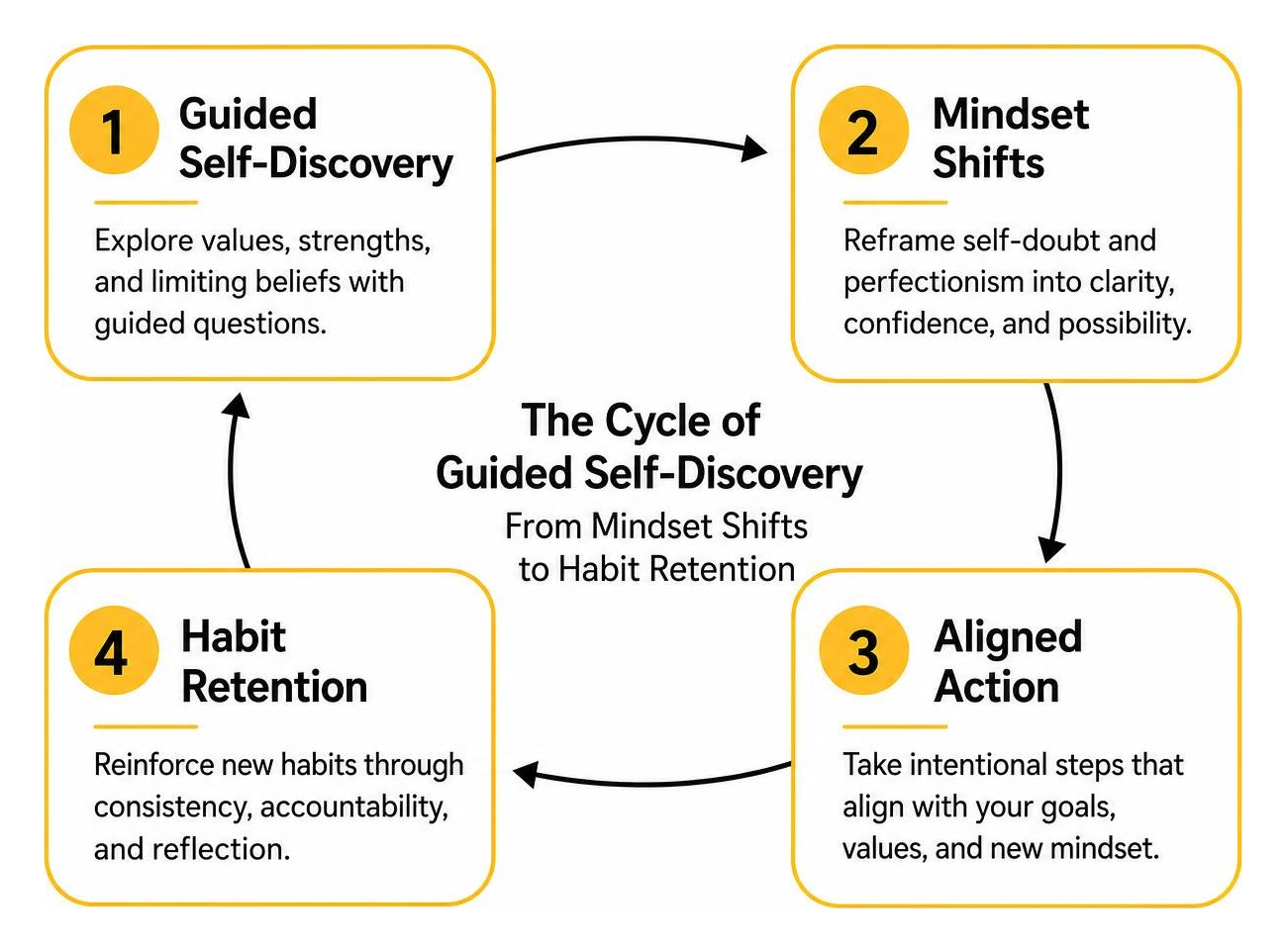
A 2022 study published in Frontiers in Psychology revealed that clients engaging in guided self-discovery retained new habits at a 30% higher rate than those given direct instructions. Rather than handing you a rigid formula, a skilled practitioner helps you uncover your innate leadership voice. Embracing transformational coaching rewires limiting beliefs into resilient, high-performing habits.
Step-by-Step Guide: How to Find a Life Coach/Mentor Near Me
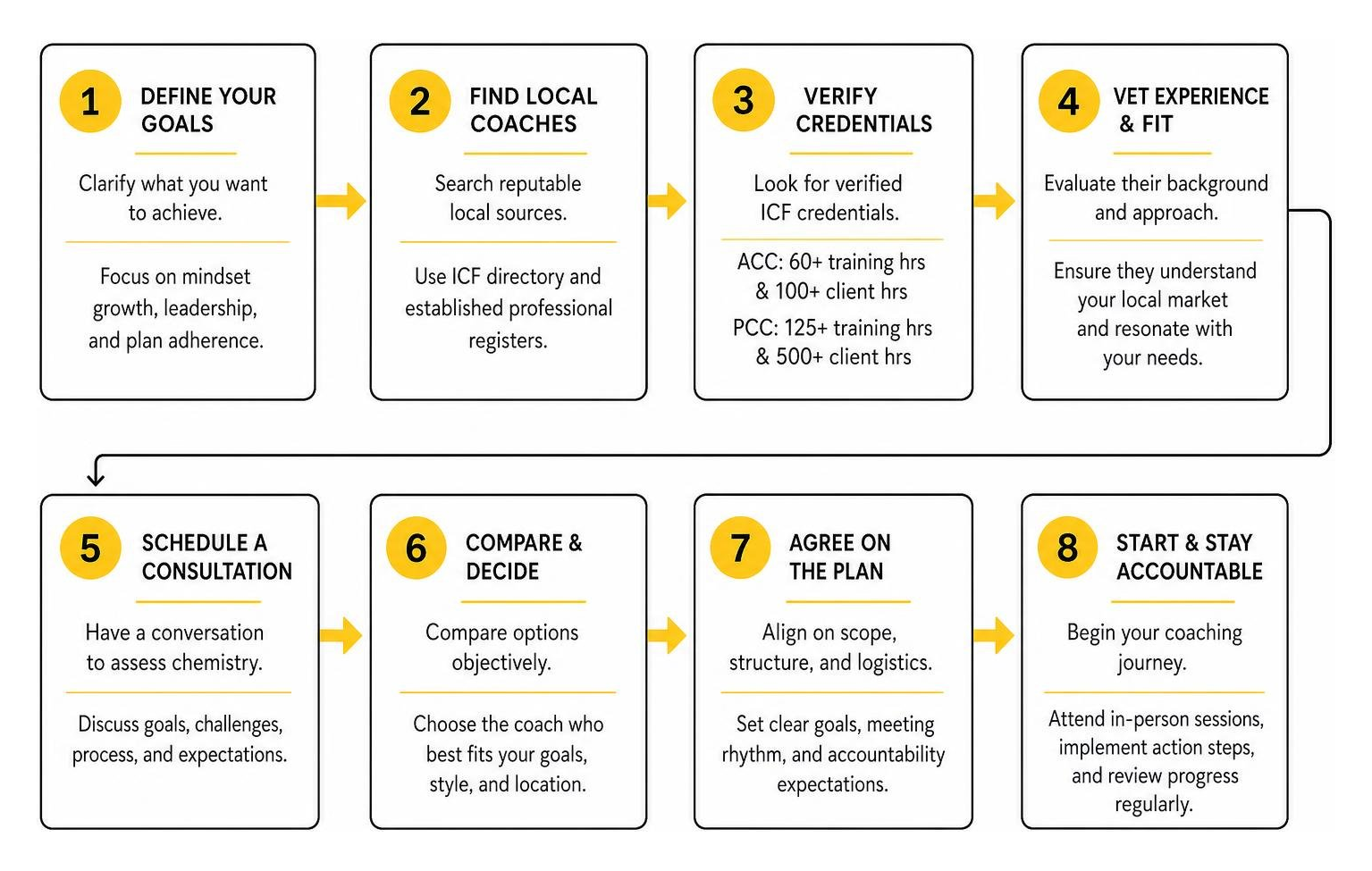
Searching for executive and personal guidance should never feel like playing roulette on a search engine. When looking for the right fit, you need a disciplined, structured vetting process. Exploring established business mentoring programs alongside individual coaches ensures you examine both structured training and organic advisory relationships.
Assessing Local Directories: How to Find a Life Coach/Mentor Near Me
To begin your search, consult established professional registers rather than unvetted social media ads. The International Coaching Federation (ICF) provides the gold standard for credentialed practitioners. Look for verified credentials:
- Associate Certified Coach (ACC): 60+ training hours and 100+ client hours.
- Professional Certified Coach (PCC): 125+ training hours and 500+ client hours.
- Master Certified Coach (MCC): 200+ training hours and 2,500+ client hours.
You can also explore accredited professional associations, regional commerce networks, and verified professional registries to cross-reference credentials.
When evaluating regional practitioners across Pennsylvania, Louisiana, or other markets, reputable community registries and professional associations help identify credentialed leaders in your area. If you split time internationally, such as in Antigua Guatemala, ensure your coach supports cross-border hybrid check-ins. (And if you need travel-ready executive gear between cities, Antigua Apparel keeps you comfortable on the road).
Questions to Ask When Learning How to Find a Life Coach/Mentor Near Me
Treat your initial discovery consultation like a high-level job interview. Never sign an agreement on the initial call without asking:
- What specific, measurable outcomes have you achieved with clients in my industry?
- How do you measure progress—do you use 360-degree feedback, weekly KPIs, or business metrics?
- What is your core coaching philosophy—is it discovery-based, directive, or hybrid?
- What happens if we reach the midway point and are not seeing meaningful progress?
- What are your contract terms, and do you offer month-to-month flexibility or trial periods?
Red Flags and Unrealistic Guarantees to Avoid
With more than 109,000 life coaching businesses operating in the United States, quality varies. Protect yourself from predatory practices by watching out for clear red flags:
- Guaranteed Specific Outcomes: Anyone promising you a 50% revenue surge or a C-suite promotion within 90 days is selling snake oil. Real growth depends on your execution.
- High-Pressure Closing Tactics: If a coach claims their discounted rate expires the second you hang up the phone, walk away.
- Vague or Unverifiable Credentials: Ask where they completed their accredited training hours. Self-printed certificates without documented client hours carry zero weight.
- Clinical Scope Creep: If a coach attempts to diagnose mental health disorders or discourages you from seeing a therapist, terminate the engagement immediately.
Budgeting and Logistics: Pricing, Session Timelines, and Insurance
Investing in professional development requires clear financial planning. Rates vary depending on geographic location, coach credentials, and whether you are hiring a general life coach or an industry-specific executive strategist.

Expected Costs and Package Pricing
Across typical directories, standard rates break down into predictable tiers:
- Per-Session Averages: Platform benchmarks on Bark average around $90 per session, while Thumbtack lists standard sessions between $120 and $150.
- Monthly Packages: Structured packages typically range from $400 to $1,400 per month, covering four to eight sessions with asynchronous messaging access.
- Three-Month Retainers: A standard three-month bi-weekly foundation usually totals around $540 for general personal coaching.
- Executive and Career Specialists: In North America, specialized career and executive coaches average $272 per hour, with elite niche advisors ranging between $200 and $500+ per hour.
Insurance, HSA/FSA, and Duration Expectations
Because life coaching is a non-clinical personal and professional development service, standard health insurance plans do not cover session fees. Similarly, Health Savings Accounts (HSAs) and Flexible Spending Accounts (FSAs) cannot be used for life coaching unless a licensed medical provider writes a specific Letter of Medical Necessity for a diagnosed medical condition.
Most professionals find that three to six months of bi-weekly sessions provide the sweet spot. This timeline gives you enough runway to dismantle outdated habits, implement new leadership strategies, and review measurable career wins.
Frequently Asked Questions About Local Life Coaching
How many sessions will I need before seeing career results?
Most clients begin seeing tangible shifts in clarity and daily habit consistency within 6 to 8 sessions (roughly six to twelve weeks). Comprehensive career transformations, such as stepping into an executive role or launching a new venture, generally benefit from a 3- to 6-month structured container.
Does health insurance or an HSA cover life coaching sessions?
No. Insurance and tax-advantaged accounts like HSAs and FSAs are reserved for licensed medical care. However, many corporations and progressive law firms offer professional development budgets, tuition assistance, or executive coaching stipends that can cover your coaching fees.
Is an in-person life coach better than an online coach?
Neither is inherently superior; it comes down to learning style. In-person coaching offers unmatched physical presence, local networking leverage, and deep accountability. Virtual coaching provides scheduling flexibility and broader access to niche specialists worldwide. Many modern professionals choose a hybrid approach, combining in-person quarterly strategic planning with bi-weekly virtual check-ins.
Conclusion
Your career trajectory is too valuable to leave to chance. Finding the right local mentor or certified coach gives you the external perspective, accountability, and psychological resilience required to lead with purpose. Whether you are balancing family life in Luzerne County, running a thriving legal practice in Philadelphia, or driving enterprise growth in New Orleans, surrounding yourself with trusted guidance changes everything.
At Nicole Farber, we believe in empowering leaders through real-life experience, strategic clarity, and faith-driven leadership. Take control of your next chapter by exploring our dedicated life coaching for women programs or contact us today to schedule a conversation about elevating your career.