The Executive’s Guide to CEO Leadership Coaching
- Leadership
- In the News
- July 1, 2026
The Executive’s Guide to CEO Leadership Coaching
What CEO Leadership Coaching Actually Does (And Why It Matters)

CEO leadership coaching is a structured, one-on-one development process that helps chief executives make better decisions, close their blind spots, and lead with greater clarity – by working with an experienced coach who has no stake in the outcome.
Here’s a quick snapshot of what it covers:
- What it is: A confidential thinking partnership between a CEO and a qualified coach, focused on leadership growth and business performance
- Who it’s for: CEOs, founders, and C-suite executives – from early-stage startups to Fortune 500 companies
- Core benefits: Unbiased feedback, sharper decision-making, accountability, blind spot identification, and faster goal achievement
- Typical outcomes: Research from the International Coaching Federation shows executive coaching drives a 70% increase in individual performance, a 50% increase in team performance, and a 48% increase in organizational performance
- When to start: Before a crisis – coaching works best as a proactive strategy, not a rescue plan
There’s a quiet problem at the top of most organizations.
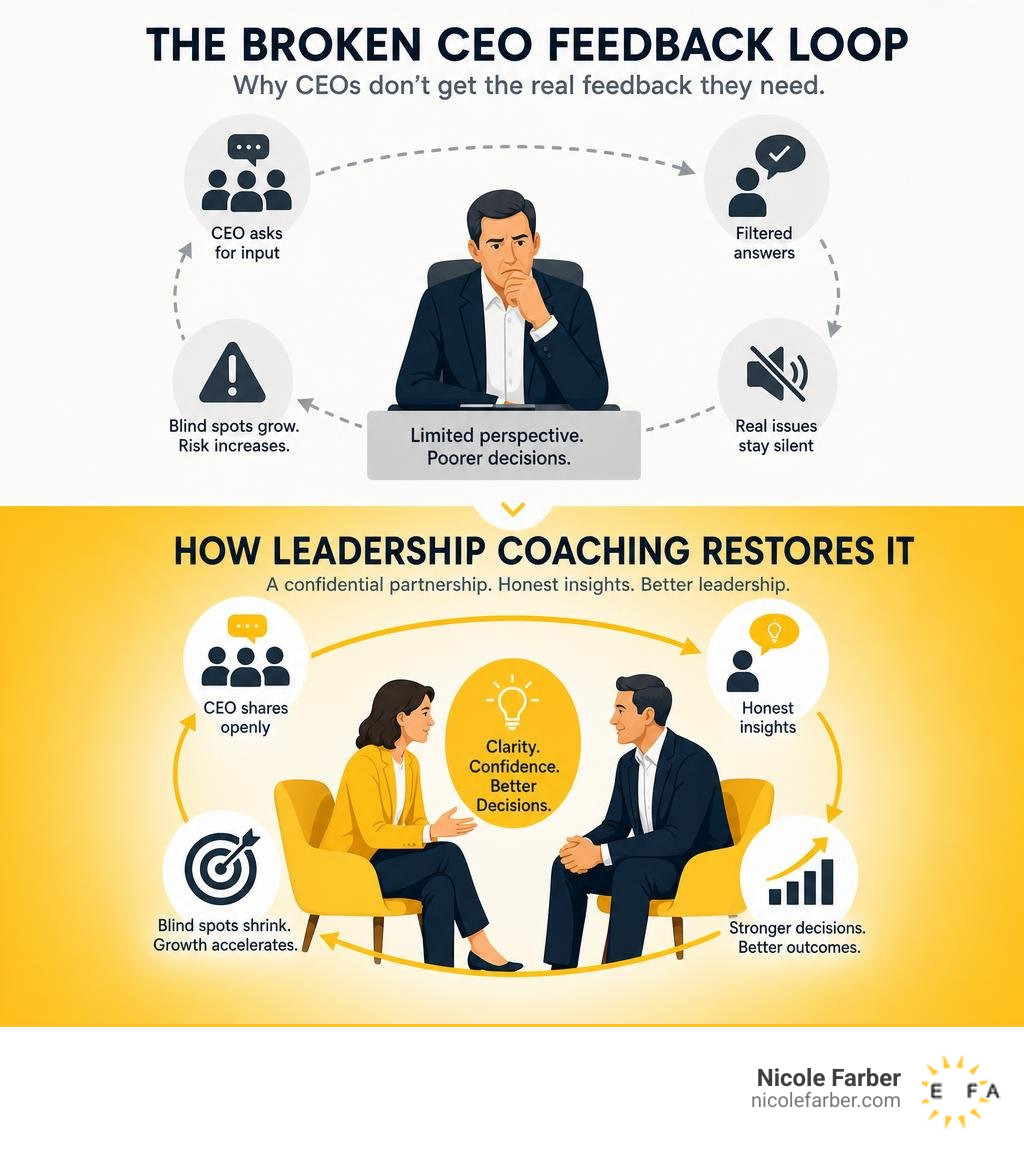
Nearly two-thirds of CEOs receive no outside leadership advice – even though the evidence for its impact keeps growing. Why? Because once you reach the top seat, the feedback loop breaks. Every person around you – your team, your board, even your closest advisors – filters what they say through the power you hold.
You ask the room if the strategy is working. Everyone tells you what they think you want to hear.
That’s not a people problem. It’s a structural one. And it’s exactly what CEO leadership coaching is designed to fix.
I’m Nicole Farber, CEO of ENX2 Legal Marketing, with over 15 years of experience helping law firms and businesses grow – including navigating leadership challenges from the inside as a business owner myself. My hands-on background in CEO leadership coaching principles, business strategy, and organizational communication shapes everything I share in this guide.
CEO leadership coaching word list:
Why Modern Executives Need CEO Leadership Coaching

In the business environment of June 2026, the demands placed on chief executives are heavier than ever. Whether we are navigating economic shifts in Philadelphia, scaling a business in Wilkes-Barre, or leading a multinational enterprise, the complexity of modern leadership is staggering.
The traditional image of the all-knowing CEO is dead. Today’s successful leaders know that sustainable growth requires continuous personal development. However, as we climb higher up the corporate ladder, the resources for our own development shrink. This is where a dedicated CEO leadership coaching framework becomes essential.
Without a structured coaching relationship, executives often rely on internal feedback loops that are inherently compromised by power dynamics and organizational politics. To truly understand why coaching is no longer a luxury but a strategic necessity, we must examine how it addresses the structural challenges of the top seat. For a broader look at how coaching integrates into overall executive growth, explore our comprehensive Business Leadership Coaching Guide.
How CEO Leadership Coaching Solves the Isolation Problem
It is often said that the top seat is the loneliest. But the real issue is not emotional loneliness; it is structural isolation.
When you are the ultimate decision-maker, you operate within a “CEO bubble.” Because you hold the power to hire, fire, promote, and allocate budgets, every interaction you have is transactional to some degree. Direct reports naturally filter information to protect their careers or advance their departments. Even well-meaning board members view your performance through the lens of fiduciary governance rather than personal development.
A professional coach serves as an objective, non-conflicted partner who exists entirely outside your organizational chart. They have no political agenda, no equity stake, and no career risk associated with telling you the unvarnished truth. In major business hubs like Philadelphia, building these trusted relationships is vital. Engaging with peer networks and local executive advisory services helps break this isolation, giving you a confidential space to pressure-test ideas before they are rolled out to the wider organization.
Overcoming Information Distortion at the Top
Information distortion is the natural byproduct of organizational hierarchy. The higher you rise, the more polished the data becomes by the time it reaches your desk. This “polishing” process often smooths over critical operational friction, cultural decay, or strategic flaws that require your immediate attention.
Consider a common boardroom scenario: the CEO presents a new product roadmap. The VP of Product hedges their concerns because they suspect the CEO is already emotionally invested in the direction. The CFO presents financial models that lean optimistic to align with the board’s growth mandates. The CEO leaves the meeting believing there is unanimous alignment, when in reality, the strategy is built on unvoiced reservations.
Through professional coaching, we learn to recognize these patterns and implement robust systems to “fix” the feedback loop. This involves calibrating your leadership team, designing neutral 360-degree feedback assessments, and learning how to ask questions that invite genuine dissent rather than passive agreement. To master these delicate interpersonal dynamics without burning out, read our survival guide on How To Rule The C Suite Without Losing Your Mind.
The Core Pillars of C-Suite Development
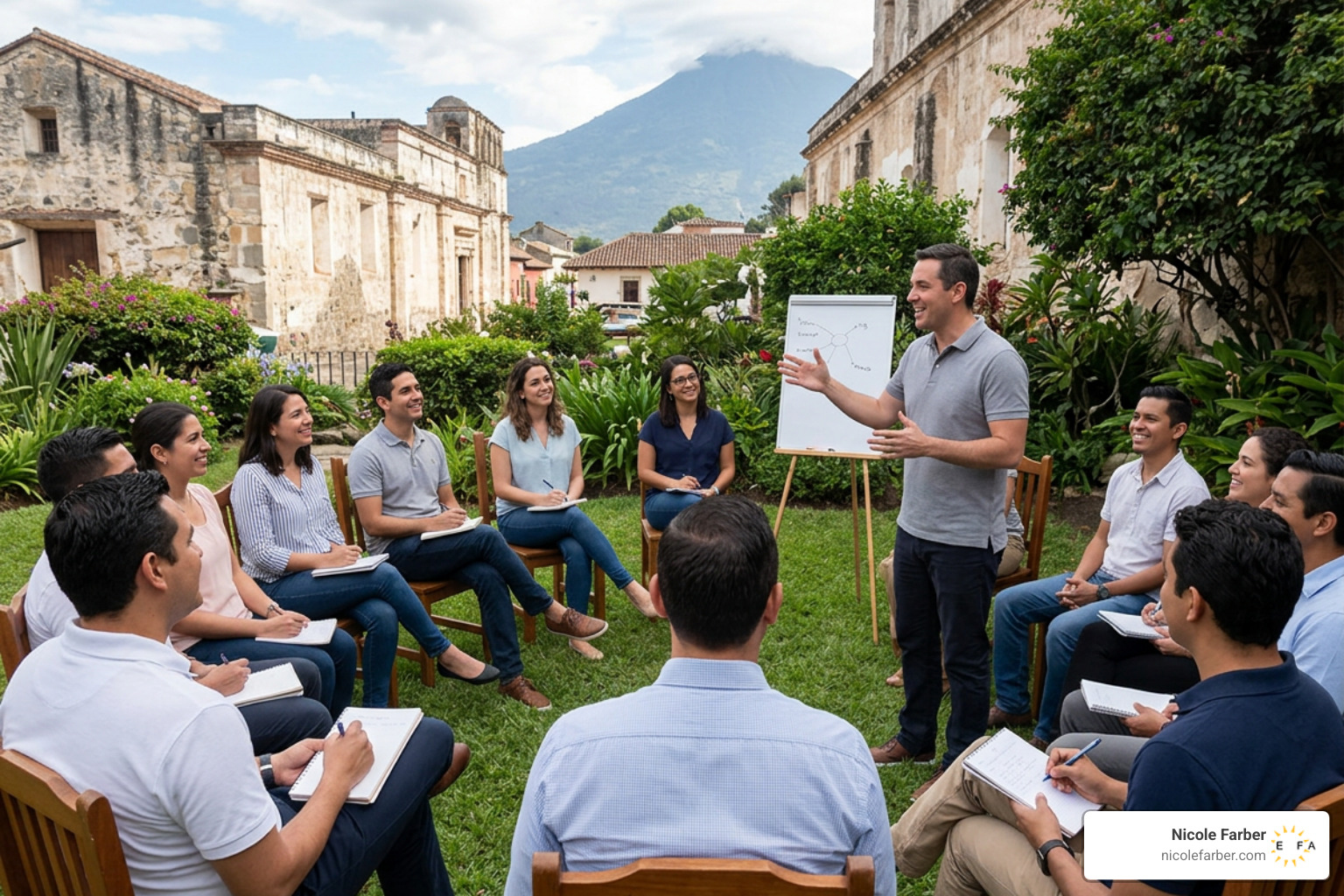
Effective C-suite development cannot rely on generic management training. It requires a holistic, customized approach that addresses both the operational realities of the business and the inner psychology of the leader. Whether we are working with leaders in Wilkes-Barre, managing family business dynamics in Luzerne County, or hosting international executive retreats in Antigua Guatemala, the core pillars of development remain consistent.
When we design high-impact Ceo Coaching Services, we focus on two primary dimensions: the inside-out (the leader’s internal mindset, emotional intelligence, and self-awareness) and the outside-in (how the leader is perceived, how they communicate, and how they align their organization).
Integrating Practical Business Skills with Radical Self-Inquiry
The best business strategy in the world will fail if the leader executing it is held back by unconscious behavioral patterns. Many leadership challenges—such as avoiding difficult conversations, micromanaging teams, or making impulsive strategic pivots—are rooted in deeply ingrained psychological habits.
Leading coaching methodologies emphasize that “better humans make better leaders.” This approach balances practical business skills with radical self-inquiry. By exploring our internal motivators, fears, and blind spots, we can identify why we get “stuck” in certain operational patterns.
Similarly, working with a psychologically grounded advisor allows executives to explore the “inner architecture” of leadership. This dual focus ensures that strategic decisions are not hijacked by imposter syndrome, stress, or the pressure to perform under extreme scrutiny.
Developing Executive Presence and Strategic Alignment
Executive presence is not about superficial charisma; it is about your capacity to project calm, clarity, and decisive authority when the stakes are at their highest. It is the ability to shape room dynamics, inspire trust across diverse stakeholder groups, and communicate a compelling organizational narrative.
In tandem with personal presence, a CEO must master the art of strategic alignment. This means ensuring that every level of the organization understands the core vision and is empowered to execute it. Coaches help leaders define clear roles, establish decision rights, and build healthy team dynamics so the company can run on scalable systems rather than constant firefighting.
To dive deeper into refining your personal leadership brand and projecting authentic authority, read our guide on how to Develop Executive Presence. For organizations looking to scale this alignment across their entire executive team, partnering with specialized development programs can accelerate systemic growth.
Selecting the Right Methodology and Coach
Choosing a coach is one of the most critical decisions a CEO can make. Because the relationship is highly personal and deeply confidential, a mismatch in chemistry, background, or methodology can render the engagement ineffective.
Whether you are seeking executive development in New Orleans, Wilkes-Barre, or internationally, you must evaluate potential coaches on more than just their resume. You need to understand their core coaching philosophy, their credential depth, and how they structure their engagements to ensure a strong alignment with your organizational goals.
Evaluating the ROI of CEO Leadership Coaching
While some view coaching as an intangible “soft” investment, the quantitative data tells a very different story. Organizations that invest in structured CEO coaching consistently outperform their peers across key financial and performance metrics.
For example, companies that engage with premier coaching systems experience dramatic, compounding growth. Industry data shows that organizations working with dedicated executive coaches for at least two years achieve significantly higher revenue Compound Annual Growth Rates (CAGR) and EBITDA expansion compared to national averages.
Similarly, studies reveal that member-driven executive development groups help companies grow their annual revenue even during years of massive global disruption, while comparable non-participating small and midsize businesses often see their revenues decrease.
To measure the ROI of your own coaching engagement, we recommend tracking a balanced scorecard of qualitative and quantitative indicators:
- Financial Performance: Revenue growth, EBITDA expansion, and progress toward major strategic milestones or exits.
- Organizational Health: Employee retention rates, internal promotion readiness, and cultural alignment scores.
- Leadership Efficiency: Hours clawed back from day-to-day operations to focus on long-term strategy, and speed of high-stakes decision-making.
- Team Performance: Alignment and trust metrics within the immediate C-suite team, measured via routine 360-degree assessments.
When to Seek Coaching vs. Other Interventions
Coaching is a powerful tool, but it is not a universal cure for every organizational problem. It is critical to recognize when coaching is the right intervention and when your business requires a different approach.
For specialized industries, such as the legal sector, generic business coaching may not address the unique structural and ethical complexities of the field. In these instances, tailored programs like Executive Coaching For Lawyers are far more effective.
Furthermore, if your primary challenge is scaling a rapid-growth venture-backed startup, highly tactical, operational coaching frameworks or operator-led approaches might be the ideal fit. If your focus is instead on social impact, workforce re-entry, or non-profit leadership, specialized resources tailored to those distinct operational environments are recommended.
Frequently Asked Questions about CEO Coaching
To help you evaluate whether this investment is right for your leadership journey, we have compiled and answered the most common questions executives ask when researching coaching programs.
| Feature / Dimension | CEO Leadership Coaching | General Executive Coaching |
|---|---|---|
| Primary Focus | Enterprise-wide strategy, board relations, systemic culture, and ultimate decision-making. | Functional performance, departmental goals, and career progression within a bounded role. |
| Information Environment | Highly distorted; lacks natural peer feedback or boss-subordinate dynamic. | Moderately structured; guided by internal HR frameworks, direct managers, and peers. |
| Key Relationships Managed | Board of Directors, investors, full C-suite alignment, and public stakeholders. | Immediate team, cross-functional peers, and direct reporting manager. |
| Confidentiality Level | Absolute; must operate outside the standard organizational HR reporting structure. | High, but often aligned with corporate HR talent development goals and manager check-ins. |
How does CEO coaching differ from general executive coaching?
The primary difference lies in the structural reality of the leader’s role. An executive below the CEO level has natural organizational “mirrors”—a boss who provides formal performance reviews, peers who offer natural friction and feedback, and a clearly bounded set of responsibilities.
The CEO has none of these. Every internal relationship is shaped by power dynamics, and the role itself is virtually boundless. Therefore, CEO leadership coaching must focus on systemic enterprise leadership, navigating board and investor relationships, managing extreme isolation, and pressure-testing high-stakes decisions that affect the entire workforce.
What are the typical measurable outcomes of a coaching program?
While individual results vary based on the organization’s stage and goals, common measurable outcomes include accelerated revenue and EBITDA growth, improved executive retention, faster product-market fit transitions, and higher alignment scores across the executive team. On a personal level, CEOs report a significant reduction in operational stress, greater clarity when making high-stakes decisions, and a healthier integration of work and personal life.
Is CEO coaching confidential from the board of directors?
Yes, a credible CEO coaching engagement must be built on absolute confidentiality. Even when the board of directors funds the program, the specific contents of the coaching sessions must remain strictly between the coach and the CEO.
Without this “confidentiality architecture,” the CEO cannot let down their guard to discuss genuine doubts, strategic worries, or personal challenges. The coach may provide high-level progress reports to the board regarding engagement and goal alignment, but the safe space of the coaching session itself remains sacrosanct.
Conclusion
At its core, CEO leadership coaching is not about correcting weaknesses; it is about maximizing your potential as a human being so you can build an extraordinary, resilient organization.
As a single mother, motivational speaker, and CEO in the highly competitive legal marketing industry, I have lived the challenges of scaling a business firsthand. I know what it means to carry the weight of every strategic decision, to navigate complex client demands, and to lead with unwavering integrity when the pressure is on.
We believe that true leadership is a blend of practical business strategy, deep self-awareness, and faith-driven purpose. When you commit to your own growth, you set a powerful example that transforms your executive team, your organizational culture, and your bottom line.
Are you ready to break through the isolation of the top seat, close your blind spots, and lead your organization into its next chapter of growth? Explore our curated resources and strategic insights in the Nicole Farber Leadership Category to take your personal and professional journey to the next level.