A Practical Guide to Starting a Successful Business
- Entrepreneurship
- In the News
- March 19, 2026
A Practical Guide to Starting a Successful Business
The Entrepreneurial Path: Your Guide to Starting a Successful Business

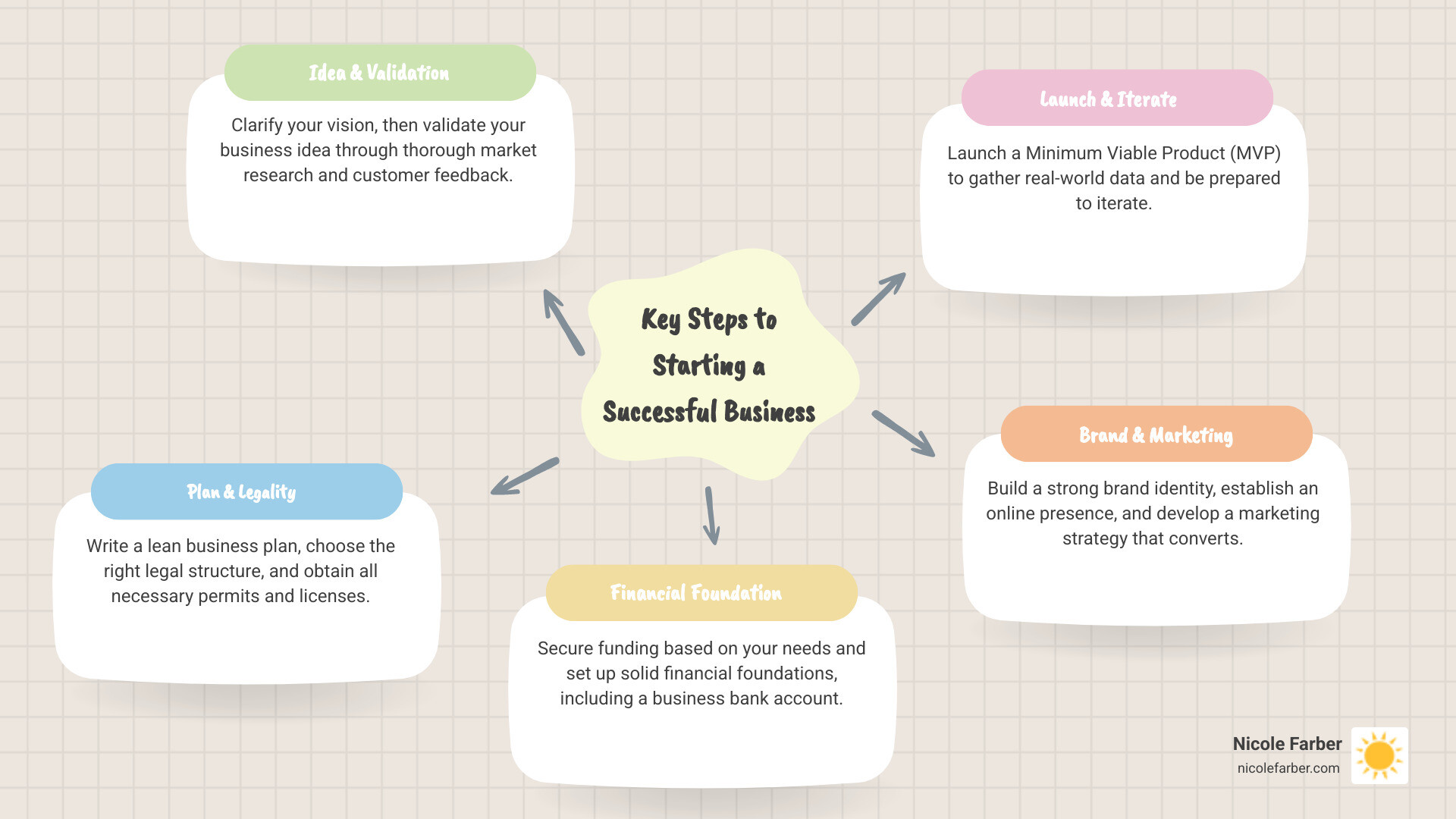
To how to start a successful business, follow these essential steps:
- Clarify your vision and assess your commitment.
- Validate your business idea through market research.
- Write a lean business plan outlining your strategy.
- Secure funding based on your needs.
- Choose the right legal structure and register your business.
- Obtain necessary permits and licenses.
- Set up solid financial foundations.
- Launch a Minimum Viable Product (MVP).
- Build a strong brand identity and online presence.
- Develop a marketing strategy that converts.
Starting a business is a journey of excitement and challenges. Turning a great idea into a thriving enterprise demands careful planning, strategic execution, and adaptability. While failure rates for new businesses are high, this guide provides the knowledge to beat the odds.
As a CEO with over 15 years of experience, I’ve guided countless businesses on how to start a successful business and thrive. My passion is helping others steer the entrepreneurial journey. This guide distills years of practical insights into actionable steps.
Phase 1: Cultivating the Entrepreneurial Mindset and Validating Your Idea
The journey of how to start a successful business begins with the right mindset and a rigorously validated idea. This foundational phase prepares you for the entrepreneurial marathon and ensures your concept has a real chance to succeed.
Developing the Right Mindset for How to Start a Successful Business
What does it take to be a successful founder? Beyond a brilliant idea, key attributes include vision, resilience, ambition, empathy, and grit. A 2023 BDC study highlighted grit and relationship skills as essential for entrepreneurs. Vision guides you, ambition fuels your drive, and resilience helps you bounce back from inevitable setbacks. As Ronald McFadden said, “Perseverance creates determination, determination creates success.”
Overcoming self-doubt is a constant battle. Define success on your own terms—focus on impact and personal growth, not just profit. Avoid overconfidence; while belief in your vision is vital, humility allows you to learn and adapt. Learning from failure is a critical part of growth. As Richard Branson advises, “Rip it up and start again.” Analyze what went wrong, find the positives, and improve.
Empathy is crucial for building a strong team and understanding customer needs. To avoid burnout, manage your time effectively by setting clear boundaries and taking tech-free breaks for creativity. Take pride in your work and foster a positive company culture; happy staff become your biggest brand advocates. And don’t forget to have fun—a positive atmosphere nurtures innovation. Finally, listen more than you talk. As Branson notes, we have “two ears and one mouth” for a reason. Great ideas can come from anywhere. For more on this, More on developing your mindset.
From Idea to Viable Opportunity
A good idea isn’t enough. You need a viable business opportunity: a proven concept with a real market and a path to profitability. The first step is thorough market research to objectively identify opportunities. Does your product solve a real problem customers will pay for? Analyze your target market, customer behaviors, market size, and competitors to find gaps you can fill.
Ask these questions to validate your business idea:
- Is there a real need for your product or service?
- Are customers willing to pay for your solution?
- Who are your main competitors and how can you differentiate?
- What are the market size and current trends?
- Are there gaps in the market your business can address?
- Is anyone doing exactly what you want to do? If not, why?
Gathering feedback early is critical. Launch a Minimum Viable Product (MVP)—a basic version of your product—to get real-world feedback quickly. This allows you to iterate based on what users actually need. Strive for simplicity in your solutions. A simple, effective change is better than a complex one. By listening to customers, you can uncover neat solutions that truly resonate.
Phase 2: The Blueprint for How to Start a Successful Business

With a validated idea, it’s time to create the blueprint. This phase covers your business plan, legal structure, registration, and location—all crucial for establishing a solid foundation for how to start a successful business.
Creating a Comprehensive Business Plan
A business plan is your roadmap for structuring, running, and growing your new company. It’s also vital for securing investment. A lean plan is great for startups, focusing on key questions about your customer, problem, and revenue model. A traditional plan is more detailed and often required for significant funding.
A comprehensive business plan should include:
- Executive Summary: A brief overview of your company, mission, product, and why it will be successful.
- Company Description: Detail the problem you solve, your target customers, and your competitive advantages.
- Market Analysis: Show your understanding of the industry, target market, and competitive landscape.
- Organization and Management: Describe your legal structure and leadership team.
- Service or Product Line: Detail what you sell, its benefits, and any intellectual property (IP) plans.
- Marketing and Sales: Outline your strategy for attracting and retaining customers.
- Funding Request: If seeking funds, specify your requirements, how the money will be used, and desired terms.
- Financial Projections: Provide five-year forecasts (income statements, balance sheets, cash flow) to prove financial viability.
- Appendix: Include supporting documents like resumes, permits, and patents.
The best business plans are unique and tell a compelling story. Your pitch deck should also be simple and clear. For personalized guidance, explore Write your business plan with Nicole Farber’s guidance and Building a Business Development Plan.
Choosing a Structure and Making It Legal
Your business structure impacts taxes, liability, and registration. Here’s a comparison:
| Business Structure | Description | Liability | Tax Implications |
|---|---|---|---|
| Sole Proprietorship | Owned by one person; simple to set up. | Owner is personally liable for all business debts. | Income/losses are reported on the owner’s personal tax return. |
| Partnership | Owned by two or more people. | General partners are personally liable; limited partners have limited liability. | Income/losses are “passed through” to partners’ personal tax returns. |
| Limited Liability Company (LLC) | A hybrid structure popular with small businesses. | Owners (members) have limited personal liability. | Offers flexible taxation options (can be taxed as a sole proprietorship, partnership, or corporation). |
| Corporation (C Corp) | A separate legal entity, ideal for seeking outside investment. | Shareholders have limited personal liability. | Subject to “double taxation” (corporate profits and shareholder dividends are both taxed). |
| S Corporation (S Corp) | A corporation that avoids double taxation. | Shareholders have limited personal liability. | Profits and losses are passed through to owners’ personal income. |
Choose a memorable business name that isn’t already in use. Registering your business with the state and getting an Employer Identification Number (EIN) from the IRS makes it official. Local considerations are vital, whether you’re starting a business in Philadelphia or need to understand the first steps in Wilkes-Barre. Consult a lawyer to ensure compliance. Also, protect your intellectual property (IP) through copyrights, trademarks, and patents.
Securing Permits, Licenses, and a Location
You must obtain all necessary federal, state, and local business permits and licenses, which vary by industry and location. These are your “license to operate” legally.
Choosing a location—whether remote, home-based, or a physical office—impacts taxes, legalities, and revenue. Key factors include your style of operation, demographics, foot traffic, accessibility, and competition. Research local zoning laws in your chosen area, whether it’s a commercial district in Luzerne County or a retail space in New Orleans, to avoid costly surprises.
Phase 3: Securing Your Financial Foundation

A solid financial foundation is essential for how to start a successful business. This phase covers securing funding and managing your finances, including banking, bookkeeping, and pricing.
Funding Your Venture
How do you fund your business? The best strategy depends on your needs.
- Bootstrapping: Self-fund with personal savings for maximum control.
- Loans vs. Equity: Use loans for day-to-day expenses and equity financing for major growth initiatives. Giving up equity is often more expensive long-term than borrowing.
- Creative Funding Strategies:
- Friends and Family: Often the first source of outside capital.
- Grants: Non-repayable funds from sources like Grants.gov.
- Crowdfunding: Gather small investments from many people via platforms like Gust and AngelList.
- Angel Investors: Individuals who provide capital in exchange for equity.
- Venture Capital: For high-growth startups, though the odds are low.
- Incubators/Accelerators: Programs offering funds, mentorship, and resources for equity.
- Bank Loans/Lines of Credit: The Small Business Administration (SBA) is a good starting point.
Explore local funding options in cities like Philadelphia, Wilkes-Barre, or New Orleans that support new businesses. Choose investors who align with your vision and offer value beyond just capital, such as industry expertise or network access.
Key Financial Decisions for How to Start a Successful Business
Smart financial decisions from day one are vital for long-term stability.
- Open a Business Bank Account: This is non-negotiable for separating personal and business finances, which simplifies tax filing and expense tracking.
- Master Bookkeeping Basics: Understand your income, expenses, and cash flow. Use accounting software to simplify record-keeping.
- Monitor Cash Flow: Cash flow is your business’s lifeblood. Monitor it diligently to ensure you can cover expenses.
- Set Prices Strategically: Consider your costs, market value, and what competitors are charging.
- Get Tax IDs: Obtain federal (EIN) and any necessary state tax IDs. Understand your tax obligations to prevent common errors. The best way to finance a company is through its own revenues, so focus on generating sales.
Phase 4: Launching, Leading, and Growing Your Venture
With your foundation set, it’s time to launch, lead, and grow. This dynamic phase requires building your team, marketing effectively, and ensuring your business remains sustainable. This is where you truly put into practice how to start a successful business.
Building and Leading Your Team
Your team is your greatest asset. Building a startup team is about fostering a culture of passion and shared vision.
- Hire for Hustle: In a startup, a can-do attitude is often more valuable than experience.
- Define Roles: Clear roles and responsibilities prevent founder conflicts and ensure alignment.
- Create Company Culture: Communicate your vision and values to inspire your team. Staff who take pride in their work are your best brand advocates.
- Delegate Tasks: Empower your team and free yourself to focus on strategy.
- Manage Founder Conflicts: Establish clear communication and decision-making processes to manage disagreements about the company’s direction.
- Motivate Employees: Offer purpose, recognition, and growth opportunities. An empathetic leader inspires an engaged workforce. For more insights, explore How to Become an Effective Leader.
Marketing, Sales, and Gaining Traction
A great product won’t succeed if no one knows about it. Marketing and sales are crucial for gaining early traction.
- Announce Your Business: Launch with a bang through press releases, events, or social media campaigns.
- Develop a Marketing Mix: Use the 4 Ps (Product, Price, Place, Promotion) to deliver value effectively.
- Build an Online Presence: A mobile-responsive, SEO-optimized website and a Google Business Profile are essential for local visibility in places like Philadelphia or New Orleans.
- Use SEO and Content Marketing: Help customers find you organically by creating valuable content that answers their questions.
- Sell Effectively: Listen to clients, understand their needs, and articulate how your product provides a solution.
- Build Customer Relationships: Happy customers become your best advocates. Learn to handle difficult customers with grace. For more on growth, Explore Business Growth Strategies.
Scaling Operations and Ensuring Sustainability
As your business grows, you need strategies to scale efficiently.
- Essential ‘Do’s’ and ‘Don’ts’: Do validate your product early and prioritize revenue. Don’t take too long to validate or let founder conflicts fester.
- Use AI and Automation: Incorporate AI tools to automate tasks like invoicing and customer support, allowing a small team to do more.
- Maintain Quality Control: Consistently delivering quality builds trust and loyalty.
- Ensure Long-Term Sustainability: A sustainable business model generates consistent revenue and adapts to market changes. Consider environmental and social responsibilities.
- Expand into New Markets: For some, sustainability may mean expanding into foreign markets like Antigua Guatemala, which requires careful research into local conditions.
- Network Cooperatively: Build a network of founders and mentors for support and opportunities. Explore how to Unlock Your Business Potential.
Frequently Asked Questions about Starting a Business
Why do most new businesses fail?
Up to 90% of new businesses fail within five years. Common reasons include:
- No market need: Creating a product no one wants.
- Running out of cash: Poor financial management or insufficient funding.
- The wrong team: Founder conflicts or a lack of essential skills.
- Being outcompeted: Failing to differentiate in the market.
- Pricing issues: Setting prices too high or too low.
To avoid these pitfalls, focus on a solid business plan, market validation, and prudent financial management.
What is the difference between a business idea and a business opportunity?
A business idea is a concept for a product or service. A business opportunity is a validated idea with a real market, a clear path to profitability, and good timing. The key is using market research and testing (like an MVP) to transform an idea into a viable opportunity.
What are the most important attributes of a successful entrepreneur?
Successful entrepreneurs typically possess:
- Vision: The ability to see and articulate a compelling future.
- Resilience: The capacity to recover quickly from setbacks.
- Grit: Passion and perseverance toward long-term goals. A 2023 BDC study found grit and relationship skills are essential.
- Empathy: The ability to understand and connect with your team and customers.
- Adaptability: Flexibility to pivot and respond to market shifts.
- Strong Relationship Skills: The ability to listen, communicate, and build rapport.
These traits, combined with financial acumen and the ability to learn from failure, are crucial for building and leading a strong team.
Conclusion
Starting a successful business is a marathon requiring the right mindset, strategy, and execution. From validating your idea in diverse markets like Antigua Guatemala to navigating regulations in US cities like Luzerne County or New Orleans, each step is a building block. We’ve covered the importance of an entrepreneurial mindset, a solid business plan, and sound financial decisions.
Building a strong team, effective marketing in areas like Philadelphia and Wilkes-Barre, and sustainable growth are all integral to long-term success. By focusing on these key areas, you can turn your entrepreneurial dream into a thriving reality. For personalized guidance, explore how Nicole Farber supports entrepreneurs in building a successful business.