From Chaos to Calm: The Magic of a Work-Life Balance Coach
- Life
- In the News
- February 27, 2026
Why Work-Life Balance Coaching Is the Missing Piece in Your Success Puzzle

A work life balance coach helps overwhelmed professionals and entrepreneurs reclaim control of their time, set healthy boundaries, and achieve sustainable success without burnout. Here’s what they do:
- Identify root causes of stress and imbalance in your daily routine
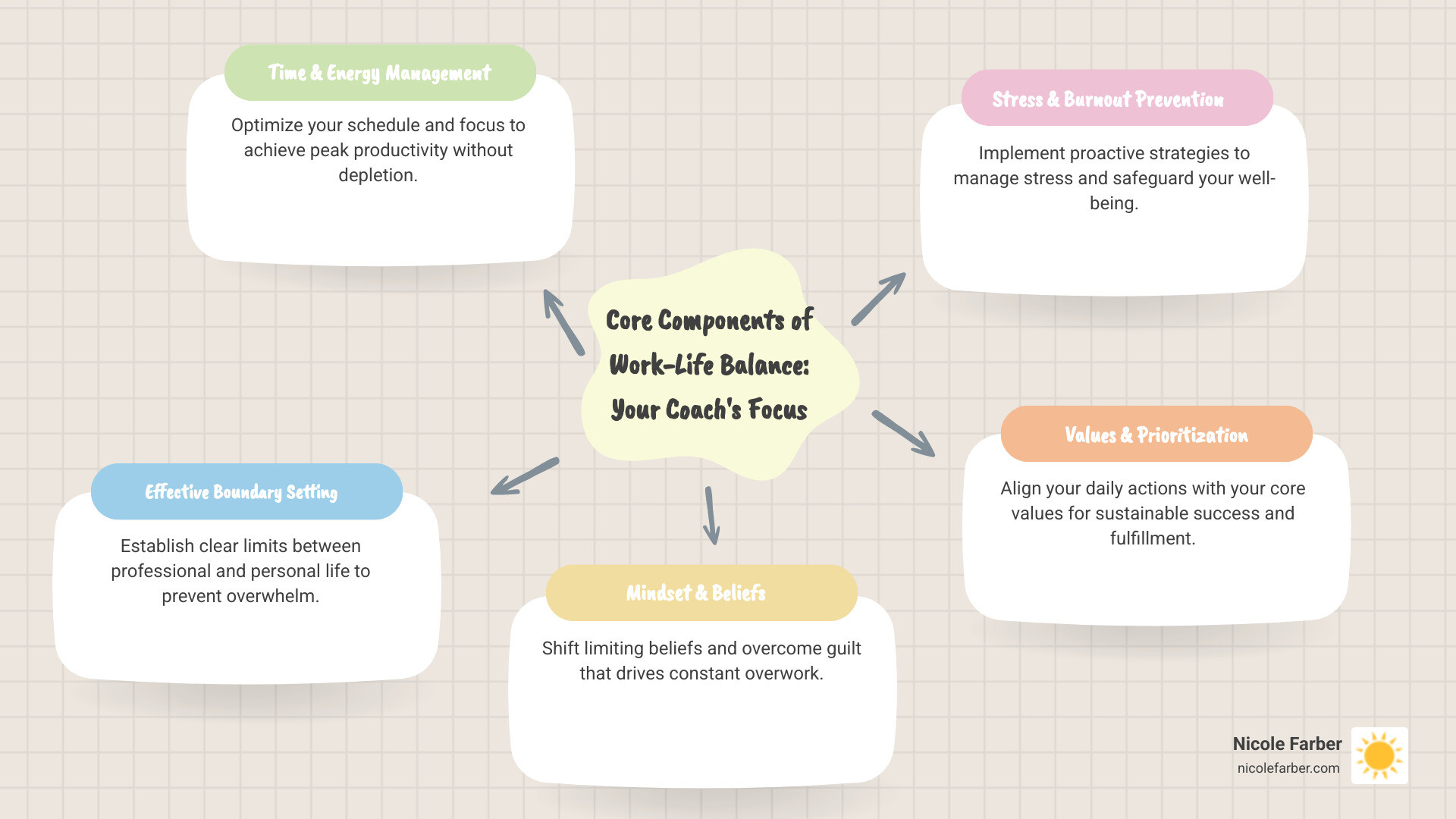
- Create personalized strategies for managing time, energy, and priorities
- Build accountability systems to help you stick to boundaries and self-care
- Shift limiting beliefs that drive overwork and guilt
- Develop sustainable habits that protect both productivity and well-being
You run an extraordinarily busy life. Between managing your law practice, serving clients, leading your team, and trying to show up for your family, there’s barely a moment to breathe. If you’re like many driven professionals in Philadelphia, Wilkes-Barre, or New Orleans, you’ve mastered the art of looking like you have it all together while feeling exhausted, overwhelmed, and stretched impossibly thin on the inside.
The truth is, 77% of professionals have experienced burnout at their jobs, and nearly half have left a position because of it. Despite passion for their work, 64% still report feeling stressed. You might love what you do, but if your personal life constantly takes a back seat or you’re fueling yourself on coffee and adrenaline, something has to change.
This is where a work life balance coach becomes transformative. Unlike therapy, which addresses past wounds and mental health conditions, coaching focuses on your future—designing a life where career success improves rather than detracts from your overall well-being. A coach helps you work smarter, set boundaries that actually stick, and create space for what matters most without sacrificing your professional goals.
As a motivational speaker and CEO who has steerd the demands of building a successful business while raising my son as a single mother, I understand the unique pressures leaders face. I’ve helped countless professionals find sustainable paths to success, and I bring a faith-driven approach to helping you design a life that is both ambitious and fulfilling.
Why Work-Life Balance is Non-Negotiable for Entrepreneurs and Leaders
We’ve all heard the phrase “work-life balance,” but what does it really mean, especially for those of us who pour our hearts and souls into our businesses? At its core, work-life balance is about achieving the right equilibrium of professional and personal activities each day to bring maximum enjoyment and satisfaction from life. It’s not a one-size-fits-all formula; it varies from person to person and evolves over time. What works for a busy entrepreneur in Philadelphia might be different for a leader managing a team remotely from Antigua Guatemala.
For business owners and entrepreneurs, prioritizing work-life balance isn’t a luxury; it’s a necessity. Studies have found statistical significance between productivity, job performance, and measurements of a healthy work-life balance. When we’re balanced, we’re not just happier; we’re more effective. We make better decisions, lead with more clarity, and inspire our teams. Conversely, neglecting this balance can lead to burnout, which not only impacts our personal health but also our business’s bottom line.
Think about it: when we feel fulfilled in our personal lives, we bring a renewed sense of energy and creativity to our work. We’re better equipped to handle the high-pressure environments common in dynamic cities like Philadelphia and New Orleans. Achieving work-life balance leads to deeper relationships and a more profound sense of accomplishment than work alone. It’s a critical component for our happiness, well-being, fulfillment, and engagement in all areas of life. To dive deeper into how coaching supports this journey, check out our Entrepreneurship Life Coach Ultimate Guide.
Balance, Blend, Integration, Harmony: What’s the Difference?
You might hear terms like “work-life balance,” “work-life integration,” “work-life blend,” or “work-life harmony” used interchangeably. While these terms might sound different, they largely refer to the same core concept: our ability to effectively manage our professional and personal lives in a way that feels sustainable and fulfilling.
The key takeaway? The specific term matters less than the underlying principle. The core issue is the ability to disconnect from work and maintain clear mental and physical boundaries. Whether you call it balance, blend, or harmony, the goal is to create a lifestyle where your career success improves, rather than detracts from, your overall well-being. Achieving this is an individual equation; it’s not solely dependent on workplace policies or rigid time ratios. The “right balance” ultimately depends on you and what you want to get out of life. It’s about designing a life where you are the CEO of your own time and energy.
The Alarming Cost of Imbalance: What the Data Shows
The evidence is clear: ignoring work-life balance comes at a significant cost, both personally and professionally. A Deloitte survey revealed that a staggering 77% of respondents had experienced burnout at their jobs, with this figure climbing to 84% among millennials. Even more concerning, nearly half of those surveyed admitted to leaving a job due to burnout.
This isn’t just about individual well-being; it has a profound impact on organizations. Reduced burnout and attrition directly improve an organization’s bottom line. When leaders and their teams are burnt out, productivity plummets, creativity wanes, and employee engagement suffers. Despite nearly 90% of those surveyed saying they’re passionate about their job, 64% still report feeling stressed at work. This constant stress can manifest in physical and emotional health issues, from insomnia and digestive problems to anxiety and depression.
The research on work-family and work-health balances further underscores these points, showing how an imbalance in one area of life inevitably impacts others. When we’re chronically stressed, our relationships with family and friends become strained, and our personal health takes a backseat. In fact, 67% of respondents in a UK study stated that work-life balance is more important than pay and benefits combined, highlighting just how crucial this aspect is for today’s workforce.
Recognizing the Red Flags: Are You Headed for Burnout?
We often wear our busy schedules as a badge of honor, especially in demanding fields like law and entrepreneurship. But beneath the surface, a relentless pace can lead to exhaustion, overwhelm, and ultimately, burnout. It’s crucial to recognize the warning signs before we hit rock bottom.

Burnout isn’t just feeling tired; it’s a state of chronic physical and emotional depletion. It can manifest in various ways: physically, through constant fatigue or recurring illnesses; emotionally, as irritability or a loss of passion; and professionally, with declining performance despite increased effort. We might find ourselves distracted on holiday, checking our phones late at night, or simply not being truly present with our loved ones. The guilt of not being “productive enough” or feeling like we’re letting people down becomes a constant companion, leaving us feeling unfulfilled even when we’re technically “succeeding.”
List of Common Signs of Work-Life Imbalance
Are you wondering if you’re teetering on the edge? Here are some common red flags that signal a work-life imbalance:
- You feel constantly overwhelmed and “on”: The mental chatter never stops, and you struggle to truly disconnect from work, even during personal time.
- Your health is declining (poor sleep, diet, no exercise): You’re running on fumes, neglecting basic self-care, and your body is starting to complain.
- You have no time for hobbies or friends: Your once-loved activities have fallen by the wayside, and your social calendar is empty.
- You feel guilty when you’re not working: The idea of taking a break or enjoying personal time is met with a nagging sense of unproductivity.
- Your relationships are suffering: Loved ones feel neglected, and you might find yourself irritable or withdrawn.
- You’re irritable and exhausted: Small frustrations feel monumental, and you have little energy left for anything outside of work demands.
If any of these resonate, it’s a clear signal that something needs to change.
The Transformative Role of a Work-Life Balance Coach
This is where a work life balance coach steps in as your dedicated ally. They serve as an accountability partner, helping us gain clarity on our values and priorities, set realistic goals, and make crucial mindset shifts. They provide expert guidance on stress management and, crucially, help us prevent and recover from burnout. For ambitious women especially, coaching can be a game-changer, offering custom support to steer complex demands. Find more about this journey with our Life Coaching for Women guide.
A coach helps us build resilience, equipping us with the tools to bounce back from challenges and setbacks. They don’t just tell us what to do; they collaborate with us, offering an outsider’s perspective to identify our unique “trouble spots” and “wasted energy” that hinder goal achievement. The courage to reach out for help can open up the tools needed to manage significant challenges and reclaim our lives.
How a Work-Life Balance Coach Helps You Reclaim Your Life
A work life balance coach doesn’t offer a magic wand, but rather a structured, personalized path to sustainable well-being. Our role as coaches is to be your co-strategizer, accountability partner, and external advocate. We help you:
- Identify root causes: We start by digging deep to uncover why your life feels out of balance. Is it unrealistic expectations, poor boundaries, constant multitasking, or perfectionism? We’ll help you pinpoint the hidden engines of stress and burnout, like rumination.
- Clarify values: What truly matters to you? By understanding your core values, we can align your time and choices with your deepest priorities, ensuring your efforts are directed towards what brings you fulfillment.
- Co-create strategies: Together, we’ll develop practical, proven strategies custom to your unique situation. This isn’t about adding more to your plate; it’s about working smarter, not harder. For leaders in demanding roles, whether in Wilkes-Barre, New Orleans, or even Antigua Guatemala, these strategies are vital for maintaining effectiveness and well-being.
- Build positive habits: We focus on creating consistent routines that support your physical and emotional health, from morning rituals to dedicated reflection time. We’ll help you schedule life activities on your calendar, giving them the same importance as work appointments.
- Provide an outsider’s perspective: When we’re in the thick of it, it’s hard to see the forest for the trees. A coach offers an objective viewpoint, helping you understand your current situation and find solutions that might be invisible to you. We’ll show you the proper path to achieve your goals and develop a healthy balance.
- Actionable steps: Our coaching process is designed for results. We provide practical, actionable steps that you can implement immediately, making key adjustments to manage demands and difficulties.
Actionable Strategies Your Coach Will Help You Implement
One of the most valuable aspects of working with a work life balance coach is gaining access to concrete strategies that you can apply immediately. We’ll help you move beyond just knowing what to do, to actually doing it.

Here are some of the actionable strategies your coach will help you implement:
- Setting boundaries: This is fundamental. We’ll work on setting clear boundaries for your working hours and communicating them effectively. Boundaries are a critical success strategy for both job and life satisfaction. This includes creating email and screen boundaries to prevent constant connectivity from eroding your personal time.
- Time management techniques: We’ll explore powerful productivity systems, such as time-blocking, task batching, and realistic planning, to help you achieve more by doing less. This isn’t just about managing tasks; it’s about managing your energy.
- Delegation: Learning to delegate and outsource tasks, both professionally and personally, is crucial. Your coach will help you identify what truly requires your attention and what can be entrusted to others.
- Prioritization: We’ll clarify your values and goals to help you prioritize effectively. This means focusing your intentions on what genuinely moves the needle and matters most to you, reducing the culture of false urgency that often pervades our days.
- Self-care routines: Building self-care into your routine is non-negotiable. This includes prioritizing your physical and mental health, practicing mindfulness or stress-reduction techniques, and finding ways to unplug. We’ll help you integrate self-care realistically and without guilt.
- Balancing Motherhood and Career: For many women, especially single mothers, managing the invisible load of motherhood alongside career demands is a significant challenge. A coach provides specific strategies for optimizing childcare arrangements, managing domestic tasks, and creating clear decision-making frameworks to reduce mental load.
The Ripple Effect: Benefits for You, Your Team, and Your Business
The benefits of investing in a work life balance coach extend far beyond your personal well-being. When leaders prioritize their own balance, it creates a powerful ripple effect that positively impacts their team and the entire organization.
- Improved leadership performance: A balanced leader is an effective leader. With reduced stress and increased clarity, you’ll make better decisions, lead with more empathy, and improve your overall effectiveness. You’ll move from constantly “putting out fires” to strategically guiding your team.
- Improved employee engagement: Leaders who model healthy work-life boundaries inspire their teams to do the same. This fosters a more engaged workforce, as employees feel valued and supported in their own well-being.
- Higher retention rates: In today’s competitive market, employees actively seek workplaces that prioritize well-being. Investing in coaching for leaders demonstrates a commitment to your team’s health, leading to reduced burnout and attrition. This is particularly important in regions like Luzerne County, where talent retention is key.
- Positive organizational culture: A leader’s approach to work-life balance sets the tone for the entire company culture. When you lead with balance, you help cultivate an environment of trust, respect, and sustainable productivity.
- Increased productivity: Counterintuitively, working less can lead to achieving more. By working smarter, prioritizing effectively, and delegating wisely, you and your team will experience increased productivity without the cost of exhaustion.
- Risk mitigation: Preventing burnout and disengagement among top talent is a crucial aspect of risk mitigation for any organization. Coaching helps safeguard your most valuable assets—your people—and ensures long-term organizational health.
Navigating Your Path to Wellness
Deciding to work with a work life balance coach is a significant step towards reclaiming your peace and productivity. It’s about making an informed decision to invest in yourself, knowing that this investment will yield profound returns across all areas of your life. For ambitious women and leaders, whether you’re navigating the legal landscape in Philadelphia or growing a business from Antigua Guatemala, this support is invaluable.
What a Work-Life Balance Coach is Not: Coaching vs. Therapy
It’s common to wonder about the distinction between coaching and therapy, and whether you need one or both. While both are powerful tools for personal growth, their focus and methodologies differ significantly.
| Feature | Therapy | Coaching |
|---|---|---|
| Primary Focus | Past wounds, mental health conditions, emotional distress | Future goals, skill development, mindset shifts, goal achievement |
| Target Audience | Individuals experiencing mental illness, trauma, or severe emotional impairment | Individuals seeking to optimize performance, overcome obstacles, and achieve specific goals |
| Approach | Healing, processing, understanding “why” | Action-oriented, strategy development, accountability, “how” to move forward |
| Expertise | Licensed mental health professionals | Certified coaches with expertise in specific areas (e.g., work-life balance) |
Therapy is an excellent fit if you’re struggling with severe emotional distress, such as panic attacks, chronic anxiety, depression, or past trauma that significantly impairs your daily functioning. It helps you heal and understand the “why” behind your struggles.
Coaching, on the other hand, is for those who are generally functional but feel stuck, overwhelmed, or have specific goals they want to achieve. If you have a sense of what you need to do differently but need support in removing obstacles, gaining clarity, making mindset shifts, and having accountability, a work life balance coach is ideal. The good news? You absolutely can pursue both simultaneously! Many find that therapy helps address underlying issues, while coaching empowers them to build a thriving future.
Overcoming Common Hesitations
It’s natural to have questions and even some hesitation when considering something new, especially when it involves investing time, money, and personal vulnerability. Let’s address some common concerns we hear:
- Financial concerns: We understand that coaching is an investment. While it’s not for those in severe financial struggle, many clients find that the long-term benefits—increased productivity, reduced stress, and greater fulfillment—far outweigh the cost. We encourage you to review your monthly bills to see where adjustments can be made. Most coaches offer flexible pricing or payment plans to make it more accessible.
- Partner skepticism: It’s not uncommon for partners to have questions or even doubts. We encourage open communication. Many coaches are willing to have a brief conversation with your partner to explain the process, answer their questions, and alleviate any fears. We’ve seen countless partners become staunch supporters once they understand the value and see the positive changes.
- “I don’t have time for coaching”: This is perhaps the most ironic hesitation for someone seeking a work life balance coach! The truth is, the main mission of coaching is typically to reduce overwhelm and free up more time, not add to your burden. We work at your pace, focusing on strategies that help you do less while achieving more impact. Coaching is client-led, allowing for flexible pacing and actionable steps that fit into your life, not overwhelm it.
- Doubting the effectiveness: We understand the skepticism. That’s why we emphasize that the coaching industry is professionally credentialed and regulated through the International Coaching Federation (ICF). Many large corporations require ICF credentials for their professional coaches, signifying a commitment to ethical practice and proven methodologies. Our approach is psychologically backed and evidence-based. If you’re open-minded and willing to do the work, you’ll likely see amazing results.
Frequently Asked Questions about Work-Life Balance Coaching
How do I know if I need a work-life balance coach or a different type of coach?
A work life balance coach specializes in the intersection of professional demands and personal well-being, helping you manage stress, time, and energy across all life domains. If your primary struggle is burnout and feeling overwhelmed by competing priorities, this is the right specialty. They help you define what “balance” means for you and create sustainable strategies. Other coaches, like a Goal Achievement Coach, may focus more narrowly on specific professional or personal objectives, without the holistic lens on your overall well-being.
What is the RESCRIPT Framework and how does it apply to work-life balance?
The RESCRIPT Framework is a powerful psychological tool designed for rewriting negative self-talk and building a more positive internal narrative. It helps you quiet your “Inner Antagonist” (that critical voice that says, “I’m not doing enough” or “I should be working harder”) and amplify your “Inner Advocate” (the voice that supports your well-being and growth).
This framework is crucial for work-life balance because it addresses the mental narratives that often drive us to overwork or feel guilty about self-care. The RESCRIPT practices include: Release Rumination, Engage Growth Goals, Seek Strengths, Challenge Catastrophizing, Restrict Regret, Invite Imperfection, Pursue Passion & Purpose, and Think Thankfully. By applying these, a coach helps you set guilt-free boundaries, prioritize your well-being without internal conflict, and cultivate a mindset that supports sustainable success.
What is the difference between work-life balance and work-life integration?
While often used interchangeably, “work-life balance” traditionally implies a clear separation and equal weighting of work and personal life—like a seesaw. The goal is to keep them distinct and equally proportioned.
“Work-life integration,” a more modern concept, acknowledges that work and life are intertwined and focuses on creating synergy between them. It’s less about strict separation and more about blending the two in a way that works for you. For example, flexing work hours to attend a child’s event, or taking a personal call during work hours when needed. The core issue remains the ability to disconnect from work and have clear mental and physical boundaries. A work life balance coach helps you find the right model—whether it’s more balance or more integration—for your unique situation, ensuring it feels intentional, sustainable, and fulfilling.
Conclusion: From Surviving to Thriving by Designing Your Life
The journey from chaos to calm isn’t just a dream; it’s an achievable reality when you have the right support. We’ve seen how a work life balance coach can be the catalyst for transformative change, helping you define success on your own terms and live a life that is both productive and profoundly fulfilling.
The benefits are clear: improved leadership, improved employee engagement, higher retention rates, and a positive organizational culture that starts with you. By identifying root causes of imbalance, clarifying your values, and implementing actionable strategies like setting boundaries and effective time management, you empower yourself to take control.
As a CEO and single mother, I understand the unique pressures leaders face, especially those balancing demanding careers with family life. My faith-driven guidance is designed to help you build a life that is both successful and deeply fulfilling, changing the “superwoman” myth into sustainable strength.
Remember Nigel Marsh’s wisdom: “If you don’t design your life, someone else will do it for you, and you may not like their idea of balance.” Your journey from chaos to calm starts with a single step—the decision to intentionally design the life you truly desire. Are you ready to stop surviving and start thriving?
Start designing your balanced life with expert guidance