The lawyer’s guide to AI and ROI
- Entrepreneurship
- In the News
- March 13, 2026
The lawyer’s guide to AI and ROI
Why AI Tools for Legal Marketing Are Changing How Law Firms Grow

AI tools for legal marketing are software platforms that use machine learning, automation, and natural language processing to help law firms attract clients, manage leads, create content, and measure marketing performance — faster and at lower cost than traditional methods.
Here’s a quick look at the most common ways law firms use AI in marketing today:
| Use Case | What AI Does | Example Tool |
|---|---|---|
| Content creation | Drafts blogs, emails, social posts | ChatGPT, Jasper |
| Lead generation | Targets high-intent prospects, pre-qualifies leads | LexGo AI |
| Client communication | Answers inquiries 24/7 via chatbot | Smith.ai |
| Competitive analysis | Monitors reviews, tracks competitor trends | Clio, Nexl |
| SEO optimization | Suggests keywords, optimizes content for search | LegalSpark.AI |
| Performance tracking | Measures conversions, engagement, and ROI | Practice management dashboards |
At least 31% of legal professionals report that AI marketing tools have helped them with everything from generating leads to measuring campaign success. And firms that use AI to spread business development across their entire team — not just a few rainmakers — grow 42% faster and retain 60% more clients.
But here’s the reality most law firm partners face: marketing already feels like a second job. Add in fast-moving AI technology, and the overwhelm is real.
That’s exactly why this guide exists.
I’m Nicole Farber, CEO of ENX2 Legal Marketing, with over 15 years of experience helping law firms across the country — from Philadelphia to New Orleans — grow their practices through smart, ethical marketing strategies. I’ve been in the trenches with AI tools for legal marketing long enough to know what works, what’s overhyped, and what can actually move the needle for your firm. Let’s cut through the noise together.
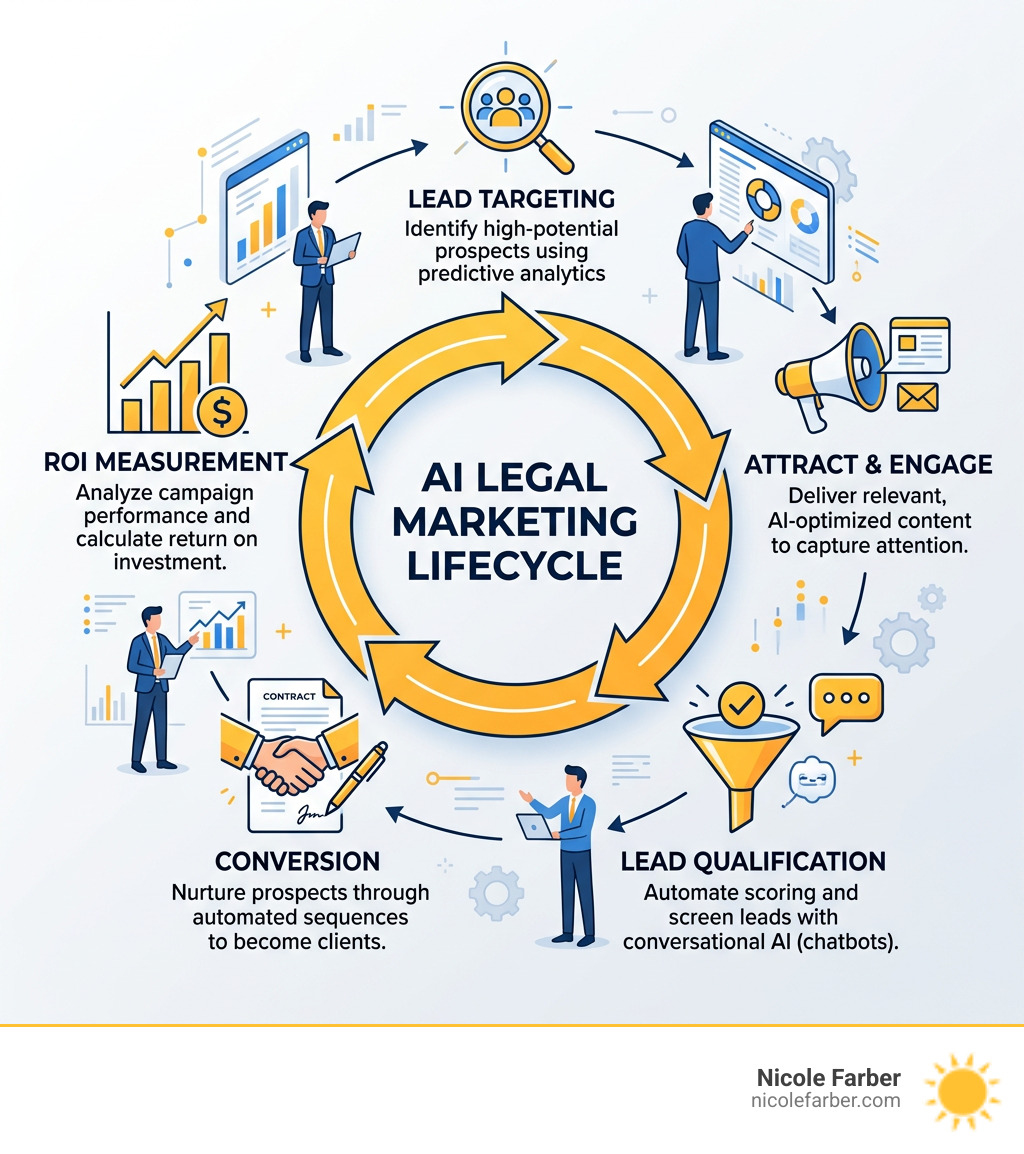
Core Use Cases: How AI Tools for Legal Marketing Drive Growth
In the legal markets of Philadelphia and New Orleans, standing out requires more than just a shingle on the door. We have seen how AI tools for legal marketing act as a force multiplier, allowing smaller firms to punch well above their weight class. By automating the “busy work” of marketing, attorneys can return to what they do best: practicing law.
Content Creation and Optimization
Content is the engine of modern law firm growth. AI tools like ChatGPT or Jasper can generate blog post outlines, draft social media updates, and even suggest email subject lines that get opened. For instance, a firm in Luzerne County can use AI to identify trending legal questions in their specific zip codes and draft educational content that addresses those needs. The goal isn’t to let the machine write everything—brand authenticity still matters—but to use AI to overcome “blank page syndrome.”
Lead Generation and Audience Targeting
Traditional advertising often feels like casting a wide net and hoping for the best. AI changes this through predictive analytics. Tools can now analyze historical data to identify “high-intent” prospects—people who aren’t just browsing, but are ready to hire. For client acquisition for lawyers, this means your ads in Philadelphia can be served specifically to individuals who have recently interacted with relevant legal resources.
Persona Segmentation
We know that a personal injury client in New Orleans has different concerns than a corporate client in Wilkes-Barre. AI can segment your audience into distinct personas. By analyzing website traffic patterns, AI might reveal that “professional parents seeking custody advice” visit your site most often on Saturday mornings. This insight allows us to tailor campaigns specifically for that window, increasing the likelihood of a conversion.
Enhancing Client Communication and Lead Management
The “junk lead” is the bane of every attorney’s existence. AI helps solve this through automated screening and 24/7 intake.
- Chatbots and Virtual Assistants: Tools like Smith.ai or the virtual assistant launched by Legal Aid of North Carolina demonstrate how AI can handle initial inquiries. These systems can answer basic questions, check for conflicts, and even schedule appointments without human intervention.
- Multilingual Support: In diverse regions like New Orleans or Philadelphia, language should never be a barrier to justice. AI-powered intake tools can offer multilingual client checklists and support, ensuring your firm is accessible to a broader demographic.
- Automated Follow-ups: Speed to lead is everything. If a prospective client in Wilkes-Barre reaches out at 2:00 AM, an AI system can send an immediate, personalized text or email to acknowledge the inquiry and set expectations for a follow-up.
Competitive Analysis and Reputation Management with AI Tools for Legal Marketing
Knowing what your neighbors are doing is vital for market positioning. In a competitive landscape like Luzerne County, staying ahead requires data-driven insights.
- Sentiment Analysis: AI can scan your online reviews (and those of your competitors) to detect themes. If multiple reviews mention “slow response times,” the AI flags this as a firm-wide improvement opportunity.
- Competitor Benchmarking: Using a law firm marketing consultant guide approach, we can use AI to “blueprint” competitors. This reveals untapped SEO opportunities or gaps in their advertising strategy that your firm can exploit.
- Online Visibility: AI tools monitor industry trends in real-time, suggesting when you should pivot your content strategy to cover a new local court ruling or a change in state law.
Navigating Ethics, Compliance, and Regional Considerations
As we embrace these powerful technologies, we must never forget our professional obligations. The legal industry is held to a higher standard, and “the AI made a mistake” is never an acceptable defense.
The Risks of Hallucinations and Inaccuracy
AI models can sometimes “hallucinate,” or confidently state facts that are entirely fabricated. The Mata v. Avianca case risks serve as a sobering reminder; in that case, an attorney used AI-generated citations that didn’t exist, leading to significant sanctions. Whether you are drafting a brief or a marketing blog post, every output must be verified by a human.
Regional Guidelines and Compliance
Different jurisdictions are moving at different speeds. For our friends in the north, the Law Society of Ontario white paper on generative AI provides a framework for ethical use. While Antigua Guatemala has its own emerging privacy standards, firms operating across borders must ensure they comply with the most stringent data protection laws applicable to their clients.
Key considerations include:
- Client Confidentiality: Never input sensitive client data into a public AI tool.
- Unauthorized Practice of Law: Ensure chatbots are used for intake and information, not for providing specific legal advice.
- Transparency: Be open with clients about when and how AI is being used in their matters or in the firm’s marketing efforts.
Security Best Practices for AI Tools for Legal Marketing
Security isn’t just a technical requirement; it’s an ethical one. When choosing AI tools for legal marketing, look for platforms that offer:
- Data Isolation: Ensure your firm’s data isn’t being used to train the AI for other users.
- Encryption: All data, whether at rest or in transit, must be encrypted.
- User Control: You should have the ability to opt out of personalization features or delete data at any time.
As the ABA notes, AI chatbots can contain biases and lack contextual nuance. This is why executive coaching for lawyers often focuses on the “human in the loop” model—using AI to assist, but never to replace, professional judgment.
Top AI Solutions and Implementation Strategies
Choosing the right tool depends on your firm’s specific needs and budget. Here is how some of the leading solutions stack up:
| Tool | Primary Focus | Key Feature | Pricing (Est.) |
|---|---|---|---|
| Clio Duo | Practice Management | Upcoming AI coach and consultant | Included in Clio plans |
| CoCounsel | Research & Drafting | Thomson Reuters CoCounsel integration | $90 – $225/user/mo |
| Spellbook | Contract Automation | Integrates directly with Microsoft Word | ~$179/user/mo |
| Smith.ai | Client Intake | AI-powered 24/7 web chat and call handling | Per-chat/call pricing |
| LexGo AI | Lead Generation | Pre-qualifies leads before handover | Success fee model |
Getting Started with AI Tools for Legal Marketing on a Budget
You don’t need a massive attorney marketing budget to start seeing results. We recommend an incremental approach:
- Assess Your Needs: Where is your biggest bottleneck? Is it writing blogs? Answering the phone? Identifying these pain points helps you pick the right first tool.
- Start Small: Use free versions of tools like ChatGPT or Claude for brainstorming and non-sensitive drafting. This helps your team get comfortable with “prompt engineering”—the art of asking the AI the right questions.
- Identify Workflows: Look for tasks that are repetitive and low-risk. Content outlines and social media scheduling are perfect entry points.
- Train Your Staff: Ensure everyone understands the ethical boundaries. AI is a tool, not a replacement for their expertise.
Measuring Success: The ROI of Legal Automation
The ultimate question for any law firm partner is: “Is this worth the investment?” To answer that, we have to look beyond vanity metrics like “likes” and focus on actual business growth.
Key Metrics to Track
- Cost Per Case: AI can lower this by up to 34% by optimizing ad spend and reducing the time spent on manual lead qualification.
- Time Savings: AI tools can reduce contract review and drafting time from hours to minutes. In fact, Spellbook time reduction statistics suggest lawyers could save up to 200 hours in the coming year.
- Conversion Rates: By using AI to respond to leads instantly, you significantly increase the chances of turning a “browser” into a “client.”
Impact on Business Models
AI isn’t just saving time; it’s changing how we charge for it. By drastically reducing the hours required for routine tasks, firms can move away from the billable hour toward more predictable flat-fee pricing. This transparency is often a major selling point for clients in New Orleans and Wilkes-Barre. To stay ahead of these shifts, many partners attend a law firm growth conference to learn how peers are restructuring their fees in the age of automation.
Frequently Asked Questions about AI in Law
Can AI tools for legal marketing replace human attorneys?
Absolutely not. While AI is incredible at processing data and drafting initial versions of content, it lacks the empathy, ethical judgment, and creative strategy of a human lawyer. Law is a relationship business. A client in Philadelphia doesn’t just want a “correct” answer; they want an advocate who understands their fears and goals. AI is the engine, but the attorney is always the driver.
How does AI improve lead quality for small firms?
AI levels the playing field. It uses high-intent targeting to find people who are actively searching for your practice area. Furthermore, automated screening ensures that by the time a lead reaches your desk, they have already been “pre-qualified” based on your specific criteria—such as location, type of case, and lack of conflicts. This means you spend your time talking to potential clients, not just answering the phone.
What are the risks of AI hallucinations in legal content?
The primary risk is reputational and legal harm. If your marketing content includes a “fake” law or an incorrect legal deadline because of an AI error, it can lead to malpractice claims or disciplinary action. The solution is a strict verification protocol: every piece of AI-generated content must be reviewed and approved by a qualified attorney before it is published.
Conclusion
The future of law is not just about who has the best legal mind, but who can best leverage technology to serve their clients and grow their practice. At the heart of this transformation is a shift toward efficiency and proactive growth.
I have always believed that leadership is about more than just numbers; it’s about empowering others. Whether you are a solo practitioner in Wilkes-Barre or a partner at a large firm in New Orleans, AI tools for legal marketing offer a path to reclaim your time and focus on the work that truly matters.
My journey as a leader has been driven by faith, resilience, and a commitment to helping others succeed. If you are ready to take the next step in your firm’s evolution, consider working with a law firm marketing coach who can help you navigate this new landscape with confidence. The tools are here. The data is clear. Now, it’s time to lead.