Law Firm Marketing Budget: Your Blueprint for Growth and ROI
- Marketing
- In the News
- December 26, 2025
Why Your Attorney Marketing Budget is the Blueprint You Can’t Afford to Ignore

Attorney marketing budget decisions can make or break your firm’s growth. Here’s what you need to know:
Key Components of an Effective Attorney Marketing Budget:
- Allocate 2-5% of revenue for maintenance, 10-12% for growth.
- Prioritize high-ROI channels like SEO and content marketing.
- Track Cost Per Acquisition (CPA) and Lifetime Value (LTV).
- Reserve 15-20% for testing new strategies.
- Measure everything to improve client retention and ROI.
Most law firms spend thousands on marketing monthly, but nearly 74% admit to wasting money on ineffective campaigns. The problem isn’t spending; it’s the lack of a strategic plan. A data-driven budget turns marketing from an expense into an investment with returns of 3-10x.
Studies show firms can waste up to 60% of their marketing spend on poor strategy. In competitive markets like Philadelphia or Wilkes-Barre, this means losing ground to strategic competitors. Without a budget framework, you’re throwing money at problems instead of investing in solutions.
This guide will show you how much to spend, where to allocate funds for maximum impact, and how to measure results. We’ll cover everything from baseline percentages to advanced strategies like Generative Engine Optimization (GEO).
I’m Nicole Farber, CEO of ENX2 Legal Marketing. For over 15 years, I’ve helped law firms from New Orleans to Antigua Guatemala turn their marketing budget into a growth engine. As a member of the ABA’s Client Development and Marketing Forum Committee, I know what separates firms that thrive from those that merely survive.
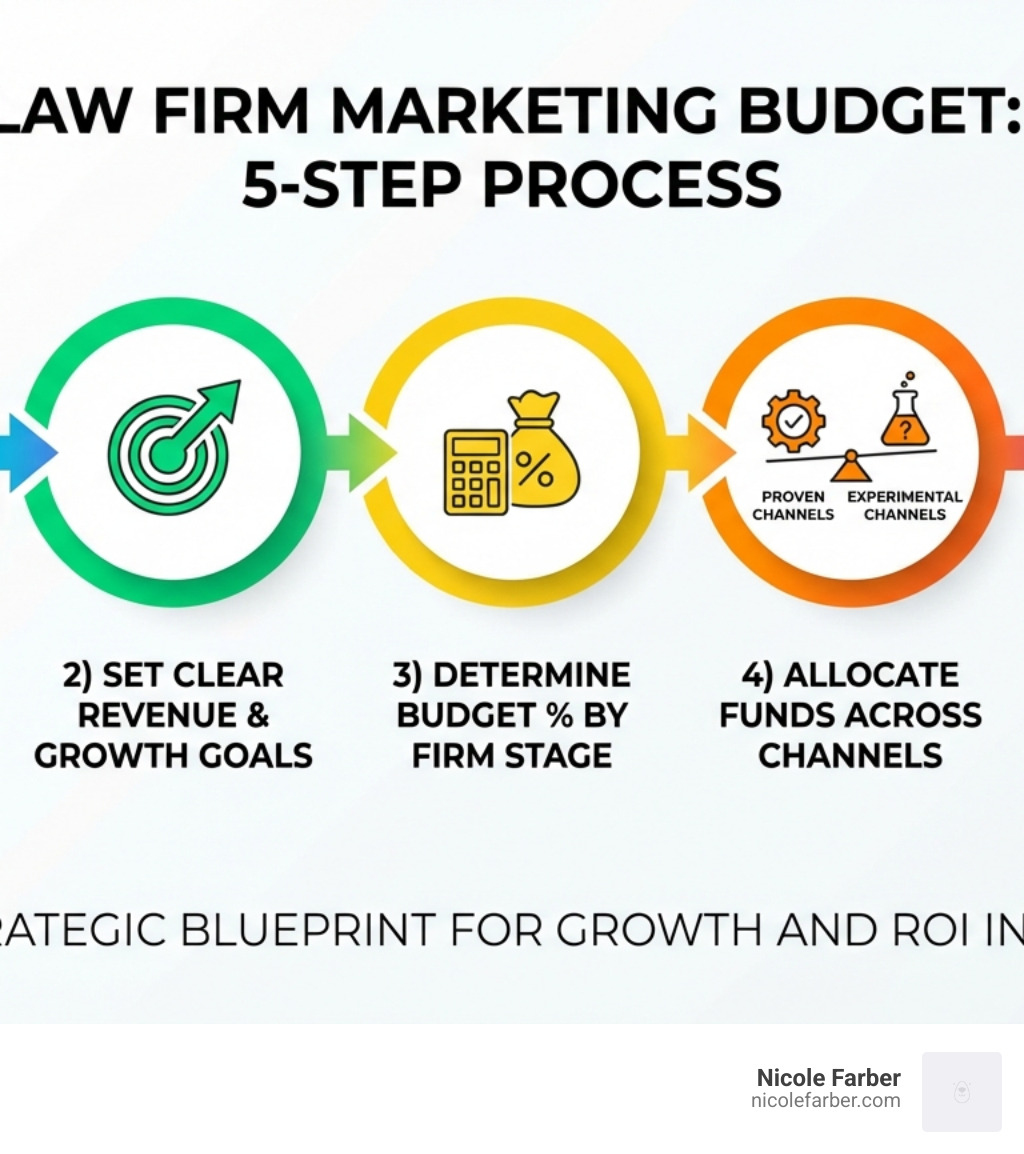
Laying the Foundation: How Much Should a Law Firm Spend?
The most common question I hear is, “What should I actually be spending on marketing?” Your attorney marketing budget isn’t a magic number; it’s a strategic decision reflecting your firm’s current position and future goals. A solo practitioner in Wilkes-Barre has different needs than a large personal injury firm in Philadelphia, and their budgets should reflect that.

Determining Your Percentage of Revenue
While The U.S. Small Business Administration recommends allocating 7-8% of gross revenue to marketing, law firms have unique dynamics. The standard advice depends on your growth stage:
- For maintenance (2-5% of gross revenue): If you have a healthy referral network and want to maintain your current position, this range is often sufficient to keep your name out there.
- For growth (10-12% of gross revenue): If you’re expanding practice areas, opening new offices, or capturing market share, you need to invest more aggressively to compete for visibility and test new channels.
The percentage matters less than the strategy behind it.
Factors That Influence Your Attorney Marketing Budget
Your revenue percentage is just a starting point. Several other factors influence your spend:
- Firm Size: A solo attorney in Luzerne County might spend $2,000-$5,000 monthly on local SEO and content, while a multi-state firm could invest over $50,000 monthly across various markets.
- Practice Area: Costs vary dramatically. Personal injury is highly competitive, with Google Ads clicks exceeding $100. Estate planning often relies on less expensive, content-driven strategies.
- Geographic Location: A dense market like Philadelphia requires a larger budget to stand out than smaller markets. Understanding the local landscape in places like New Orleans or even Antigua Guatemala is key.
- Growth Goals: Your budget must match your ambition. Aggressive expansion (15-20% growth) requires more investment than steady, sustainable growth.
- Competitive Landscape: Analyze what your competitors are doing. The goal isn’t always to outspend them but to outthink them with smarter strategy.
The most successful firms spend strategically, track what works, and adjust as they grow. For personalized guidance on building a marketing approach that fits your firm’s unique situation, explore our Attorney Business Development services.
The Strategic Attorney Marketing Budget: Allocating Dollars for Maximum Impact
Once you’ve set your overall attorney marketing budget, the next step is allocation. Many firms confuse tactical advertising (buying ads) with strategic marketing (building relationships and brand equity). Understanding this difference is key to effective spending.
Allocating Funds Across Digital Channels
With about 65% of law firms spending most of their marketing budget online, knowing where to invest is crucial. Here’s a breakdown of key channels:

- Search Engine Optimization (SEO): Your most valuable long-term asset. SEO retainers typically run $5,000-$25,000 per month. For firms in Luzerne County, local SEO is essential, as 46% of Google searches have local intent.
- Pay-Per-Click (PPC) Advertising: Delivers immediate leads, which is ideal for testing a new practice area in Philadelphia or Wilkes-Barre. Expect to spend at least $2,000 monthly, with $5,000+ needed for competitive markets.
- Content Marketing: Powers your SEO and establishes authority. Firms often invest $5,000-$15,000 monthly, as active blogs generate 97% more inbound links.
- Social Media Marketing: Requires strategic investment. While organic social media can generate leads, a dedicated strategy is more effective. You can start testing on platforms like LinkedIn with small daily budgets.
- Email Marketing: A cost-effective tool for nurturing leads and maintaining client relationships. 41% of law firms now use email newsletters.
For comprehensive support in developing these channels strategically, explore our Client Acquisition for Lawyers services.
Balancing Client Acquisition vs. Retention
Your attorney marketing budget must balance acquiring new clients and retaining existing ones. While acquisition is necessary for growth, retention often delivers a better ROI.
Client acquisition is expensive (an average SEO lead costs $456), especially in competitive markets like New Orleans. In contrast, retention marketing strategies like referral programs and email follow-ups turn satisfied clients into advocates.
The right balance depends on your practice area. A personal injury lawyer in New Orleans may focus on referrals, while a criminal defense attorney will prioritize acquisition. A healthy Lifetime Value (LTV) to Customer Acquisition Cost (CAC) ratio for law firms is at least 5:1. Achieving this means you can confidently invest in acquisition. Successful firms build systems that turn clients into life-long brand champions.
Measuring What Matters: ROI, KPIs, and Justifying Your Spend
If you can’t measure your marketing, you’re just guessing with your attorney marketing budget. Successful firms measure what matters, connecting spending directly to the bottom line. Before setting next year’s budget, analyze your historical data to see what worked and what didn’t. This analysis helps you stop wasting money and double down on effective strategies.
Calculating ROI for Your Attorney Marketing Budget
Replace vague wishes like “more clients” with S.M.A.R.T. goals (Specific, Measurable, Achievable, Relevant, Time-bound). For example: “Acquire 15 new personal injury clients in Philadelphia with case values over $50,000 in the next six months.” Marketers who set clear goals are 376% more likely to report success.
Track these key metrics:
- Cost Per Lead (CPL): What you spend to get an inquiry. The average CPL for law firm SEO is $456.
- Cost Per Acquisition (CPA): What you spend to sign a client. Understanding your CPA in markets like Wilkes-Barre or New Orleans is crucial for profitability.
- Lifetime Value (LTV): The total revenue a client generates over time.
The golden metric is the LTV:CPA ratio, which should be 5:1 or higher for law firms. This ratio confirms your marketing is a profitable investment. While the immediate ROI on a campaign can be powerful, remember the long-term compounding effect of channels like SEO, which can deliver a 526% three-year ROI. Firms that track ROI see 23% higher client retention and 31% more referrals because they invest more strategically. This data justifies your marketing spend as an investment, not an expense. For more insights, explore our guide on Business Growth Strategies.
Common Budgeting Pitfalls to Avoid
Nearly 75% of law firms admit to wasting money on ineffective campaigns. Avoid these common mistakes:
- Underfunding: Spreading a small budget too thin across too many channels yields no results. A marketing plan without adequate funding is as ineffective as no plan at all.
- Neglecting to Track Performance: Without tracking, you’re flying blind and could waste up to 60% of your marketing spend.
- Focusing Only on Short-Term Results: Relying solely on immediate-return channels like PPC means missing out on the compounding power of long-term strategies like SEO and content marketing.
- Ignoring Lead Quality: Don’t obsess over lead volume. Focus on attracting high-value prospects that your firm is best equipped to serve.
- Inefficient Lead Follow-Up: A slow response time is a death sentence in competitive markets like Philadelphia. Almost half of firms take three or more days to respond to inquiries, by which time the prospect has likely hired someone else.
Future-Proofing Your Budget: Advanced Strategies and Trends
The legal marketing landscape is constantly changing. A smart attorney marketing budget is flexible, allocating resources for both proven channels and emerging opportunities.
The Impact of AI and Evolving Search
Search is shifting from simple queries to AI-powered conversations. To stay relevant, firms must adapt.
- Generative Engine Optimization (GEO): This is the next evolution of SEO, focused on gaining visibility in AI-driven search results. Firms investing in GEO now are building a significant competitive advantage. Consider allocating 10-15% of your digital budget to AI optimization, which includes creating authoritative content and implementing technical elements like schema markup. For a PI firm in a crowded Philadelphia market, being recommended by an AI assistant could be a game-changer.
- Voice Search Optimization: As more people use voice assistants, optimizing for conversational queries is essential. You want your firm to be the answer when someone in Wilkes-Barre asks, “Who’s the best family lawyer near me?”
Working with Agencies vs. In-House
A key budget decision is whether to hire an agency or build an in-house team. A staggering 83% of law firms rely on external agencies, and for good reason. An agency provides immediate access to specialized expertise, advanced tools, and proven strategies, allowing your attorneys to focus on practicing law.
Budget-wise, agency management typically costs $2,500-$7,500 monthly, which is often a better ROI than hiring a full in-house team. When vetting partners, ask about their track record with firms like yours in markets from New Orleans to Antigua Guatemala. Ensure any partner complies with ethical guidelines like ABA Rule 7.2: Communications Concerning a Lawyer’s Services.
For smaller firms, cost-effective strategies like local SEO in Luzerne County, content creation, and networking can deliver impressive results. Also, budget your time—dedicating at least four hours weekly to marketing can create significant momentum. The goal is to maximize your budget’s impact, whether you work with a partner or go it alone. Learn how we can help through our Law Firm Marketing Coach services.
Frequently Asked Questions about Law Firm Marketing Budgets
What is a realistic marketing budget for a solo or small law firm?
A realistic attorney marketing budget for a solo or small firm is typically 5-10% of your desired annual revenue, often falling between $2,000 and $5,000 per month for meaningful results. To compete effectively, focus on high-ROI strategies like local SEO, content creation, and networking. Also, budget your time: dedicating at least four hours weekly to marketing can drive 15-20% growth in 12-18 months, a principle that holds true from Wilkes-Barre to New Orleans.
How long does it take to see ROI from SEO?
SEO requires patience. Expect to see significant results and break even on your investment in 6-14 months. While that seems long, SEO is an infrastructure investment that builds equity. The three-year ROI for law firms is an impressive 526% because it creates a sustainable stream of qualified leads. Many firms quit too early, just before the investment pays off. Whether you’re in Philadelphia or Luzerne County, SEO is a long game worth winning.
Is PPC (Pay-Per-Click) advertising worth the cost for lawyers?
It can be, but it depends. PPC offers immediate visibility and leads, which is invaluable for urgent-need practice areas like criminal defense. However, it’s expensive, with clicks costing $100 or more. Many firms struggle to achieve a positive ROI.
PPC makes sense when you need cases immediately, are testing a new market, or have high case values that justify the cost. Success requires rigorous optimization and an efficient intake process to convert high-cost leads. A starting budget is at least $2,000 monthly, but competitive markets like Philadelphia may require $5,000+ per month. The key is to focus on lead quality over quantity.
Conclusion
An effective attorney marketing budget is more than an administrative task; it’s the strategic blueprint for your firm’s growth. Treat it as a living document that adapts to market conditions, whether you’re in a competitive city like Philadelphia or a smaller community like Wilkes-Barre.
Here are the key takeaways:
- Invest Strategically: Ensure every dollar has a purpose, whether you’re allocating 2-5% for maintenance or 10-12% for growth.
- Play the Long Game: While PPC offers quick wins, the compounding 526% three-year ROI of SEO builds lasting market dominance, from New Orleans to Antigua Guatemala.
- Measure Everything: Tracking ROI is non-negotiable. It leads to higher client retention and more referrals, protecting you from wasted spend.
- Avoid Common Pitfalls: Don’t underfund your efforts, ignore lead quality, or have slow follow-up. These mistakes can cost you up to 60% of your budget.
- Accept the Future: Dedicate a portion of your budget to AI and Generative Engine Optimization to stay ahead of the curve.
- Seek Expert Guidance: You don’t have to do this alone. Partnering with specialists can turn your marketing from an expense into a growth engine.
Your budget tells the story of your firm’s ambition. As someone who has built a business while raising a family, I know every dollar counts. I’m passionate about helping law firms achieve measurable growth. Through business coaching for lawyers, we can build a strategy that doesn’t just spend money—it makes money.
Your firm’s next chapter starts with the budget you set today. Make it count.