Beyond the Boardroom: Your Guide to Building Executive Presence
- Leadership
- In the News
- December 10, 2025
Why Executive Presence Matters for Your Leadership Journey

Develop executive presence to open up the next level of your career and inspire confidence in those around you. Whether you’re a law firm partner in Philadelphia or leading a team in Luzerne County, this skill is critical for growth.
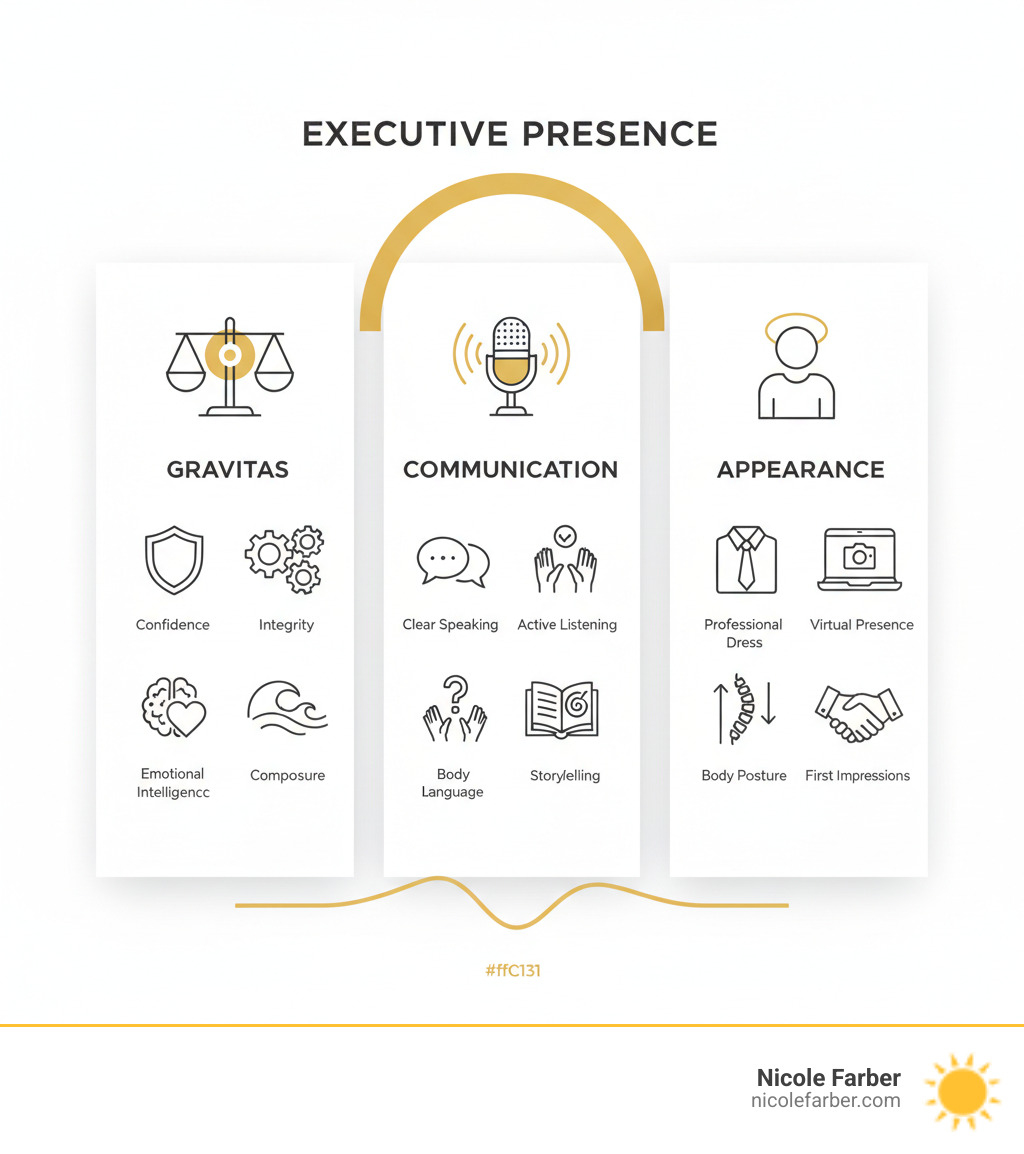
To develop executive presence, focus on these three core areas:
- Gravitas – Project confidence, integrity, and composure under pressure
- Communication – Speak with clarity, listen actively, and master nonverbal cues
- Appearance – Align your professional image with your authority and role
Research from Coqual shows that executive presence accounts for 26% of what a leader needs to achieve the next level in their career, yet many talented professionals struggle to define or develop it.
Receiving feedback that you lack executive presence can sting. It often feels vague or unhelpful. But the truth is that executive presence is not an innate gift. It’s a learnable skill built on observable behaviors that engage, inspire, and align people to action.
It’s the difference between being heard and being followed. It’s what makes people trust you with bigger challenges, whether you’re commanding a room in Wilkes-Barre, leading a virtual team from New Orleans to Antigua Guatemala, or influencing senior stakeholders.
The traditional view of executive presence—a polished appearance and unwavering authority—is evolving. Today’s leaders must balance confidence with authenticity and authority with empathy. Remote work and changing workplace cultures have rewritten the rules.
I’m Nicole Farber, and over my 15+ years building ENX2 Legal Marketing, I’ve coached countless law firm partners and business leaders to develop executive presence that drives real results. I’ve seen how mastering these skills transforms careers, whether you’re navigating client acquisition or stepping into a bigger leadership role.
The Core Components of Executive Presence
You know it when you see it—that leader who walks into a room and shifts the energy. People listen and trust them. That’s executive presence, and the good news is it’s not magic, and it’s not reserved for a chosen few.
When you develop executive presence, you’re building a specific set of skills that can be learned and refined. Research from Coqual breaks it down into three pillars: Gravitas, Communication, and Appearance. Think of them as the foundation of your leadership house; you need all three working together.

These pillars reinforce each other and shape how people see your leadership potential. Whether you’re presenting to a board in Philadelphia or leading a client call from your home office in Luzerne County, mastering these components changes how people respond to you. You can dive deeper into the research behind these foundational elements in this resource on the three pillars of executive presence.
Gravitas: Projecting Confidence and Credibility
Gravitas is the weight you carry as a leader, the quality that signals competence. It’s built through consistent behaviors.
Decisiveness is at the heart of gravitas. Leaders with gravitas take a clear position, even if it’s to gather more information. Silence in a meeting where direction is needed erodes your presence.
Emotional intelligence is the ability to read the room and manage emotions. When tensions rise, gravitas means staying calm and centered. It’s the lawyer in New Orleans who remains composed under pressure or the business owner in Wilkes-Barre who steers a difficult conversation with an employee.
Integrity and composure are also key. When your actions match your words, you build trust. When you stay steady under pressure, people feel safe following your lead. This is about showing you can handle tough calls and hold your own with other leaders. For more insights, explore our article on Business Leadership Strategies.
Communication: Speaking with Clarity and Impact
Gravitas won’t matter if you can’t communicate effectively. It’s not just your words, but how you deliver them, listen, and connect.
Verbal skills are crucial. Can you speak clearly and concisely? Practice speaking up, especially if you tend to be quiet in groups. Simple, direct language is powerful.
Nonverbal communication often speaks louder than words. Strong posture and direct eye contact show you’re grounded and confident. Scattered eye contact can make you seem nervous or disengaged.
Active listening is an overlooked skill. Great leaders truly hear what others are saying by giving undivided attention and asking thoughtful questions. This builds the connection and trust essential for effective leadership.
Storytelling brings your ideas to life, making complex concepts easier to grasp and inspiring action, not just understanding.
Whether you’re presenting to a client in Philadelphia or facilitating a team meeting with remote participants in Antigua Guatemala, your communication skills shape how your leadership is perceived. For more guidance, check out our guide on Being a Good Leader in the Workplace.
Appearance: Aligning Your Image with Your Authority
Appearance can feel superficial, but people form impressions fast. The goal isn’t to fit an outdated mold but to align your image with your authority and environment.
Professional dress and grooming mean understanding the norms of your workplace. A law firm partner in Philadelphia will dress differently than a creative agency owner in New Orleans. The key is presenting a visual image that says, “I’m a leader here,” while remaining authentic.
Virtual presence is non-negotiable. Your home office setup, lighting, and camera quality contribute to your professional image. Looking into your webcam simulates eye contact and creates stronger connections with remote audiences, whether they’re in Luzerne County or across the globe.
Body posture affects perceived authority. Sitting up straight and moving with intention project confidence. Slouching can undermine even the strongest words.
Projecting polish is about showing up as put-together and intentional. It reassures your team and stakeholders that you’re a grounded leader. While appearance is often considered the least critical pillar, it amplifies everything else, signaling you’re worth listening to before you even speak.
Actionable Steps to Develop Executive Presence
Develop executive presence through consistent, practical actions. This journey requires self-awareness, a willingness to try new approaches, and patience as you grow.

I’ve watched leaders transform their careers by focusing on specific behaviors. The difference between a talented professional and a rising leader often comes down to mastering these concrete skills. For more insights, explore our guide on How to Become an Effective Leader.
Master Your Mindset and Conquer Self-Doubt
Your inner dialogue shapes how you show up. To inspire confidence in others, you must believe in your own leadership capability.
Imposter syndrome is common. That voice saying “you don’t belong here” can be deafening. But if you’re in the room, you earned your seat. The work is to reframe that internal narrative. Pay attention to your self-talk. When you catch yourself thinking “I’m terrible at presentations,” challenge it with “I’m learning to be a stronger presenter.”
Authenticity is your anchor. You don’t need to project someone else’s version of leadership. Align your presence with your values and strengths. When you’re genuine, people trust it. Also, take time to define your core values. When you’re clear on your principles, decision-making becomes faster and your actions more consistent, which builds trust and reinforces your gravitas. For deeper work on this internal foundation, check out our resource on mastering your inner critic.
Command the Room (Virtually and In-Person)
Once your mindset is aligned, focus on how you physically and verbally show up, whether in a conference room in Philadelphia or on a video call connecting teams from Wilkes-Barre to Antigua Guatemala.
Taking up space signals confidence. Sit up straight, plant your feet firmly, and speak up when you have something to contribute. These physical adjustments signal that you belong in the conversation.
Voice projection is critical. Practice speaking from your diaphragm, lowering your pitch slightly, and slowing your pace. Your words will carry more weight.
Maintaining composure under pressure separates good leaders from great ones. When a crisis hits, your team watches how you respond. Practice mindfulness or pre-meeting rituals to center yourself. Your calm presence in a high-stakes negotiation in New Orleans or during a complex issue in Luzerne County reassures everyone.
The virtual meeting environment requires specific attention. Look into your webcam to simulate eye contact. Adjust your camera angle and lighting so you are clearly visible. These details dramatically impact how your leadership translates through a screen. Engage your remote audience actively by asking questions and using their names.
Communicate Complex Ideas to Senior Leaders
Influencing senior leadership requires a different approach. You must demonstrate strategic thinking and drive action.
Uplevel the conversation by connecting your work to organizational goals. Focus on the why and the impact, not just the how. This positions you as a strategic thinker.
Lead with solutions, not just problems. When you bring an issue to leadership, come prepared with potential paths forward. This shows an action-oriented mindset that senior leaders value.
Provide sufficient context without over-explaining. Read the room to gauge their understanding and adapt accordingly, showing respect for their time.
Drive to clarity and decision in every conversation. Know what outcome you need and guide the discussion toward concrete next steps. This decisiveness is fundamental to executive presence. For more strategies on effective leadership communication, explore our guide on How to Be a Good Leader.
The Evolving Rules of Executive Presence
Leadership isn’t what it used to be. The executive presence that commanded respect twenty years ago might feel stiff today. We’ve lived through seismic shifts—the Covid-19 pandemic, social movements, and a complete change in how and where we work. These changes have rewritten what it means to lead.
The old playbook emphasized a command-and-control style where leaders had all the answers. That approach is outdated. Today’s teams, whether in a law firm in Philadelphia or remote from Wilkes-Barre to Antigua Guatemala, need something different.
| Traditional Executive Presence | Modern Executive Presence |
|---|---|
| Authoritative | Authentic |
| Formal | Inclusive |
| Command-and-Control | Empathetic |
| Hierarchical | Collaborative |
| Focus on individual charisma | Focus on collective impact |
| Stiff, unapproachable | Agile, approachable |
Modern executive presence still requires gravitas, communication, and appearance, but how we express them has evolved. We now develop executive presence by balancing confidence with authenticity, authority with empathy, and decisiveness with collaboration. It’s less about projecting perfection and more about inspiring trust through transparency.
Remote work has fundamentally changed the game. Leaders now steer hybrid environments, engaging teams in a Luzerne County conference room and on video from New Orleans simultaneously. This requires new skills in reading virtual body language and maintaining energy across screens. For a comprehensive look at how leadership expectations have shifted, explore The New Rules of Executive Presence.

This shift isn’t about abandoning authority; it’s about expressing it in ways that resonate with today’s workforce, creating space for diverse voices.
Specific Considerations for Women in Leadership
Let me be honest: women face unique challenges when developing executive presence. The rules have always been different for us.
Projecting authority without being labeled “too aggressive” remains a real challenge. Behaviors praised as “decisive” in men can be criticized as “bossy” in women. But we can demonstrate powerful leadership by being intentional. Lowering our tone slightly, strengthening our posture, and grounding our body language all signal authority without sacrificing our authentic selves.
One of the biggest differences I’ve observed is that men often pursue opportunities when they’re 60% certain, while women tend to wait until they’re 100% sure. That hesitation costs us. Saying ‘yes’ to opportunities, even when nervous, is how we grow and demonstrate our capabilities.
The sweet spot for all leaders is balancing warmth and competence. Too much warmth without competence can undermine trust; all competence without warmth can seem cold. Bringing both to the table creates real influence. For more insights, visit our resource on Women in Business Leadership.
The Role of Authenticity in Modern Leadership
Authenticity is the foundation of modern executive presence. People can spot a fake, and in today’s transparent world, a facade will eventually crack.
Being genuine doesn’t mean oversharing. It means your actions consistently align with your values and you don’t pretend to have all the answers. For me, faith-driven leadership is woven into everything I do. My personal journey as a single mother building a company shapes how I lead. That authenticity creates deeper connections.
Aligning your presence with your personal values makes leadership sustainable. When you lead authentically, it feels natural, and you build trust more easily. The old model of a separate “work self” is draining. Modern executive presence invites you to bring your whole self to leadership.
Building trust through transparency means being honest about challenges and admitting mistakes. When I share my struggles, it doesn’t diminish my authority—it amplifies it. People trust leaders who’ve faced real challenges. Authenticity combined with competence creates a powerful presence. Learn more about leading with your core beliefs at Faith-Based Business Leadership.
Accelerating Your Growth with Mentorship and Resources
The journey to develop executive presence is about continuous learning, seeking feedback, and building a supportive network. Just as we refine business strategies, we must sharpen our leadership presence, whether in Philadelphia, Wilkes-Barre, New Orleans, Luzerne County, or Antigua Guatemala.
The Power of Feedback and Mentorship
One of the fastest ways to grow is by seeing ourselves through another’s eyes.
Seeking constructive criticism is invaluable for spotting our blind spots—the gaps between how we think we’re perceived and how we actually are. I make it a practice to regularly ask for feedback from my team and trusted advisors. It’s always a gift.
Finding a mentor or coach can be transformative. A good coach helps you see behavioral patterns, interpret feedback, and develop custom strategies. Through my programs, I work with entrepreneurs and law firm leaders to provide this kind of personalized support, helping you steer your specific obstacles.
Leadership assessments, such as 360-degree feedback tools, can provide a science-based snapshot of where you stand. They turn vague feedback into concrete behaviors you can work on. This combination of feedback, guidance, and assessment creates a clear roadmap for growth. If you’re ready to invest in your development, explore our Leadership Training New Orleans programs.
Essential Resources to Sharpen Your Presence
Beyond coaching, a wealth of resources can support your journey to develop executive presence.
Books on the topic can offer deep insights. For example, Executive Presence 2.0 by Sylvia Ann Hewlett explores essential qualities for modern leadership, while other great books offer step-by-step approaches to building confidence and conviction.
Podcasts are another powerful learning tool. Search for shows on leadership communication and executive presence to find practical tips for developing your abilities and amplifying your impact.
Nicole Farber’s training programs and workshops bring all these elements together. I’ve built ENX2 Legal Marketing from the ground up as a single mother, facing every challenge imaginable. My programs blend practical strategies, real-life lessons, and faith-driven insights to help you lead with both confidence and authenticity. Whether you’re an entrepreneur finding your voice or a law firm partner ready for senior leadership, these programs meet you where you are.
Continuous learning keeps us adaptable. To explore how these resources can fuel your journey, check out insights from Entrepreneur Motivational Speakers and find what’s possible when you commit to your growth.
Conclusion
You’ve just walked through a roadmap for developing executive presence—from understanding the pillars of gravitas, communication, and appearance, to implementing strategies that transform your leadership. This isn’t about faking it; it’s about building authentic skills to inspire trust, influence decisions, and open up new career opportunities.
The truth is, executive presence is entirely learnable. Whether you’re a law firm partner in Philadelphia, an entrepreneur in Wilkes-Barre, or a business leader in New Orleans, these principles apply. The modern landscape rewards leaders who balance confidence with authenticity, authority with empathy, and decisiveness with collaboration.
I’ve seen this change firsthand—in my own journey as a single mother building ENX2 Legal Marketing, and in the countless leaders I’ve coached. The moment you start working on your mindset, refining your communication, and showing up with intention, everything shifts. Your influence expands.
Developing executive presence is a continuous journey, not a destination. It requires self-reflection, seeking feedback, and committing to daily growth. Some days you’ll succeed, and other days you’ll stumble. What matters is that you keep showing up and leading with integrity.
As someone who leads with faith and real-life experience, I believe in your potential. Your unique perspective—shaped by your experiences in Luzerne County, Antigua Guatemala, or anywhere else—adds value no one else can. The world needs your voice and your leadership.
Ready to take your communication skills and leadership presence to the next level? I’d love to help. Take the next step with our specialized Philadelphia public speaking coaching to transform your presence and lift your leadership.