Beyond the Buzzwords: Real Motivation Strategies for Your Business
- Entrepreneurship
- Word of the Day
- February 2, 2026
Why Your Current Motivation Tactics Might Be Failing Your Team

Business motivation strategies are the difference between a team that merely shows up and one that drives results. Truly effective strategies focus on intrinsic motivation—autonomy, mastery, and purpose—by communicating the ‘why’ behind every task, providing continuous feedback, investing in growth, and designing personalized rewards.
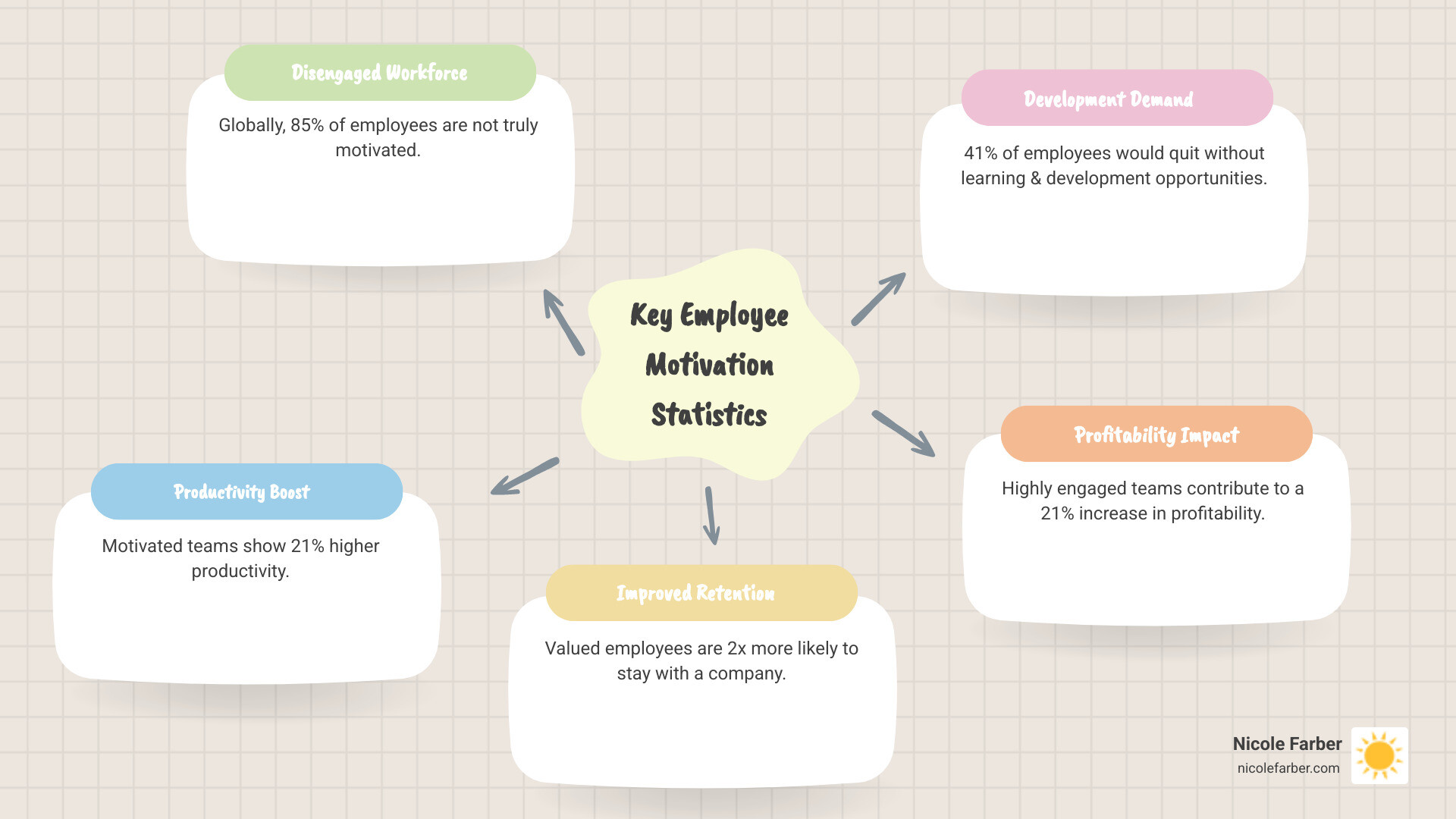
The numbers tell a sobering story. Globally, only 15% of employees feel motivated, meaning 85% of your workforce might be running on fumes. Yet, organizations with motivated teams see 21% higher productivity, and valued employees are twice as likely to stay.
The challenge isn’t a lack of motivation; it’s that traditional approaches are failing. Bonuses and plaques create short-term compliance, not sustainable engagement. In fact, 41% of employees would quit without learning and development opportunities, a sharp increase from the previous year.
Motivation isn’t one-size-fits-all. Your team in Philadelphia might respond differently than your remote workers in Antigua Guatemala. A law firm partner in New Orleans faces different challenges than a paralegal in Wilkes-Barre. The real question is: Are you creating an environment where your team’s motivation can flourish?
I’m Nicole Farber, CEO of ENX2 Legal Marketing. For over 15 years, I’ve helped law firms transform their teams with proven business motivation strategies. In my recent keynote at Merakey’s Annual Leadership Conference, I shared how internal motivation creates ripple effects throughout entire organizations—and I’ve seen it work firsthand.
The Science of Motivation: Understanding What Truly Drives Employees
Let’s be honest, we all want to be motivated. We want to wake up energized and feel a sense of accomplishment. But what is that inner fire, and how can we ignite it in our teams? The answer lies in the science of motivation—understanding the psychological needs that drive human behavior, a field explored through frameworks like Self-Determination Theory and performance psychology.

The science behind motivation tells us that simply dangling a carrot (or threatening with a stick) isn’t enough for long-term engagement. People are already motivated; our role as leaders is to understand why they are motivated and create the conditions for that motivation to flourish. The science behind motivation is clear: true drive comes from within.
Intrinsic vs. Extrinsic Motivation
The cornerstone of effective leadership lies in understanding the fundamental differences between intrinsic and extrinsic motivation in the workplace. This isn’t just academic; it profoundly impacts how we build sustainable business motivation strategies.
| Feature | Intrinsic Motivation | Extrinsic Motivation |
|---|---|---|
| Source of Drive | Internal satisfaction, personal interest, enjoyment | External rewards, avoidance of punishment, obligations |
| Longevity | Long-term, sustainable engagement | Short-term compliance, often unsustainable |
| Focus | Mastery, autonomy, purpose, personal growth | Salary, bonuses, recognition, benefits, job security |
| Impact | Higher job performance, creativity, retention, satisfaction, well-being | Can lead to burnout, lower quality work, increased turnover |
When employees are intrinsically motivated, they find genuine satisfaction in the work itself, driven by a desire for mastery, autonomy, and purpose. This is the holy grail of motivation, leading to higher performance, creativity, and retention. Research on intrinsic motivation’s impact consistently shows these profound benefits.
Extrinsically motivated employees work for external rewards like salary or to avoid negative consequences. While important, relying solely on these incentives can lead to a workforce that’s just punching the clock.
The Six Types of Motivation: From Suboptimal to Optimal
Building on the intrinsic vs. extrinsic divide, motivation research identifies six distinct types of employee motivation, ranging from suboptimal to optimal.
Suboptimal Motivation Types (Low Performance, High Turnover Risk):
- Disinterested: Employees feel disconnected from their work and see little value in their tasks, leading to quiet quitting.
- External: Work is driven solely by external rewards like salary or bonuses, which is unsustainable for genuine commitment.
- Imposed: Employees work out of pressure, guilt, or obligation, creating a toxic environment and impacting mental health.
Optimal Motivation Types (High Performance, Strong Retention):
- Aligned: Work aligns with personal values, making efforts feel purposeful. For us, it’s about aligning with faith-driven leadership principles.
- Integrated: Employees internalize the value of their work, making it part of their identity and personal goals.
- Inherent: The pinnacle of motivation, where pure enjoyment comes from the work itself. Imagine your team in Philadelphia or New Orleans finding this level of joy!
Our goal as leaders is to guide our teams away from suboptimal motivation and towards these optimal, self-sustaining types.
The Three Psychological Pillars: Autonomy, Relatedness, and Competence
Self-Determination Theory identifies three core psychological needs essential for optimal motivation: autonomy, relatedness, and competence. When these needs are met, employees thrive.
-
Autonomy: Empowering Employee Decision-Making
Autonomy means giving employees meaningful choices about how they approach their work. This includes flexible work arrangements, decision-making authority, and input into goals. Empowered employees feel a greater sense of ownership, leading to higher creativity and performance. Giving your team in Luzerne County the freedom to innovate can open up incredible potential. -
Relatedness: Building Workplace Connection and Belonging
Humans are social beings motivated by a sense of belonging. Fostering community and team collaboration significantly boosts motivation. This means encouraging team-building, cultivating a positive environment, and ensuring open communication. Companies with strong cultures that foster relatedness have lower turnover and higher engagement. Think of the team spirit that can be built, even connecting our team in Wilkes-Barre with those in Antigua Guatemala. Companies like Salesforce are masters at this. -
Competence: Supporting Employee Growth and Development
People need to feel effective and capable. Supporting competence involves providing appropriate challenges, offering opportunities for skill development, and giving constructive feedback. When employees feel competent, they take on new challenges, contribute innovative ideas, and feel a sense of mastery, which is crucial for sustainable motivation.
Foundational Business Motivation Strategies for Sustainable Growth
Understanding the science is the first step; applying it is where the magic happens. Effective business motivation strategies are woven into the fabric of leadership and culture. As leaders, we must create an environment where trust flourishes, goals are clear, and everyone feels inspired.
Communicating the ‘Why’ to Foster Purpose
One of the most powerful things a leader can do is communicate the ‘why’ behind tasks. Explaining why work matters connects individual efforts to the company mission. For example, a paralegal in Wilkes-Barre isn’t just organizing files; they’re helping win a case, which strengthens the firm’s reputation. This clarity inspires teams from Philadelphia to Antigua Guatemala. Since 90% of workers feel more driven in purpose-led organizations, communicating the ‘why’ is a powerful way to show value. As a Gallup survey noted, underappreciated employees are twice as likely to leave.
Setting Clear Goals and Expectations with SMART Frameworks
Imagine driving from New Orleans to Philadelphia without a map. The same chaos applies to work without clear goals. Setting clear expectations is fundamental to effective business motivation strategies.
The SMART framework is our GPS for goal-setting:
- Specific: Clearly define what needs to be achieved.
- Measurable: Establish criteria for tracking progress.
- Achievable: Ensure goals are realistic yet challenging.
- Relevant: Align goals with the individual’s role and company mission.
- Time-bound: Set a clear deadline.
Setting SMART goals gives employees clarity and a sense of accomplishment. Research shows 72% of employees find goal setting a strong motivator. When we empower our team in Luzerne County with well-defined goals, they can channel their energy effectively and celebrate their progress.
Cultivating a Positive and Inclusive Work Environment
A positive and inclusive work environment is a foundational element of successful business motivation strategies. It means fostering psychological safety, championing diversity, encouraging open communication, and building community. A supportive culture improves morale and leads to stronger collaboration. Employees in a positive work environment perform better, innovate more, and are more likely to stay. Honest communication builds trust, which improves engagement and productivity. We know 8 out of 10 employees want a sense of community, whether they’re in our Philadelphia office or spread across New Orleans and Wilkes-Barre.
Actionable Tactics: Moving from Theory to Daily Practice
We’ve covered the science and foundational strategies, but how do we translate these ideas into daily actions? This section covers the practical, hands-on tactics for fostering a motivated workforce through daily habits and thoughtful application of motivation theory.

Implementing Continuous Feedback and Recognition
Annual reviews are not enough. Continuous feedback and recognition are among the most low-cost, high-impact recognition business motivation strategies.
- Go Beyond Annual Reviews: Implement regular check-ins to drive performance and connection.
- Create Constructive Feedback Loops: Make feedback a regular, two-way street focused on guidance and growth.
- Encourage Peer-to-Peer Appreciation: Foster a culture where colleagues recognize each other’s efforts.
- Celebrate Small Wins: Acknowledge accomplishments as they happen to build momentum.
- Use Public and Private Praise: A blend of both ensures everyone feels appreciated. Consistent recognition can reduce turnover by 40% and boost productivity by 31%.
Offering Meaningful Growth and Development Opportunities
Stagnation is a major driver of disengagement. Investing in employee growth is a powerful business motivation strategy that boosts motivation and retention. In fact, 41% of employees would quit if no learning opportunities were offered, according to employee retention research.
- Career Pathing: Show employees a clear path for advancement within the organization.
- Mentorship Programs: Pair experienced team members with those looking to grow. Pairing a strategist in New Orleans with new talent in Philadelphia could be a game-changer.
- Learning Stipends and Tuition Reimbursement: Demonstrate a tangible commitment to their future by funding courses or certifications.
- Upskilling and Reskilling: Provide opportunities to learn new skills to keep your team competitive and engaged.
Designing Personalized and Flexible Rewards
While compensation is foundational, long-term engagement comes from personalized rewards. Thoughtful, custom rewards resonate deeply, as 66% of employees prefer them over generic ones.
- Beyond Monetary Rewards: Consider experiential rewards like a weekend getaway or tickets to an event.
- Flexible Work Arrangements: Autonomy over when and where people work is a powerful motivator. Flexible work trends show this is in high demand. For our team in Antigua Guatemala, this might mean adapting to local time zones.
- Personalized Recognition: A handwritten note, a gift related to a hobby, or a “passion project” can be incredibly motivating.
- Choice in Rewards: Offer a menu of rewards or a points-based system, allowing employees to choose what truly motivates them.
Diagnosing and Adapting: How to Keep Your Strategies Effective
Even the best business motivation strategies aren’t set-it-and-forget-it. To ensure our strategies remain effective, we need to continuously assess, adapt, and iterate using data, agility, and a proactive approach.
How to Assess Your Current Motivation Landscape
Before you can fix a problem, you need to understand it. Look for common warning signs of struggling motivation:
- Declining productivity or performance
- Low participation and lack of new ideas
- Increased absenteeism or presenteeism
- Higher turnover, especially among top talent
- A lack of employee-driven innovation
- Negative sentiment in feedback
To dive deeper, use tools like engagement surveys, focus groups, and one-on-one conversations. Track key performance indicators (KPIs) like productivity, satisfaction, and turnover to measure the effectiveness of your strategies and adjust as needed.
Adapting Your Business Motivation Strategies for Remote & Hybrid Teams
The shift to remote and hybrid work requires intentional business motivation strategies. For teams spread across New Orleans, Luzerne County, and beyond, focus on:
- Virtual Team Building: Organize online social events to foster relatedness.
- Digital Communication Tools: Use platforms that facilitate clear and transparent communication.
- Asynchronous Work: Respect different time zones and offer flexibility.
- Maintaining Culture Across Locations: Proactively reinforce company culture through virtual channels, from Philadelphia to Antigua Guatemala.
- Trust and Autonomy: Empower remote teams with autonomy and clear expectations, avoiding micromanagement.
Emerging Trends and No-Cost Motivation Boosters
Staying ahead of trends and leveraging no-cost strategies can provide a significant edge.
Emerging Trends:
- AI-Powered Recognition: Use AI for real-time, personalized recognition.
- Purpose-Driven Work: Articulate your mission’s impact, as 90% of workers feel more driven in such environments.
- Wellness Programs: Focus on mental and physical well-being with resources like mindfulness apps or mental health days.
No-Cost Motivation Boosters:
- Leadership Thank-You Notes: A heartfelt email or note from a leader is highly impactful.
- Public Recognition: A shout-out in a team meeting for a job well done.
- Peer-to-Peer Appreciation: Encourage colleagues to recognize each other.
- Stretch Assignments: Offer challenging projects to show trust and provide growth opportunities.
- Encourage Innovation: Empower your team to experiment, like Google’s “20% time” policy which led to projects like Gmail and Google News.
The Business Case: Why Investing in Motivation Pays Dividends
If you’re still wondering if investing in business motivation strategies is worth it, the numbers speak for themselves. This isn’t just about employee happiness; it’s about driving tangible results that impact your bottom line.
The Link Between Motivation, Productivity, and Profitability
A motivated workforce is a productive and profitable one. This isn’t a theory; it’s a proven fact:
- Higher Productivity & Profitability: Organizations with motivated teams see 21% higher productivity and a 21% increase in profitability.
- Improved Customer Ratings: Highly engaged teams score 10% higher in customer ratings. Happy employees lead to happy customers.
- Reduced Absenteeism: A motivated workforce with good work-life balance leads to a 41% reduction in absenteeism.
For law firms in competitive markets like Philadelphia and New Orleans, this means better client service and a stronger reputation.
The Impact of Competitive Compensation and Work-Life Balance
While intrinsic motivators are key, we can’t ignore the basics. Fair pay and a healthy work-life balance are foundational.
- Fair Pay as a Foundation: Competitive compensation attracts and retains top talent. As Herzberg’s two-factor theory suggests, salary won’t create love for a job, but its absence guarantees dissatisfaction.
- Preventing Burnout: Prioritizing work-life balance is a direct investment in sustained motivation. Offering wellness programs and flexible schedules shows you care. Engagement surveys show that companies prioritizing well-being earn greater loyalty, which is crucial for retaining talent in places like Luzerne County and Wilkes-Barre.
Frequently Asked Questions about Business Motivation Strategies
What are the most effective no-cost ways to boost motivation?
Some of the most effective no-cost motivators are:
- Public and Peer-to-Peer Recognition: A simple shout-out in a team meeting or company newsletter.
- Leadership Thank-You Notes: A personalized email or handwritten note from a leader.
- Stretch Assignments: Entrusting employees with challenging projects shows you believe in their capabilities.
- Autonomy and Flexibility: Giving employees meaningful choices about how and when they work fosters ownership and trust.
How do you motivate a team that seems disengaged or burned out?
When a team is burned out, it’s a critical signal to intervene:
- Start by Listening: Use one-on-one conversations to understand the root causes.
- Re-evaluate Workloads: Ensure expectations are realistic and workloads are balanced.
- Prioritize Work-Life Balance: Actively encourage breaks, vacation time, and healthy boundaries.
- Reconnect to Purpose: Remind the team of the ‘why’ behind their work and its impact.
- Celebrate Small Wins: Break down large goals and celebrate small accomplishments to rebuild momentum.
Can financial incentives alone improve long-term motivation?
No. While competitive pay is a crucial “hygiene factor” that prevents dissatisfaction, it doesn’t create sustainable motivation. Long-term engagement is driven by intrinsic factors like purpose, autonomy, mastery, and a positive culture. A bonus might be appreciated by your team in New Orleans, but they’ll thrive on challenging work, growth opportunities, and a strong sense of belonging.
Conclusion
Fostering a motivated workforce isn’t a one-time project; it’s an ongoing commitment to empathetic and strategic leadership. The science of motivation shows that the most effective business motivation strategies move beyond superficial rewards to address the fundamental psychological needs of our team members.
By empowering employees with autonomy, building strong relationships, and providing opportunities for growth, we create a thriving workplace. This human-centered approach, guided by principles of faith-driven leadership and real-life experience, is what truly open ups potential.
As Nicole Farber, I’ve seen how this environment transforms organizations. From our legal marketing professionals in Philadelphia and Wilkes-Barre to our remote teams in Luzerne County and Antigua Guatemala, a motivated team is our greatest asset. When we invest in our people, they invest in our success.
Are you ready to inspire your team and transform your business? Become a more motivational leader with expert keynote speaking and find how to lead with purpose and passion.