Tune In to the Best Podcasts for Leadership Communication
- Leadership
- In the News
- September 28, 2026
Tune In to the Best Podcasts for Leadership Communication
Find the Right Speak Like a Leader Podcast for Your Goals

The best speak like a leader podcast depends on the communication skill you need most right now. Choose a show that matches your goal:
- Executive presence and influence: Look for concise frameworks that help you speak clearly in meetings, presentations, and boardrooms.
- Public-speaking confidence: Choose episodes on managing nerves, storytelling, rehearsal, and audience connection.
- Everyday leadership communication: Prioritize practical advice on listening, emails, conflict, remote teams, and one-on-ones.
- Career visibility and personal brand: Seek guidance on sharing expertise, building credibility, and communicating with authority.
These podcasts are not all the same. Some focus on high-stakes presentations and stage presence. Others help leaders stop rambling, listen better, write clearer emails, or speak up without feeling like an imposter. The strongest shows treat confidence as a skill built through practice, feedback, and a focus on serving the audience rather than judging yourself.
For law firm leaders, that distinction matters. Clear communication can improve client trust, strengthen team alignment, and make your expertise easier for the right clients and referral partners to notice.
I am Nicole Farber, CEO of ENX2 Legal Marketing, with more than 15 years of experience helping law firms and business leaders grow their visibility and communicate their value. As you compare a speak like a leader podcast, use this guide to find practical ideas you can apply to client conversations, team leadership, and your firm’s marketing.
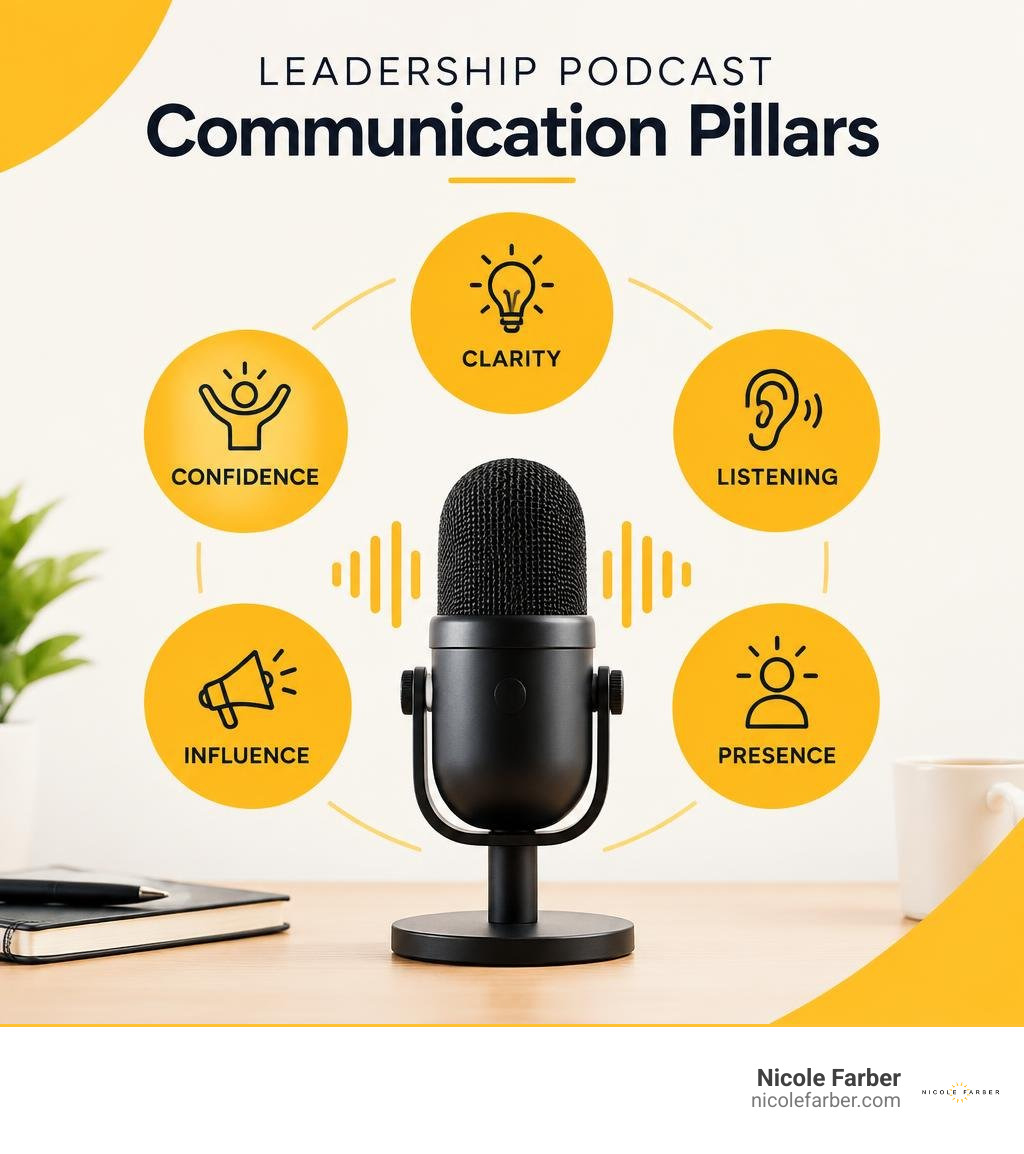
Quick speak like a leader podcast definitions:
Why Every Executive Needs a Speak Like a Leader Podcast in Their Routine
Most professionals assume their career bottlenecks stem from a lack of technical knowledge. In reality, modern leadership plateaus almost always stem from communication gaps. Whether you are leading a trial team in Philadelphia, directing operations in Wilkes-Barre, or managing remote teams across Luzerne County, your ability to articulate ideas with conviction dictates your impact.
Integrating a top-tier podcast into your weekly commute or morning routine provides micro-doses of behavioral coaching. In our work guiding law firms and growing enterprises, we see high-performing professionals battle common hurdles: imposter syndrome in high-stakes meetings, rambling updates that drain audience attention, and difficulty turning raw visibility into lasting credibility.
To master these moments, leaders must master the ultimate guide to leadership communication strategies by transforming abstract concepts into repeatable habits. A dedicated podcast helps you:
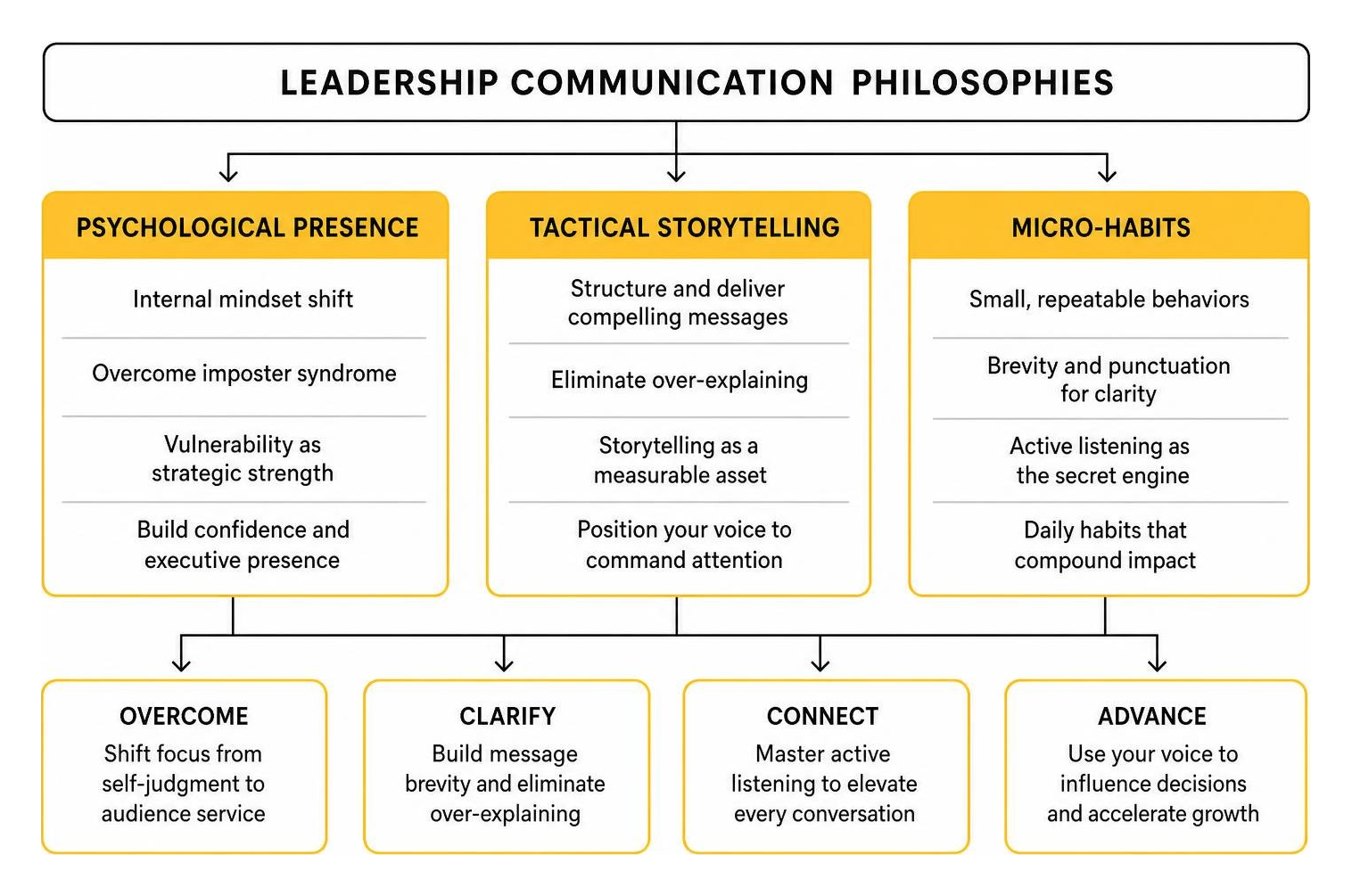
- Overcome Imposter Syndrome: Shift your internal focus from self-judgment to audience service.
- Build Message Brevity: Eliminate over-explaining, which erodes perceived executive authority.
- Master Active Listening: Treat listening as the secret engine of charismatic conversation rather than just waiting for your turn to speak.
- Accelerate Career Mobility: Position your voice to command attention during pivotal decision-making windows.
Top Leadership Communication Podcasts Compared
Finding the exact show that fits your busy calendar and leadership style is essential. Here is how the top programs stack up across format, host expertise, and core philosophy:
| Podcast Title & Host | Primary Target Audience | Typical Format & Length | Core Strategic Focus |
|---|---|---|---|
| Speak Like A Leader (Georgina Chang) | Senior Executives, Founders, High-Performers | 9–52 mins; Solo & Expert Deep Dives | Neuroscience of presence, vulnerability, emotional well-being, and burnout prevention. |
| Speak as a Leader (Nausheen I. Chen) | Tech Leaders, Entrepreneurs, Stage Speakers | 25–65 mins; In-depth Interviews | Fearless on-camera, stage, and interpersonal speaking; public speaking as an experience. |
| SPEAK LIKE A CEO (Oliver Aust) | Ambitious Founders, CEOs, Growth Leaders | 15–40 mins; Tactical Interviews | Storytelling frameworks, audience ownership, and maintaining authenticity in an AI world. |
| Speak Up: Executive Presence (Laura Camacho) | Introverts, Ambiverts, Corporate Leaders | 8–30 mins; Bite-sized Tips & Interviews | Science-backed presence, physiological readiness, competitive listening, and status signals. |
| Talk Like a Leader (Guy Harris) | Managers, Team Supervisors, Remote Leaders | 8–13 mins; Rapid Solo Tactics | Micro-communication skills, punctuation clarity, email conflict resolution, and intentionality. |
| Speak Like a Leader (Executive Presence Series) | Rising Professionals, Corporate Managers | 10–25 mins; Structured Coaching | Brevity, 1-to-3-minute executive briefings, message clarity over charisma, and active listening. |
The Core Philosophy Behind Each Speak Like a Leader Podcast
Each host brings a distinctive perspective on what it means to lead through speech. Some frame leadership communication as an internal mindset shift, while others treat it as a disciplined behavioral science.
For instance, Georgina Chang’s show approaches communication through the lens of positive psychology and neuroscience. Her core philosophy centers on the idea that confidence is a deliberate skill rather than an innate personality trait. She explores how high achievers often suffer from stoic burnout and disconnection, teaching executives how vulnerability serves as a strategic strength.
In contrast, Nausheen I. Chen emphasizes that public speaking must be an immersive experience rather than a cold transfer of information. Her philosophy focuses on breaking through the fear barrier on stage and on camera, helping leaders project warmth and conviction.
On the structural side, Oliver Aust’s Speak Like a CEO treats storytelling as a measurable business asset, focusing on how ambitious leaders can enter the top 1% of communicators. Meanwhile, Laura Camacho focuses heavily on introverts and ambiverts, showing professionals how to develop executive presence not by dominating conversations, but by elevating the thinking of everyone in the room. Finally, Guy Harris treats micro-habits—such as deliberate punctuation and pausing—as foundational tools for daily management.
How Guest Experts Elevate the Speak Like a Leader Podcast Experience
Top leadership podcasts stand out by hosting industry pioneers who bring raw, real-world case studies to light:
- High-Stakes Political Speechwriting: Former presidential speechwriter Terry Szuplat shared on Nausheen I. Chen’s show how even seasoned world leaders like Barack Obama experienced moments of freezing early in their careers, emphasizing that conviction matters far more than effortless perfection.
- Mission-Critical Storytelling: On Oliver Aust’s podcast, former NASA Chief Story Architect Paul Propster broke down how a four-point narrative structure secured $100 million in mission funding, proving that even pure scientific merit fails without compelling emotional belief.
- Positive Psychology and Burnout: Experts like Stephen Lew appear on Georgina Chang’s show to unpack why executives frequently experience emotional numbness despite outward commercial success, offering tools to realign personal values with high-pressure demands.
- Counter-Intuitive Intelligence Tactics: Laura Camacho regularly brings on observation specialists, such as former intelligence operatives, who show corporate leaders how to read room dynamics, assess unspoken power structures, and remain calm under intense boardroom interrogation.
Proven Frameworks and Strategies Taught Across Top Shows
The best podcasts move beyond vague motivational pep talks and teach practical, repeatable systems. Listening to these episodes equips you with actionable communication models:

1. The Confidence-Competence Loop
Popularized across executive presence coaching, this framework illustrates that you do not wait for confidence before taking action. Instead, you take small speaking actions in low-stakes environments, which builds competence, subsequently creating genuine confidence. This allows leaders to learn how to inspire confidence and finally silence your inner critic in front of key stakeholders.
2. The First Minute Framework & The 3-P Method
Highlighted on Speak Like a CEO, structured presentation techniques prevent rambling:
- Plan: Define your single core objective before speaking.
- Practice: Rehearse the critical first 60 seconds where 90% of audience judgment occurs.
- Present: Deliver a crisp opening statement, followed by key supporting points, ending in an unmistakable call-to-action.
3. The AI Authenticity Loop
As artificial intelligence becomes a staple in corporate drafting, leaders risk losing their authentic voice. The AI Authenticity Loop provides a safe workflow:
- Establish strict personal voice and values guidelines.
- Use AI tools solely for rapid outlining, idea generation, and rough drafting.
- Manually edit every communication to re-inject personal stories, empathy, and strategic conviction.
4. Competitive Listening and the THINK Filter
Guy Harris and Laura Camacho advocate for refining how leaders receive information. Camacho’s “Competitive Listening” trains executives to spot unstated stakeholder needs, while Harris’s “THINK” acronym prompts leaders to evaluate whether a remark is True, Helpful, Inspiring, Necessary, and Kind before speaking. Mastering these subtle dynamics is central to our advice in talk the talk the ultimate guide to executive presence.
High-Stakes Boardrooms vs. Everyday Conversations: Mastering Both Arenas
True leadership communication requires versatility. A keynote speech in New Orleans or a partner meeting in Philadelphia demands a very different cadence than a daily Slack message or an internal one-on-one.

Navigating High-Stakes Arenas
In boardrooms, investor pitches, and keynote presentations, stakes are elevated and attention spans are compressed. Here, executive presence hinges on message structure, emotional resonance, and composure under fire. Podcasts covering high-stakes speaking teach executives to:
- Avoid over-explaining technical details at the expense of strategic outcomes.
- Structure data within narrative frameworks so stakeholders remember key takeaways.
- Utilize breathing and physiological grounding techniques to keep the brain out of fight-or-flight threat mode.
To dive deeper into formal presentation mastery, explore our leadership speaking guide 2026 or explore how to transform your presentations with the best leadership speaking programs.
Perfecting Everyday Micro-Communications
Everyday leadership happens in hallways, email threads, and casual team catch-ups across offices from Antigua Guatemala to Pennsylvania. Micro-communication habits build your leadership reputation:
- Email Conflict Resolution: Guy Harris highlights the danger of ambiguous punctuation in digital messaging. Resolving written friction requires picking up the phone or framing emails around shared objectives rather than defensive clarifications.
- Meeting Brevity: Keeping operational updates to concise 1-to-3-minute briefings prevents cognitive overload and commands respect from cross-functional peers.
- Intentional Check-ins: Remote leadership demands intentional check-ins that prioritize listening to employee well-being over merely checking off task lists.
Frequently Asked Questions About Leadership Podcasts
What makes a leadership communication podcast effective for senior executives?
An effective podcast for senior leaders delivers concise, high-density insights without unnecessary filler. Executives benefit most from shows that offer repeatable frameworks (such as story templates or meeting opening structures), psychological grounding techniques, and real-world executive case studies that can be applied immediately to daily operations.
How do leadership podcasts address public speaking anxiety and imposter syndrome?
Top podcasts address public speaking fear by breaking down the neuroscience of the brain’s threat detection system. Hosts teach listeners to reframe nervous physiological energy into excitement, treat speaking as an act of service to the audience rather than an audition, and use low-stakes practice environments to build genuine comfort over time.
Can listening to audio episodes replace formal public speaking training?
Podcasts serve as reinforcement and habituation tools, but they cannot entirely replace active, deliberate practice. Listening provides the mental models, vocabulary, and motivation; however, true mastery requires stepping up to the podium, presenting in meetings, gathering feedback, and testing those communication strategies in real-world scenarios.
Conclusion
Mastering communication is a continuous pursuit that directly shapes your organizational culture, client trust, and executive trajectory. Whether your goal is to conquer stage fright, deliver concise executive briefings, or lead with greater empathy across distributed teams, tuning into a dedicated show provides the continuous coaching you need to excel.
At Nicole Farber, we believe that when leaders find their authentic voice, they transform not only their businesses but the communities they serve. Take the insights you gather from these top podcasts, put them into practice during your next meeting, and continue elevating your leadership presence. If your organization is ready to inspire its teams with impactful, real-world communication strategies, explore our empowering leadership speaking engagements today.